ADVERTISEMENT
Friday, June 5, 2026
Tech | Business | Economy
No Result
View All Result
  • Technology
    • Trends
    • Telecoms
      • Broadband
    • ConsumerTech
      • Gadgets and Appliances
      • Apps
      • Accessories
      • Reviews
      • Unboxing
    • EnterpriseTECH
    • Security & Data Protection
    • How To
  • Business
    • Company News
    • StartUPs
      • Founder’s Story
      • Funding
    • Deals
    • People & Moves
    • SME & Entrepreneur Focus
    • BUSINESS SENSE FOR SMEs
    • Competition & Market Positioning
    • Commerce & Mobility
    • Travel
    • WomenPreneurs
  • Economy
    • Macroeconomic Trends
      • Macro Monday
      • TE Insights
    • Finance
      • Banks
      • Fintech
      • Insurance
      • Digital Assets
      • Personal Finance
    • Policies
      • Tech & Society
    • Market Analysis
    • Jobs & Workforce Economy
  • Features
    • Guest Writer
      • Chidiverse
      • Digital Assets
      • GameTech
    • EventDIARY
    • IndustryINFLUENCERS
    • MarkTECH
    • TBS
    • NewsEXTRA
  • Editorial
  • Brand Content
  • TECHECONOMY TV
Friday, June 5, 2026
Tech | Business | Economy
No Result
View All Result
Tech | Business | Economy
No Result
View All Result

Home » Nigeria’s Public Debt Surges by ₦8.02 Trillion in Three Months, Reaching ₦142.3 Trillion

Nigeria’s Public Debt Surges by ₦8.02 Trillion in Three Months, Reaching ₦142.3 Trillion

Joan Aimuengheuwa by Joan Aimuengheuwa
January 22, 2025
in Finance
Reading Time: 2 mins read
0
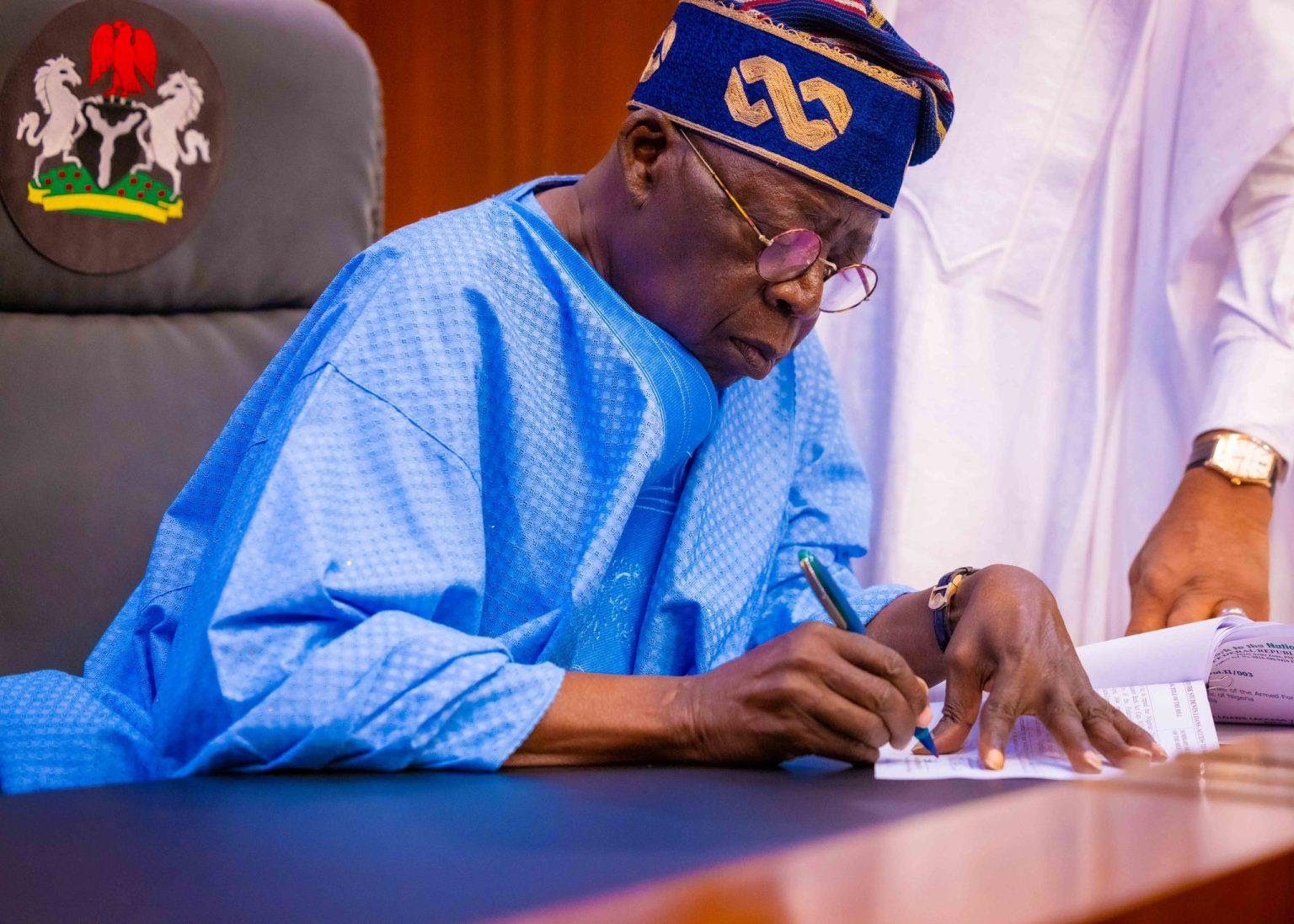
Nigeria’s Public Debt Surges by ₦8.02 Trillion in Three Months, Reaching ₦142.3 Trillion

President of Nigeria, Bola Ahmed Tinubu

The Debt Management Office (DMO) has disclosed that Nigeria’s total public debt reached ₦142.3 trillion ($88.89 billion) as of September 2024. 

The surge is an increase of ₦8.02 trillion compared to the ₦134.3 trillion recorded three months earlier. This resulted from exchange rate fluctuations, growing domestic borrowing, and Nigeria’s fiscal policy directions.

The country’s debt stock consists of external and domestic borrowings undertaken by the Federal Government, state governments, and the Federal Capital Territory (FCT). 

External and Domestic Debt Split

External debt accounts for ₦68.89 trillion ($43.03 billion), 48.4% of the total debt stock. This showed the rate at which Nigeria relies on foreign loans to fund development projects and address budget deficits. 

Subscribe to our Telegram channel for the latest updates.

Follow the latest developments with instant alerts on breaking news, top stories, and trending headlines.

Join Channel

Meanwhile, domestic debt stands at ₦73.43 trillion ($45.87 billion), contributing 51.6% of the overall figure. The Federal Government alone is responsible for ₦69.22 trillion ($43.23 billion) of the domestic debt, while state governments and the FCT owe ₦4.21 trillion ($2.63 billion).

Debt Growth and Exchange Rate Impact

From June to September 2024, Nigeria’s debt increased by ₦8.02 trillion (5.97%), driven by high domestic borrowing and the depreciation of the naira against the US dollar. 

The exchange rate weakened from ₦1,470.19/$ in June to ₦1,601.03/$ in September, amplifying the naira value of external obligations. While external debt in dollar terms grew marginally by 0.29%, its naira equivalent surged by 9.22%.

Composition of Domestic Debt

Federal Government bonds were the largest domestic debt component, growing by 4.47% to ₦54.65 trillion. Other components include Nigerian Treasury Bills, which declined slightly to ₦11.73 trillion, and promissory notes, which increased to ₦1.77 trillion. 

Retail-focused instruments like Federal Government Savings Bonds also recorded growth, reflecting increased participation from smaller investors.

External Debt Profile

External debt, valued at $43.03 billion, is primarily composed of multilateral loans, which account for 50.6% of the total and increased slightly to $21.77 billion. Obligations to bilateral lenders, including China and France, declined marginally, while commercial loans, such as Eurobonds, remained steady at $15.12 billion. 

The issuance of a $2.2 billion Eurobond in December 2024 further expanded Nigeria’s external debt, aimed at funding the national budget.

The DMO’s report revealed Nigeria’s increased reliance on borrowing to finance budget deficits and support development projects. While domestic borrowing has grown, external loans remain essential to fund infrastructure and social initiatives.

However, the rapid depreciation of the naira, coupled with mounting debt obligations, is limiting debt sustainability. Rising debt servicing costs, declining oil revenues, and high inflation rates further compound the fiscal challenges.

Initiatives to moderate short-term domestic borrowing are evident, with reductions in Treasury bills and Sukuk. Nonetheless, Nigeria’s issuance of its first domestic dollar-denominated bond added ₦1.47 trillion to the debt stock, pointing to the need for innovative funding mechanisms.


0Shares
Previous Post

Foxit Unveils Game-Changing AI Platform with 13 Unique Features

Next Post

AI Readiness Roundtable for SMEs: Credo by eTranzact Drives Innovation across Nigeria

Joan Aimuengheuwa

Joan Aimuengheuwa

Joan thrives at helping individuals and businesses scale via storytelling...

Related Posts

Expert Charges CBN | Naira depreciated | Wednesday Market | Dollar

Dollar to Naira Exchange Rate Today, June 4, 2026

June 4, 2026
Naira and British Pounds, IMTOs | Pound | UK capital inflows to Nigeria

UK Tops Nigeria’s Capital Source in Q1, Contributing 49% of Total Inflows – NBS

June 4, 2026

40% of Nigerians Now Use Crypto

June 4, 2026
Load More
Next Post
eTranzact CEO - CeBIH - Credo by eTranzact

AI Readiness Roundtable for SMEs: Credo by eTranzact Drives Innovation across Nigeria

Leave a Reply Cancel reply

Your email address will not be published. Required fields are marked *

I agree to the Terms & Conditions and Privacy Policy.

This site uses Akismet to reduce spam. Learn how your comment data is processed.

Techeconomy Podcast
Techeconomy Podcast

The Techeconomy Podcast is a thought-leadership show exploring the powerful intersection of technology, business, and the economy, with a strong focus on Africa’s fast-evolving digital landscape.

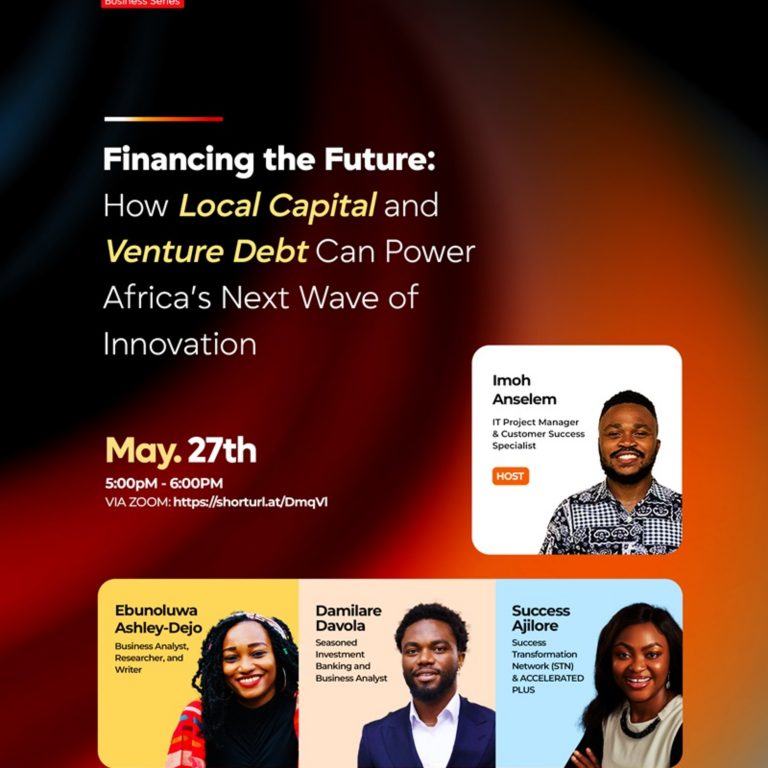
Financing the Future: Venture Debt, Local Capital & African Innovation | TBS May 2026 Webinar
byTecheconomy

Africa’s innovation ecosystem is evolving, but where will the funding for the next generation of startups come from?

In this edition of the Techeconomy Business Series (TBS) May 2026, industry experts explore how local capital, venture debt, and smarter investment structures are redefining startup growth and innovation across Africa.

🎙️ Featured Speakers:

* Ebunoluwa Ashley-Dejo

* Damilare Davola

* Success Ajilore (STN & Accelerated Plus)

Key conversations in this webinar include:

✔️ The future of startup financing in Africa

✔️ Venture debt and alternative funding models

✔️ The role of local investors in scaling innovation

✔️ Sustainable investment strategies for African startups

✔️ Opportunities and challenges in the African tech ecosystem

Subscribe for more conversations shaping Africa’s digital economy and innovation landscape.

#TBS2026 #AfricanInnovation #VentureDebt #StartupFinance #TechInAfrica #Techeconomy #AfricanStartups #InnovationEconomy

Financing the Future: Venture Debt, Local Capital & African Innovation | TBS May 2026 Webinar
May 27, 2026
Techeconomy
PROTECTING INNOVATION IN AFRICA’S STARTUP ECOSYSTEM
April 29, 2026
Techeconomy
BUILDING TRUST IN AFRICA ECOSYSTEM
February 27, 2026
Techeconomy
Navigating a Career in Tech Sales
January 29, 2026
Techeconomy
How Technology is Transforming Education, Health, and Business
November 27, 2025
Techeconomy
Search Results placeholder
MTN Live It 100 Thematic Campaign
ADVERTISEMENT
  • About Us
  • Careers
  • Contact Us
  • Privacy Policy

© 2026 TECHECONOMY.

No Result
View All Result
  • Technology
  • Business
  • Economy
  • Features
  • Editorial
  • Brand Content
  • TECHECONOMY TV

© 2026 TECHECONOMY.

This website uses cookies. By continuing to use this website you are giving consent to cookies being used. Visit our Privacy and Cookie Policy.