

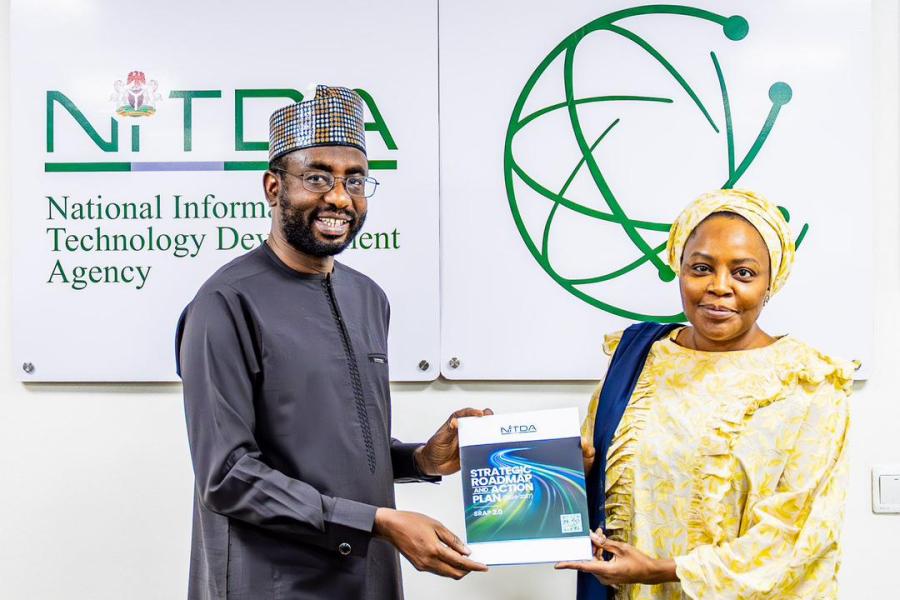
In a major move to address the foundational gaps in Nigeria’s digital economy, the National Information Technology Development Agency (NITDA) and the Universal Basic Education Commission (UBEC) have agreed to synchronize their efforts.
The goal? To bring digital literacy to the over 47 million children currently enrolled in Nigeria’s basic education system.
During a strategic meeting at NITDA Headquarters in Abuja, Kashifu Inuwa, NITDA director general, told the UBEC management team, led by Dr. Aisha Garba, executive secretary, that reaching the classroom is the “final frontier” for the country’s 95% digital literacy target by 2030.
Moving from Teacher Training to Student Impact
While NITDA has successfully embedded digital literacy modules into teacher training programmes, Inuwa stressed that the focus must now shift to measurable student outcomes.
The Numbers Game: NITDA is aiming for 70% digital literacy by 2027 and 95% by 2030.
Data-Driven Tracking: The Agency plans to use AI and data analytics to track individual teachers and the specific number of students they influence, ensuring that “impact” is more than just a buzzword.
Solving the Underused Infrastructure Problem
NITDA has already deployed over 1,500 digital learning centres nationwide. However, Inuwa admitted that while some are buzzing with activity, others remain underutilized.

The Solution:
- Inter-Agency Mapping: NITDA and UBEC will share data to map existing interventions and avoid duplication of efforts.
- Sustainable Connectivity: Both agencies are exploring new models to bring consistent internet services to rural schools, which Inuwa identified as the “key” to unlocking the potential of these facilities.
AI and the Playbook for UBEC’s Internal Reform
Beyond the classroom, NITDA is offering to share its Digital Transformation Playbook to help UBEC modernize its own internal operations. Inuwa shared how NITDA used Generative AI to retrain staff and “re-engineer” processes to cut down on administrative bottlenecks.
“A Director General is not an expert in audit or procurement… Why can’t they just work and bring the final product for approval?” Inuwa remarked, highlighting how automated workflows allow leadership to focus on strategy rather than paperwork.
UBEC: The Biggest Stake in Nigeria’s Future
For Dr. Aisha Garba, UBEC executive secretary, the partnership is a necessity rather than a choice.
With 47 million children in basic education, compared to fewer than 5 million in higher education, the stakes are at their highest at the foundational level.
“Partnering with NITDA is a necessity for us. We need to work together to use technology to bridge the lack of access in the country and to improve the quality of education,” Garba stated, referencing the dual challenge of enrollment and foundational literacy.
Nigeria’s digital future is being decided in primary schools. While Tech Lagos grabs the headlines, the long-term sustainability of the sector depends on the 47 million-strong talent pipeline managed by UBEC.
By aligning NITDA’s infrastructure with UBEC’s massive reach, the government is attempting to move away from siloed projects toward a cohesive national strategy.
However, the real hurdle remains connectivity. Without a sustainable model to keep 1,500+ learning centres online, the digital divide between urban and rural students could widen, regardless of how many tablets or AI playbooks are deployed.