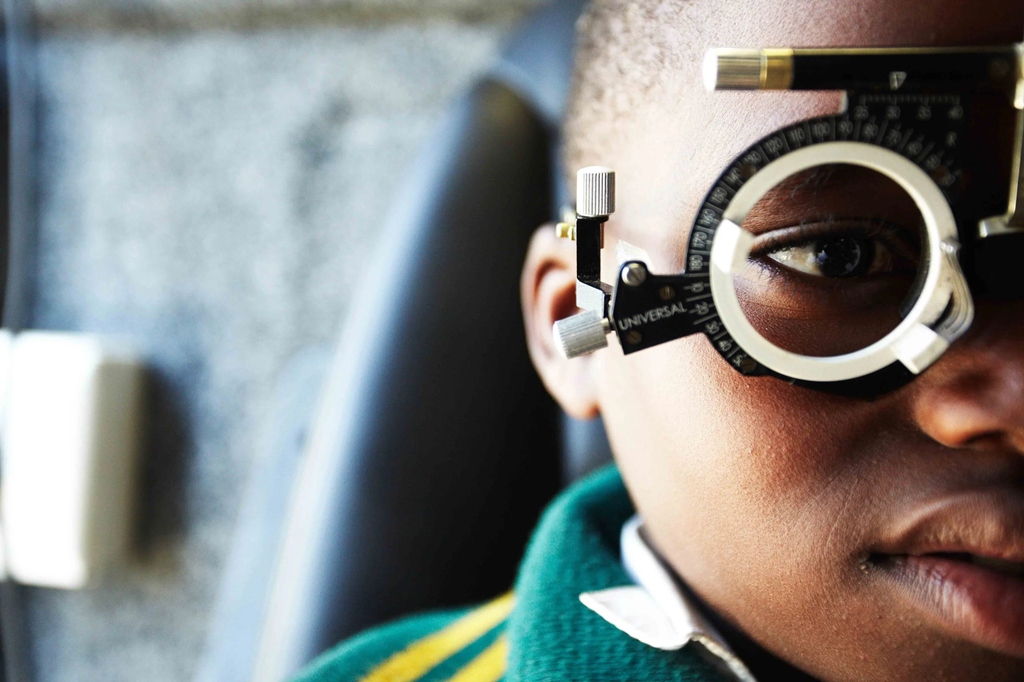
“The eyes are the window to the soul,” is a popular statement. The truth is that the eyes are also the window to education, productivity, and quality of life.
Imagine a child in Lagos struggling to read from the board, not because she is lazy or distracted, but because her eyesight is failing.
Picture a farmer in Katsina unable to tend to his crops, not because the rains failed, but because cataracts have clouded his vision. Consider the office worker in Port Harcourt who squints endlessly at his computer screen because he cannot afford a simple pair of glasses.
These are not distant stories – they are daily realities for millions of Nigerians.
On Thursday, October 9, 2025, the world will pause to observe World Sight Day, an annual event that shines a spotlight on blindness, vision impairment, and the importance of eye health.
This year’s theme, #LoveYourEyes, is a rallying call for individuals, communities, and governments to make eye care accessible, available, and affordable for all.
The International Agency for the Prevention of Blindness (IAPB), which coordinates the campaign, is spearheading a year-long global petition to gather one million voices, urging decision-makers to prioritise eye health.
For Nigeria, a country with over 200 million citizens, this campaign is especially urgent. According to estimates from the World Health Organisation (WHO) and local studies, more than 4.25 million Nigerians are blind or visually impaired, many from preventable or treatable causes. Cataracts, glaucoma, uncorrected refractive errors, trachoma, and diabetic retinopathy top the list.
What makes this even more tragic is that nearly 80 per cent of global vision loss is avoidable. This invariably means millions of Nigerians are suffering needlessly.
But the impact goes beyond health. Poor vision directly affects education, productivity, and household income. A child who cannot see the board struggles in school and may eventually drop out. An artisan who loses his sight cannot work and slips into poverty.
For Nigeria’s economy, the cost is staggering: lost productivity due to poor vision is estimated in billions of naira annually.
Children, in particular, face lifelong disadvantages. Experts note that 80 per cent of learning in a child’s early years is visual. Without proper eye screening in schools, thousands of children with correctable vision issues go unnoticed, their potential cut short before it even begins.
Take the story of Toheeb, a seven-year-old boy in Lagos State. Born with cataracts, he spent the first years of his life in darkness.
He could not play freely with other children, and school was impossible. His parents, petty traders, assumed nothing could be done until a charity outreach programme connected him to a free eye surgery project.
He then underwent a simple cataract surgery. The operation, which took less than an hour, changed his life forever. Today, Toheeb can see. He is back in school, learning to read and write for the first time. His teachers describe him as “curious and eager.” For his family, it is nothing short of a miracle.
Toheeb’s story is a reminder that sight can be restored, futures can be reclaimed, and blindness does not have to be a life sentence. But for every Toheeb, there are thousands of other Nigerian children still waiting for that chance.
The #LoveYourEyes campaign is not just about individual action; it is about systemic change. In Nigeria, it speaks directly to three critical gaps – Accessibility; Affordability; Awareness.
The campaign’s focus on children’s vision is particularly relevant for Nigeria, where over 40 per cent of the population is under 15 years old. Without intervention, vision problems in this demographic could affect future literacy, workforce readiness, and national development.
World Sight Day 2025 presents an opportunity for Nigeria to rethink its approach to eye health. In my mind, here are clear steps forward:
Integrate Eye Care into Primary Healthcare: Every primary healthcare centre should have basic eye screening facilities. This ensures early detection and treatment at the community level. Governments must engage optometrists in primary eye healthcare provision.
Scale Up School Eye Health Programmes: State governments must introduce mandatory vision screening for all pupils/students. Children deserve to see and learn clearly.
Invest in Human Capital: Nigeria has a shortage of ophthalmologists, optometrists, and ophthalmic nurses. There is an urgent need to expand training programmes and incentives to help bridge the gap.
Subsidise Essential Eye Care Services: From glasses to cataract surgeries, the cost must be reduced. Vision should not be a privilege for the wealthy.
Strengthen Public Awareness Campaigns: Media, influencers, and religious organisations must be mobilised to spread the #LoveYourEyes message nationwide. The National Orientation Agency has its job cut out for it.
The truth is that Nigeria cannot afford to treat eye health as an afterthought. Vision is tied to productivity, education, and quality of life. Every untreated case of blindness or visual impairment is a story of lost potential, lost income, and lost dignity.
World Sight Day 2025 is more than a date on the calendar. It is a wake-up call. For policymakers, it is a reminder that integrating eye care into health systems is not optional; it is essential. For individuals, it is a reminder to take responsibility, because to #LoveYourEyes is to secure your future.
[Featured Image Credit]
*Dr Elizabeth Eromosele is the Optometrist-in-Charge at Vantage Point Eye Clinic, Idimu and Secretary, Alimosho Zone, Nigerian Optometrists Association (NOA)