
ADVERTISEMENT
Monday, June 8, 2026
Tech | Business | Economy
No Result
View All Result
  • Technology
    • Trends
    • Telecoms
      • Broadband
    • ConsumerTech
      • Gadgets and Appliances
      • Apps
      • Accessories
      • Reviews
      • Unboxing
    • EnterpriseTECH
    • Security & Data Protection
    • How To
  • Business
    • Company News
    • StartUPs
      • Founder’s Story
      • Funding
    • Deals
    • People & Moves
    • SME & Entrepreneur Focus
    • BUSINESS SENSE FOR SMEs
    • Competition & Market Positioning
    • Commerce & Mobility
    • Travel
    • WomenPreneurs
  • Economy
    • Macroeconomic Trends
      • Macro Monday
      • TE Insights
    • Finance
      • Banks
      • Fintech
      • Insurance
      • Digital Assets
      • Personal Finance
    • Policies
      • Tech & Society
    • Market Analysis
    • Jobs & Workforce Economy
  • Features
    • Guest Writer
      • Chidiverse
      • Digital Assets
      • GameTech
    • EventDIARY
    • IndustryINFLUENCERS
    • MarkTECH
    • TBS
    • NewsEXTRA
  • Editorial
  • Brand Content
  • TECHECONOMY TV
Monday, June 8, 2026
Tech | Business | Economy
No Result
View All Result
Tech | Business | Economy
No Result
View All Result

Home » Question of the Day: Will Chat GPT Impact Critical Thinking Skills for the Youth?

Question of the Day: Will Chat GPT Impact Critical Thinking Skills for the Youth?

Techeconomy by Techeconomy
May 17, 2023
in Security & Data Protection
Reading Time: 4 mins read
0
ChatGPT A Revolutionary Chatbot that Blurs the Lines between Humans -

ChatGPT A Revolutionary Chatbot that Blurs the Lines between Humans -

  • Artificial intelligence (AI) tools are here to stay so instead of seeing it as a threat, it should be seen as an asset

ChatGPT has had more airtime than the world’s most renowned celebrity. Its arrival has sparked questions and concerns that some did not even think to ask, including if it is a threat to our critical thinking skills.

Write this essay. Complete this analysis. Unpack the meaning behind this excerpt. These are all sentences that bring horror to those who do homework – lengthy essays about things that students are not sure they care about, and that many do not see the point in doing in the first place.

This homework is not designed to be terrifying; it is designed to ignite the mind and critical thinking; to challenge students to form their own opinions and then using research and cognitive thinking to back them up. Currently, this is being threatened by tools like ChatGPT.

Anna Collard KnowBe4 AFRICA
Anna Collard, SVP Content Strategy & Evangelist at KnowBe4 AFRICA

Yet, artificial intelligence (AI) tools are here to stay so instead of seeing it as a threat, it should be seen as an asset, but one that supports cognitive growth and memory function rather than replacing it, says Anna Collard, SVP Content Strategy & Evangelist at KnowBe4 AFRICA.

“Research by George Millar in 1956 found that the average person can only keep around seven items in their working memory,” she explains. “Miller’s Law of seven plus-minus two means up to nine or as little as five items are the limit of a human’s processing abilities. Today, that number has gone down to four. This research, along with other academic papers and analyses, points to reduced memory due to an over reliance on technology also called the Google effect,” explains Collard.

This is a concern, one that has grown increasingly vocal over the past year as educators and researchers have pondered the impact of technology, and now AI, on cognitive behaviour and memory retention. However, it is also balanced by research that has pointed out that actually, human beings have been outsourcing their memory to various materials and solutions for centuries. Paper, parchment, papyrus and wood are some prime examples. Modern technology is no different. It can be a tool to bolster memory and make it far easier for humans to manage lives that are deluged by information, noise and digital clutter.

“The research goes in both directions, suggesting that technology is both an enabler and an inhibitor of human memory,” says Collard. “This points to the fact that actually, the impact does not lie in using it, but in how it is used or, in the case of ChatGPT, abused. The latter can be an immensely useful tool that supports students in their research and studies, but if it becomes the sole source of information and does all the writing for them, that is where the problems start.”

Subscribe to our Telegram channel for the latest updates.

Follow the latest developments with instant alerts on breaking news, top stories, and trending headlines.

Join Channel

Nowadays, remembering where you found a fact has become more important than remembering the fact itself. This translates directly into the biggest challenge with ChatGPT – it is vague on its sources and often out of date, which means that it rarely is as accurate as it needs to be.

Artificial Intelligence will change SVOD and AVOD and CHATGPT

“ChatGPT uses machine learning to infer information and this introduces inaccuracies,” says Collard. “If you ask ChatGPT what happens if you break a mirror, it replies with ‘You will have seven years of bad luck’. This is not a fact; it is based on superstition. If users do not constantly check the factual accuracy of ChatGPT, they run the risk of sharing fake news, inaccurate information and even conspiracy theories.”

The TruthfulQA benchmark test has found that most generative models are only truthful 25% of the time, according to the 2022 Stanford University Artificial Intelligence Index Report.

This means over reliance on technology such as ChatGPT is simply going to make the student’s work look stupid. However, that is not enough to stop people from turning to tech when they are tired, overwhelmed or lazy, which means that the best approach is to embrace it.

“Do not ban it, rather teach students how to use it within practical guidelines and policies that help them to enhance their understanding of AI and this type of tool,” concludes Collard. “This will enhance their own critical thinking skills by asking them to question the sources, content, truthfulness and accuracy of the content that the platform serves up to them, and it will turn the threat into an opportunity.”


0Shares
Previous Post

Tizeti to Tackle Broadband Underdevelopment in Cote d’Ívoire with Microsoft

Next Post

NCS Cautions Against Hasty Passage of NITDA Bill

Techeconomy

Techeconomy

Related Posts

Nigeria social media age restrictions

Nigeria Weighs Social Media Age Ban as 93% Voice Extreme Concern Over Child Online Safety

June 5, 2026
ESET Nigeria cybersecurity training Lagos government

ESET Nigeria Empowers Lagos Government Personnel to Fight AI-Driven Cyber Risks

June 4, 2026

Kaspersky: Credential Abuse Techniques Rank as Attackers’ Most Effective Tactic

June 4, 2026
Load More
Next Post
NCS on NITDA Bill 2022, Sodiya

NCS Cautions Against Hasty Passage of NITDA Bill

Leave a Reply Cancel reply

Your email address will not be published. Required fields are marked *

I agree to the Terms & Conditions and Privacy Policy.

This site uses Akismet to reduce spam. Learn how your comment data is processed.

Techeconomy Podcast
Techeconomy Podcast

The Techeconomy Podcast is a thought-leadership show exploring the powerful intersection of technology, business, and the economy, with a strong focus on Africa’s fast-evolving digital landscape.

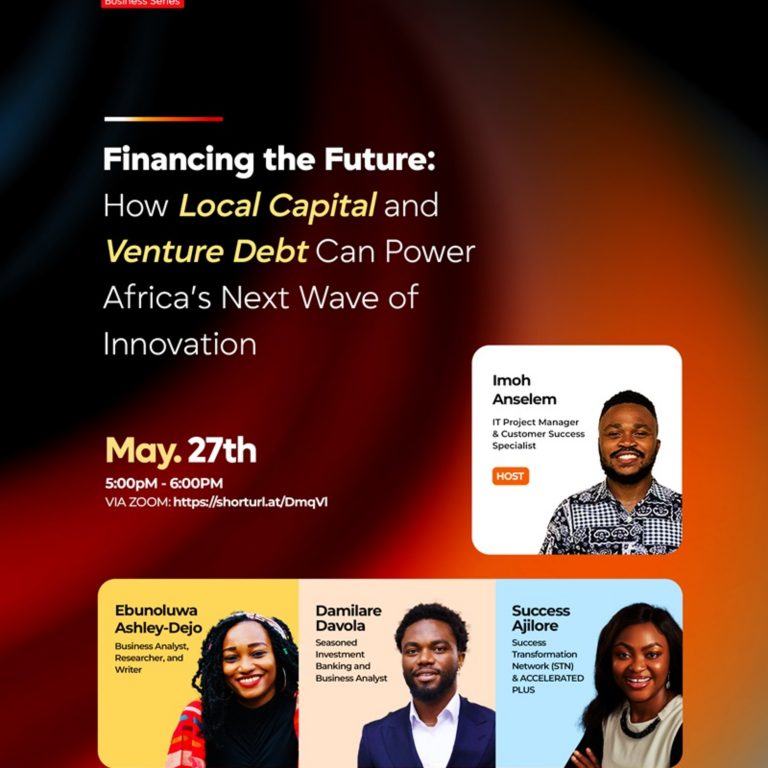
Financing the Future: Venture Debt, Local Capital & African Innovation | TBS May 2026 Webinar
byTecheconomy

Africa’s innovation ecosystem is evolving, but where will the funding for the next generation of startups come from?

In this edition of the Techeconomy Business Series (TBS) May 2026, industry experts explore how local capital, venture debt, and smarter investment structures are redefining startup growth and innovation across Africa.

🎙️ Featured Speakers:

* Ebunoluwa Ashley-Dejo

* Damilare Davola

* Success Ajilore (STN & Accelerated Plus)

Key conversations in this webinar include:

✔️ The future of startup financing in Africa

✔️ Venture debt and alternative funding models

✔️ The role of local investors in scaling innovation

✔️ Sustainable investment strategies for African startups

✔️ Opportunities and challenges in the African tech ecosystem

Subscribe for more conversations shaping Africa’s digital economy and innovation landscape.

#TBS2026 #AfricanInnovation #VentureDebt #StartupFinance #TechInAfrica #Techeconomy #AfricanStartups #InnovationEconomy

Financing the Future: Venture Debt, Local Capital & African Innovation | TBS May 2026 Webinar
May 27, 2026
Techeconomy
PROTECTING INNOVATION IN AFRICA’S STARTUP ECOSYSTEM
April 29, 2026
Techeconomy
BUILDING TRUST IN AFRICA ECOSYSTEM
February 27, 2026
Techeconomy
Navigating a Career in Tech Sales
January 29, 2026
Techeconomy
How Technology is Transforming Education, Health, and Business
November 27, 2025
Techeconomy
Search Results placeholder
MTN Live It 100 Thematic Campaign
ADVERTISEMENT
  • About Us
  • Careers
  • Contact Us
  • Privacy Policy

© 2026 TECHECONOMY.

No Result
View All Result
  • Technology
  • Business
  • Economy
  • Features
  • Editorial
  • Brand Content
  • TECHECONOMY TV

© 2026 TECHECONOMY.

This website uses cookies. By continuing to use this website you are giving consent to cookies being used. Visit our Privacy and Cookie Policy.