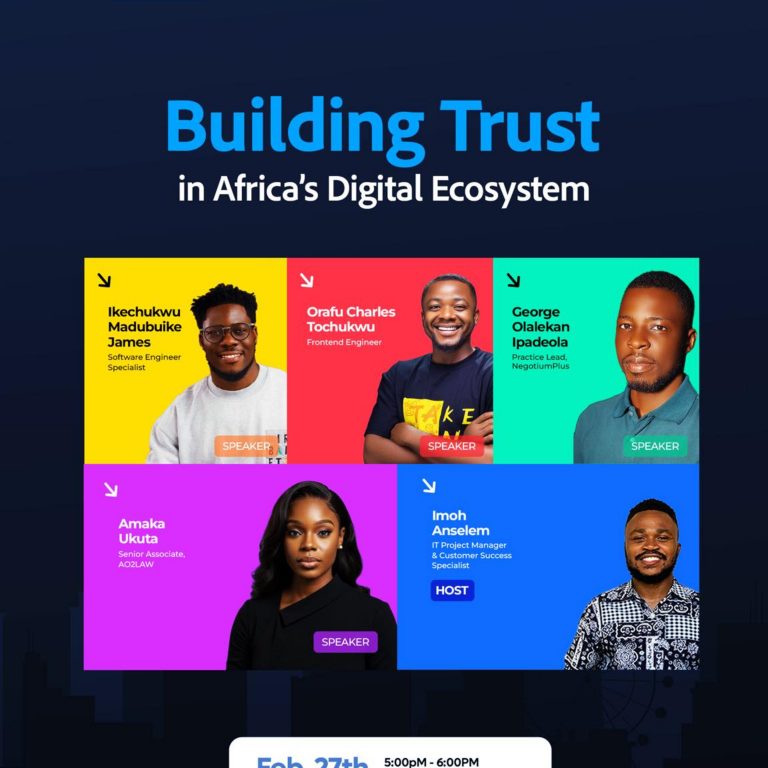




Reframing customer engagement in Nigeria for 2026 means moving beyond one-off transactions to building trust-based, digitally driven relationships.
With a population of over 220 million people and internet penetration exceeding 50%, Nigerian consumers are becoming more digital, price-conscious, and influenced by social networks and peer recommendations.
To drive sustainable growth, businesses must move from simply selling products to creating value through hyper-personalisation, social commerce, and high-trust digital experiences supported by emerging technologies.
According to projections presented at the Business Journal Annual Lecture 2025 by Olatunde Amolegbe, Managing Director of Arthur Stevens Asset Management Limited, Nigeria’s digital economy revenue is expected to reach $18.30 billion by 2026.
This represents a strong rise from the $9.97 billion recorded in 2021, indicating that the sector is on track to nearly double within five years. The expansion is being driven largely by fintech, artificial intelligence, telecommunications, and e-commerce.
Against the backdrop of rising inflation and changing consumer behaviour, businesses can no longer rely solely on transactional models. Building trust-based engagement has become essential for long-term relevance.
Prioritising digital agility, cultural relevance, and ethical business practices provides a clear route to sustained growth.
When applied effectively, these principles allow Nigerian entrepreneurs to optimise operations and scale their businesses more efficiently.
1. Accelerate hyper-personalisation with AI
Nigerian consumers are increasingly seeking tailored experiences, with 93% reportedly using AI tools for learning and complex tasks, a figure that exceeds global averages.
In sectors such as fintech and retail, personalised recommendations have improved engagement levels, while banks continue to report higher customer satisfaction from customised services.

However, concerns around data privacy persist, especially with evolving regulations. Businesses must ensure transparency in how customer data is used to build loyalty without eroding trust.
2. Adopt proactive, data-informed retention strategies
Predictive analytics can help businesses identify customer churn early, particularly in highly competitive sectors like banking and e-commerce.
As digital payments continue to rise and customers become more discerning, linking engagement metrics to business outcomes delivers measurable improvements. Ethical data use, aligned with regulatory standards, remains critical for long-term sustainability.
3. Foster community and influencer-driven loyalty
Gen Z and younger consumers increasingly prioritise peer validation and niche communities over broad, generic marketing.
Micro-influencers often deliver higher engagement relative to cost, while loyalty programmes are projected to reach $241.7 million in 2025, supported by fintech-based incentives.
Building authentic communities around shared values helps reduce digital fatigue and encourages repeat patronage.
4. Embed sustainability into core business strategies
Despite economic pressures, many Nigerian consumers are willing to pay between 16 and 20 per cent more for environmentally responsible products, driven by concerns around health, quality, and environmental impact.
In FMCG and retail, genuine sustainability efforts such as traceable sourcing and waste reduction help brands stand out in a challenging inflationary environment. Authentic commitments that align with local realities strengthen brand reputation and customer retention.
By adopting these approaches, Nigerian entrepreneurs can build stronger trust with their customers while improving business performance, even as they navigate persistent challenges such as power instability, poor road infrastructure, limited broadband access, and financial exclusion in many rural and urban communities.
Businesses that rethink customer engagement through these principles, balancing innovation with cultural awareness and ethical responsibility, are better positioned to capture growth in Nigeria’s rapidly digitising economy.
With competition intensifying, smart engagement strategies could unlock meaningful gains in market share.