


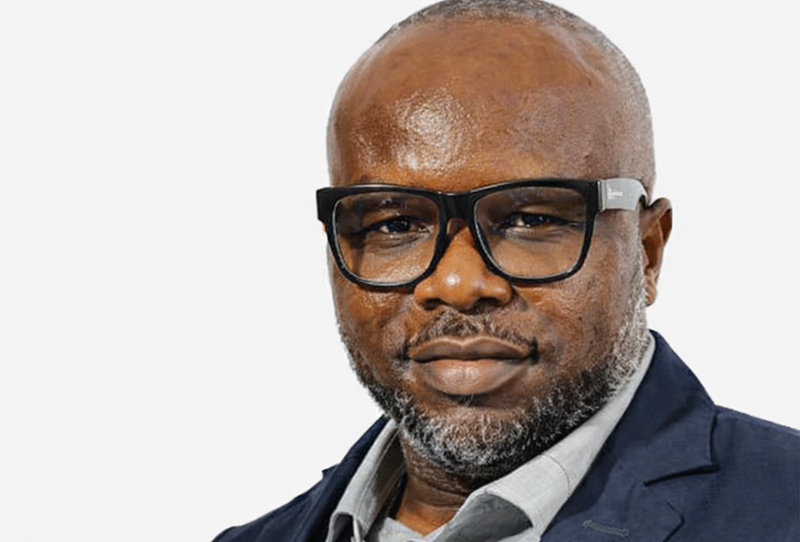
In a rare extended interview, Chimezie Emewulu, co-founder and group CEO of Seamfix, lays out why identity is the continent’s most urgent technology problem, and why only African engineers can solve it.
When Chimezie Emewulu speaks about digital identity, he is not reciting a venture pitch. He is describing a personal wound.
In August 2022, his father was kidnapped. The ransom demand came with a bank account number. The account was functional, active, and had been opened under a stolen identity, belonging to someone who had no knowledge it existed in their name.
The criminals had exploited, with ease, the single most consequential vulnerability in Africa’s financial system: the absence of a trustworthy, verifiable identity infrastructure.
“That experience transformed my professional endeavour into a life mission,” Emewulu said in a wide-ranging interview on Côte d’Ivoire’s national broadcaster, RTI 1.
The targets of that mission, fraudulent SIM swaps, ghost identity registrations, and illicit bank transfers, are not niche technology problems.
They are the daily operating environment of Africa’s financial criminals, and they persist because the foundation beneath Africa’s digital economy remains unfinished.
Emewulu’s company, Seamfix, has spent years building that foundation.
The Infrastructure Beneath the Economy
The argument Emewulu makes is architectural rather than technological. Digital identity, he contends, is not a product or a service, it is the trust layer without which no digital economy can function at scale.
“Moving from analogue to digital systems allows countries to build trust between both sides of any given transaction,” he said.
Without that trust layer, every digital interaction, opening a mobile money account, purchasing a SIM card, receiving agricultural financing, crossing a border, carries an unquantified fraud risk that either raises the cost of the transaction or excludes the poorest participants from it entirely.
In a post-COVID, AI-driven world, he argues, the traditional paper-based identity document is not merely inconvenient; it is structurally incompatible with what digital economies require.
Remote verification is impossible. Tamper-proof enrollment cannot be guaranteed. And the downstream consequences, as his family discovered in 2022, can be catastrophic.
From 10 Million to 100 Million: The Nigerian Scale Story

The scale of Seamfix’s work in Nigeria is one of the more remarkable untold stories in African technology.
Working with the Nigerian government, Seamfix introduced a mobile Android-based enrollment solution that helped scale the national identity database from under 10 million registered citizens to over 100 million, a tenfold expansion that repositioned Nigeria as one of the continent’s most significant digital identity deployments.
The approach was deliberately engineered for African conditions. Rather than replicating Western enrollment models that require citizens to visit fixed urban registration centres, Seamfix designed flexible Android applications that enrollment workers could carry directly into rural communities, ward by ward, village by village.
“You cannot build a national identity system that only works in Lagos,” is the implicit logic of the design. The rural farmer, the market trader three hours from the nearest city, the woman in a community without reliable electricity, their enrollment is not a secondary objective. It is the entire point.
This design philosophy extends to the software architecture itself. Emewulu is pointed in his critique of imported Western platforms that routinely fail in African deployments, not because African users are different, but because the platforms were not built to be resilient against the realities of intermittent power supply, low-bandwidth connectivity, and infrastructure conditions that European or North American engineers have never encountered.
“African problems are best solved by African engineers who possess local context,” he said. It is a position that is gaining ground across the continent’s technology policy community, and Seamfix’s track record provides one of the more substantive arguments for it.
The Passport Renewal Model: A Blueprint for Diaspora Services
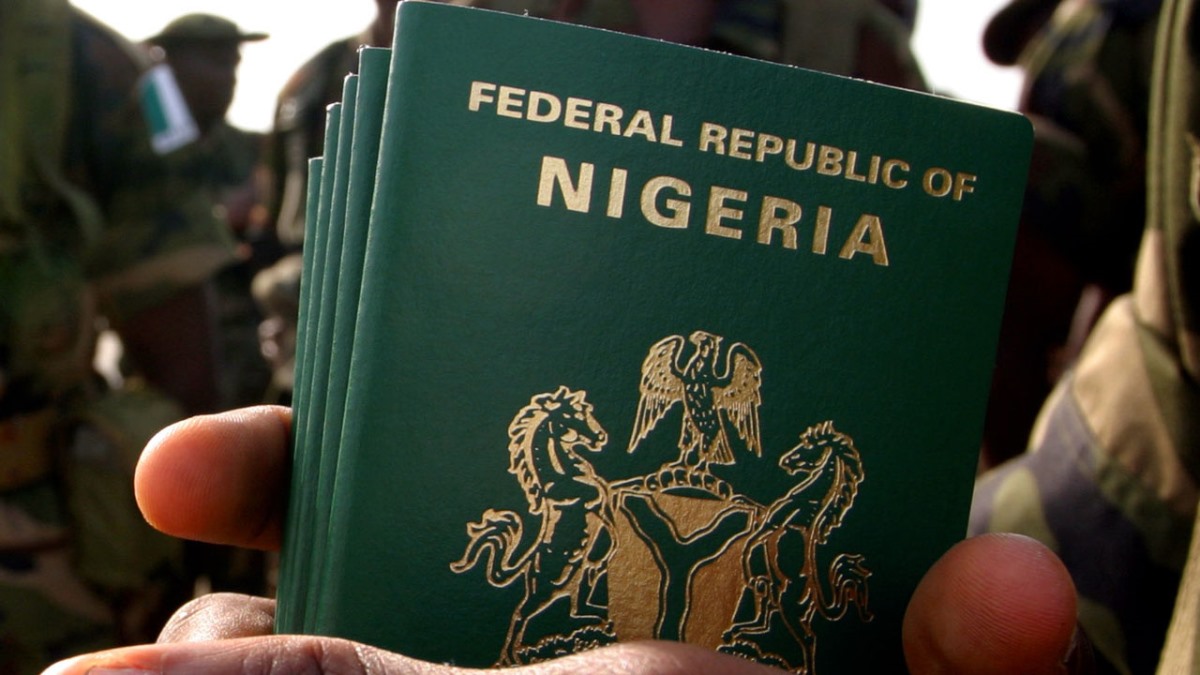
Beyond domestic enrollment, Seamfix has demonstrated what sovereign digital identity infrastructure can do for Africa’s vast diaspora populations.
In a partnership with an African government, the company built a system enabling citizens across 83 countries to renew their international passports entirely via mobile phone, including biometric data collection, without visiting an embassy. The cost savings for citizens are significant.
The policy implications are broader: for the millions of Africans living and working abroad who maintain financial and civic ties to their home countries, frictionless remote identity verification is not a convenience, it is a prerequisite for meaningful participation in the digital economy their remittances help fund.
Cross-Border Payments: The PAPSS Integration
Emewulu’s most forward-looking disclosure concerns Seamfix’s work alongside the Pan-African Payment and Settlement System – PAPSS, the infrastructure designed to enable intra-African trade and payments without routing transactions through foreign correspondent banks.
Seamfix is building a governance transaction framework within the PAPSS ecosystem: infrastructure designed to monitor cross-border payments, enforce government transaction quotas, and prevent money laundering and terrorism financing.
In practical terms, this means that the trust layer Seamfix builds domestically, the verified identity underpinning a citizen’s financial profile, becomes portable across borders.
“When citizens travel across borders, their trust profile should securely travel ahead of them,” Emewulu told RTI 1.
The vision is of a continental identity handshake: a system in which a Nigerian entrepreneur doing business in Côte d’Ivoire, a Ghanaian trader clearing goods in Senegal, or a Kenyan professional accessing services in Rwanda carries a verified digital credential that financial and government institutions across the continent can trust.
This is not speculative infrastructure. It is the logical completion of what the African Continental Free Trade Area requires to function at scale.
Trade agreements liberalise market access on paper. Identity infrastructure makes that access real.
Who Owns the Data, and Who Must Protect It
On the question of data sovereignty, one of the most contested dimensions of digital identity deployment globally, Emewulu draws a firm line.
Private companies like Seamfix build the technology. They must never own or hold primary responsibility for citizen data. Data protection laws must be legislated, enforced, and managed entirely by the state. The government is the custodian. The technology company is the contractor.
This distinction matters because the commercial incentives of private data custodianship are structurally misaligned with the public interest in identity protection. Companies monetise data. Governments, when functioning effectively, protect citizens.
Conflating the two roles, as some public-private partnership models have done, creates accountability gaps that criminal networks are very good at exploiting.
The policy message to African governments is clear: commission the infrastructure, own the data, enforce the law.
Financing the Foundation From Within
On the question of capital, Emewulu offers a perspective that diverges from the standard development finance narrative.
Before African nations turn to external development partners for infrastructure investment, he argues, they should look inward, build sustainable business cases, challenge local talent to resolve structural obstacles, and demonstrate that the systems work before inviting external financing on someone else’s terms.
“Internal financing first” is not isolationism. It is a sequencing argument with real strategic logic. Countries that build digital identity infrastructure with domestic capital and domestic engineering talent own the outcome. Countries that build it on donor conditionalities and imported platforms often find that the system serves the financier’s reporting requirements better than the citizen’s needs.
Identity as a Right
Emewulu’s closing argument during the interview returns the conversation from infrastructure and economics to something more fundamental.
“Identity is a fundamental right, not a privilege,” he said. “No one should play god with it.”
It is a statement that carries weight precisely because he has seen what happens when that principle is violated, not in an abstract policy document, but in a bank account opened in a stranger’s name, used to extort a family, and traced back to a system that had never properly asked who anyone was.
Africa is building its digital economy on soil that, in too many places, has not yet been properly surveyed. Knowing who your citizens are, securely, verifiably, and with their consent, is not the endpoint of a development agenda. It is the starting point of one.
The infrastructure question is not whether Africa can afford to build it. It is whether it can afford not to.
(Chimezie Emewulu is the Group CEO of Seamfix, a Lagos-based digital identity and verification technology company operating across multiple African markets. The interview was conducted on RTI 1, Côte d’Ivoire’s national public broadcaster).



