


ADVERTISEMENT
Thursday, June 4, 2026
Tech | Business | Economy
No Result
View All Result
  • Technology
    • Trends
    • Telecoms
      • Broadband
    • ConsumerTech
      • Gadgets and Appliances
      • Apps
      • Accessories
      • Reviews
      • Unboxing
    • EnterpriseTECH
    • Security & Data Protection
    • How To
  • Business
    • Company News
    • StartUPs
      • Founder’s Story
      • Funding
    • Deals
    • People & Moves
    • SME & Entrepreneur Focus
    • BUSINESS SENSE FOR SMEs
    • Competition & Market Positioning
    • Commerce & Mobility
    • Travel
    • WomenPreneurs
  • Economy
    • Macroeconomic Trends
      • Macro Monday
      • TE Insights
    • Finance
      • Banks
      • Fintech
      • Insurance
      • Digital Assets
      • Personal Finance
    • Policies
      • Tech & Society
    • Market Analysis
    • Jobs & Workforce Economy
  • Features
    • Guest Writer
      • Chidiverse
      • Digital Assets
      • GameTech
    • EventDIARY
    • IndustryINFLUENCERS
    • MarkTECH
    • TBS
    • NewsEXTRA
  • Editorial
  • Brand Content
  • TECHECONOMY TV
Thursday, June 4, 2026
Tech | Business | Economy
No Result
View All Result
Tech | Business | Economy
No Result
View All Result

Home » Snapdragon C Series Explained: Qualcomm’s Budget Chip for Sub-$300 Windows Laptops

Snapdragon C Series Explained: Qualcomm’s Budget Chip for Sub-$300 Windows Laptops

Instead of targeting premium ultrabooks, Qualcomm is pushing ARM-based efficiency further into the entry-level PC space

Ethan Ebenezar by Ethan Ebenezar
June 4, 2026
in Reviews
Reading Time: 3 mins read
0
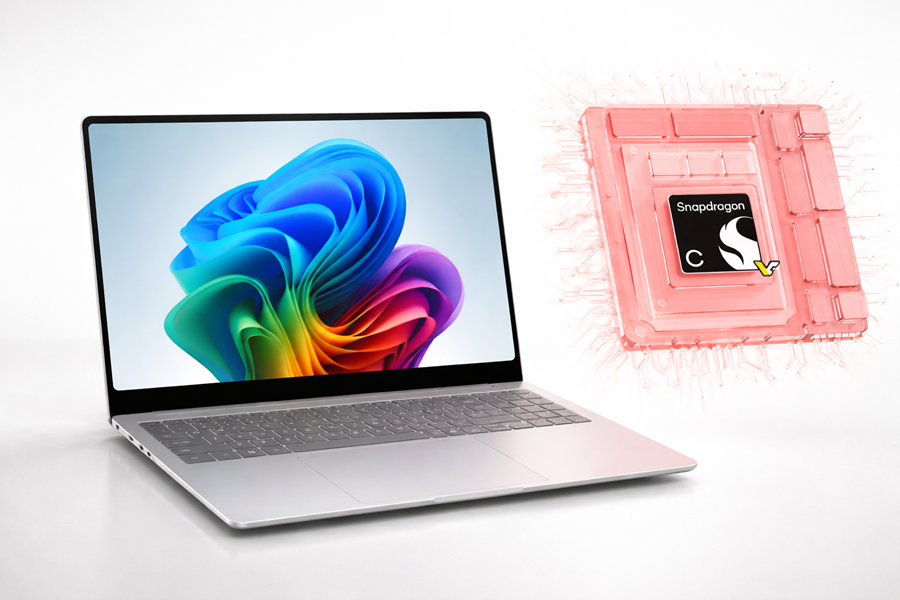
Snapdragon C series

Snapdragon C series

While most tech enthusiasts expected premium, high-cost hardware announcements this week, tech brands appear to be leaning more toward affordability.

Dell opened the week with its redesigned XPS 13, and Qualcomm has now unveiled the Snapdragon C series, a processor lineup designed for entry-level, power-efficient Windows laptops starting from $300 or N400,000.

Instead of targeting premium ultrabooks, Qualcomm is pushing ARM-based efficiency further into the entry-level PC space, where affordability is a major barrier in many markets.

What makes this more interesting is the timing. The year 2026 leans heavily into lightweight AI computing and power-efficient architectures, so the new Snapdragon C series is Qualcomm’s answer to a simple question: how to make modern laptops cheaper without making them feel outdated.

Core Architecture of The Snapdragon C Series

In terms of performance, the Snapdragon C Series takes a different approach when compared to Qualcomm’s flagship laptop processors. It may not be as powerful, but it offers a price-performance balance that flagships do not offer.

Subscribe to our Telegram channel for the latest updates.

Follow the latest developments with instant alerts on breaking news, top stories, and trending headlines.

Join Channel

Instead of using the high-performance Oryon found in premium Snapdragon X chips, the Snapdragon C utilises the Kryo-based core that is closely related to what you find in smartphones. The design is intentional and it solves three main problems in the entry-level PC market:

  • Cost Reduction: Kryo cores are cheaper to manufacture and scale.
  • Power Efficiency: ARM laptops normally consume less energy than the normal x86.
  • Thermal Efficiency: Lower heat output translates to simpler cooling systems, thinner build, and quieter laptops.

This means OEMs can build laptops that do not require bulky fans or expensive thermal systems to carry out productivity tasks.

AI Capabilities, Battery and Thermal Efficiency

At the entry-level, the Snapdragon C series does not ignore AI which is currently shaping modern computing. In fact, it is built around it. Qualcomm integrated a lightweight NPU designed for local AI processing for tasks like

  • Background noise removal during calls
  • Basic generative AI assistance in productivity apps
  • Smart battery optimization
  • Offline transcription and voice processing

While it does not match the raw power of Snapdragon X Elite-class systems, it is still optimised for always-on low-power tasks that feel a little more than enough for the average budget user.

Thermal and battery efficiency are also not left out. Because the architecture is ARM-based and derived from mobile silicon, laptops built on Snapdragon C are expected to deliver all-day battery life with no overheating under normal productivity use.

Why Does This Matter to Nigeria or Other Emerging Markets?

In Nigeria currently, the N400,000 range is where most buyers expect solid enough performance for office work, business use and schooling, but the main problem has always been consistency. Many devices around this price range are either underpowered second-hand products or refurbished.

For the first time, we are looking at the possibility of brand new, ARM-powered systems that are affordable, energy efficient and efficient enough for most entertainment [streaming and social networking] productivity tasks. This could potentially reduce the import of second-hand laptops currently dominating Nigeria’s market.

Expected Laptops

Acer’s new Aspire Go 15 is the first device to adopt this chipset and was also introduced on the same day it was announced. The laptop positions itself as a straightforward productivity system featuring: 15-inch display for multitasking and media consumption, entry-level RAM and storage configurations suited for web and office work, and lightweight chassis design focused on portability

Paired with the Snapdragon C processor, the laptop becomes more than just a budget laptop. It becomes a low-power productivity system where battery life and responsiveness matter more than raw performance numbers.

Aside from Acer, Qualcomm confirmed that there are more global laptop brands looking to enter the affordable ARM PC segment.

Clearly, Qualcomm now operates a dual strategy in the PC processor space. On one end we get the premium Snapdragon X and X2 platforms. On the other hand, the Snapdragon C series exists as a cost-efficient ARM-powered alternative built for everyday users who don’t need extreme performance but still want modern efficiency, long battery life, and AI-assisted computing.

As the demand for affordable computing continues to rise globally, we are likely to see responses from companies like MediaTek and Intel, especially as they adjust to supply chain pressures and changing market expectations following the recent component supply constraints.

0Shares
Previous Post

Nigeria Telecom Foreign Investment Falls to 4-Year Low Despite $10.37bn Capital Surge

Next Post

Dollar to Naira Exchange Rate Today, June 4, 2026

Ethan Ebenezar

Ethan Ebenezar

Related Posts

TECNO POP 20 Review by Techeconomy

Unbeatable Value, Elite Specs: TECNO POP 20 Redefines What a Pocket Friendly Smartphone Can Do

May 22, 2026
Dell Alienware 15 Review vs Acer Nitro V 15

Alienware 15 Review: Dell’s First Affordable Gaming Laptop Faces Tough Competition from Acer Nitro V 15

May 14, 2026

MacBook Air M5 vs Lenovo Yoga 9i Gen 10: Best Laptop for Nigeria

May 7, 2026
Load More
Next Post
Expert Charges CBN | Naira depreciated | Wednesday Market | Dollar

Dollar to Naira Exchange Rate Today, June 4, 2026

Leave a Reply Cancel reply

Your email address will not be published. Required fields are marked *

I agree to the Terms & Conditions and Privacy Policy.

This site uses Akismet to reduce spam. Learn how your comment data is processed.

Techeconomy Podcast
Techeconomy Podcast

The Techeconomy Podcast is a thought-leadership show exploring the powerful intersection of technology, business, and the economy, with a strong focus on Africa’s fast-evolving digital landscape.

Financing the Future: Venture Debt, Local Capital & African Innovation | TBS May 2026 Webinar
byTecheconomy

Africa’s innovation ecosystem is evolving, but where will the funding for the next generation of startups come from?

In this edition of the Techeconomy Business Series (TBS) May 2026, industry experts explore how local capital, venture debt, and smarter investment structures are redefining startup growth and innovation across Africa.

🎙️ Featured Speakers:

* Ebunoluwa Ashley-Dejo

* Damilare Davola

* Success Ajilore (STN & Accelerated Plus)

Key conversations in this webinar include:

✔️ The future of startup financing in Africa

✔️ Venture debt and alternative funding models

✔️ The role of local investors in scaling innovation

✔️ Sustainable investment strategies for African startups

✔️ Opportunities and challenges in the African tech ecosystem

Subscribe for more conversations shaping Africa’s digital economy and innovation landscape.

#TBS2026 #AfricanInnovation #VentureDebt #StartupFinance #TechInAfrica #Techeconomy #AfricanStartups #InnovationEconomy

Financing the Future: Venture Debt, Local Capital & African Innovation | TBS May 2026 Webinar
May 27, 2026
Techeconomy
PROTECTING INNOVATION IN AFRICA’S STARTUP ECOSYSTEM
April 29, 2026
Techeconomy
BUILDING TRUST IN AFRICA ECOSYSTEM
February 27, 2026
Techeconomy
Navigating a Career in Tech Sales
January 29, 2026
Techeconomy
How Technology is Transforming Education, Health, and Business
November 27, 2025
Techeconomy
Search Results placeholder
MTN Live It 100 Thematic Campaign
ADVERTISEMENT
  • About Us
  • Careers
  • Contact Us
  • Privacy Policy

© 2026 TECHECONOMY.

No Result
View All Result
  • Technology
  • Business
  • Economy
  • Features
  • Editorial
  • Brand Content
  • TECHECONOMY TV

© 2026 TECHECONOMY.

This website uses cookies. By continuing to use this website you are giving consent to cookies being used. Visit our Privacy and Cookie Policy.


