

Nigeria is entering a new era of tax administration. Beginning this January 2026, the country’s evolving tax framework will place stronger emphasis on digital reporting, automated compliance, and real-time transparency.
For businesses and individuals alike, this marks a shift away from informal tax handling toward structured, technology-driven processes.
While policy changes often create anxiety, they also create opportunity. Across Nigeria, a growing group of technology companies is building the infrastructure that will define how compliance works in practice.
From tax automation to digital invoicing and professional service platforms, these companies are shaping the future of how Nigerians interact with the tax system.
Below are some of the most notable players driving this transformation to watch in 2026:
1. Taxlyne – Building the Infrastructure for Digital Tax Compliance

Taxlyne operates at the infrastructure layer of Nigeria’s evolving tax ecosystem. Built by HarmonizedX, the platform was designed to support the country’s transition to automated, digitally enforced tax compliance.
Rather than functioning as an advisory service, Taxlyne serves as a technical bridge between businesses and the Federal Inland Revenue Service. It enables real-time invoice generation, validation, and submission by integrating directly with enterprise resource planning systems and billing platforms.
This allows companies to meet compliance requirements without manual intervention.
By embedding tax compliance into daily business operations, Taxlyne helps reduce errors, eliminate reporting delays, and ensure consistency in tax records.
Its system is designed to support Nigeria’s move toward e-invoicing and real-time transaction monitoring, which are central to the upcoming reforms.
Taxlyne’s strength lies in its infrastructure-first approach. It does not change how businesses operate, but ensures that every transaction they generate automatically meets regulatory standards.
As tax enforcement becomes more data-driven, platforms like Taxlyne will become a foundational part of Nigeria’s compliance architecture.
2. DigiTax – Enabling Cross-Border Tax Compliance in Africa
DigiTax is a pan-African tax technology company focused on simplifying e-invoicing and regulatory compliance across multiple markets.
Founded in 2022 by Caine Wanjau and Thuku wa Thuku, the company was built to help businesses navigate the growing complexity of tax systems across the continent.
The platform enables companies to onboard to government tax portals, generate compliant invoices, and meet reporting obligations across countries such as Nigeria, Kenya, and Zambia.
DigiTax reduces the need for separate compliance processes across markets by offering a unified interface for tax reporting.
Its strength lies in its regional perspective. As African economies become more interconnected and governments adopt digital tax systems, DigiTax provides businesses with the tools needed to operate across borders without increasing administrative burden.
By standardizing compliance workflows, DigiTax allows companies to scale while maintaining regulatory alignment, making it especially valuable for startups and growing enterprises operating in multiple jurisdictions.
3. Taxmingo – Product-Driven Tax Compliance for Businesses and Practitioners

Taxmingo represents a new generation of tax technology companies in Nigeria. Founded in 2020 by Richard Ojo alongside Oluwasegun Ebenezer, the company was built as a product-first platform designed to modernize how businesses and tax professionals work together.


Rather than operating as a traditional tax consultancy, Taxmingo provides a structured digital environment in which compliance occurs collaboratively.
Business owners receive dedicated dashboards to upload documents, track filings, monitor compliance status, and maintain digital tax records.
Independent accountants and tax practitioners also have their own dashboards, allowing them to manage clients, oversee submissions, and deliver services efficiently.
This dual dashboard structure addresses one of the most significant problems in Nigerian tax administration: the lack of transparency and coordination between taxpayers and professionals.
By centralizing records and workflows, Taxmingo creates accountability on both sides and removes the friction that often leads to missed filings or errors.
Taxmingo’s strength lies in its product-driven approach. It does not replace tax professionals but empowers them with technology that makes compliance continuous rather than reactive. As Nigeria moves toward more structured enforcement, platforms like Taxmingo will become essential for everyday businesses.
4. Taxaide – Enterprise Grade Tax Operations and Compliance Automation

Taxaide is one of Nigeria’s more established tax technology platforms, built to support complex tax operations at scale. Led by a team of experienced tax professionals, including Olumide Bidemi Daniel, the company focuses on automating core tax functions for businesses and institutions.
The platform supports payroll tax processing, withholding tax management, tax payments, and structured compliance reporting.
Its tools are designed to help organizations manage recurring obligations with accuracy and consistency, particularly in environments where regulatory expectations are increasing.
Taxaide’s approach emphasizes operational discipline and reliability. Digitizing tax workflows that were previously manual helps organizations reduce compliance risk and improve audit readiness.
As Nigeria’s tax system becomes more data-driven, platforms like Taxaide provide the structured backbone required for large-scale compliance and reporting.
5. Tyms – Making Businesses Tax Ready Through Accounting Automation

Tyms plays a foundational role in Nigeria’s tax technology ecosystem by focusing on accounting automation.
Founded by Ibrahim Adepoju and Chineye Ochem, the company helps businesses maintain clean, organized financial records that support accurate tax reporting. One of its key products, Adam, automates bookkeeping, financial tracking, and reporting.
By simplifying day-to-day financial management, Tyms helps businesses stay audit-ready and reduces the risk of errors during tax filing.
Rather than handling tax compliance directly, Tyms strengthens the foundation on which compliance depends. Accurate financial data is essential for effective tax reporting, and Tyms ensures that businesses have that foundation in place.
As tax authorities increasingly rely on digital records and data consistency, accounting platforms like Tyms play a critical supporting role in the broader compliance ecosystem. What sets Tyms and Adam apart is their use of artificial intelligence.
The Bigger Picture
Nigeria’s tax reform is not simply about increasing revenue. It represents a broader shift toward transparency, automation, and accountability. The success of these reforms will depend not only on policy but also on the technology that enables implementation.
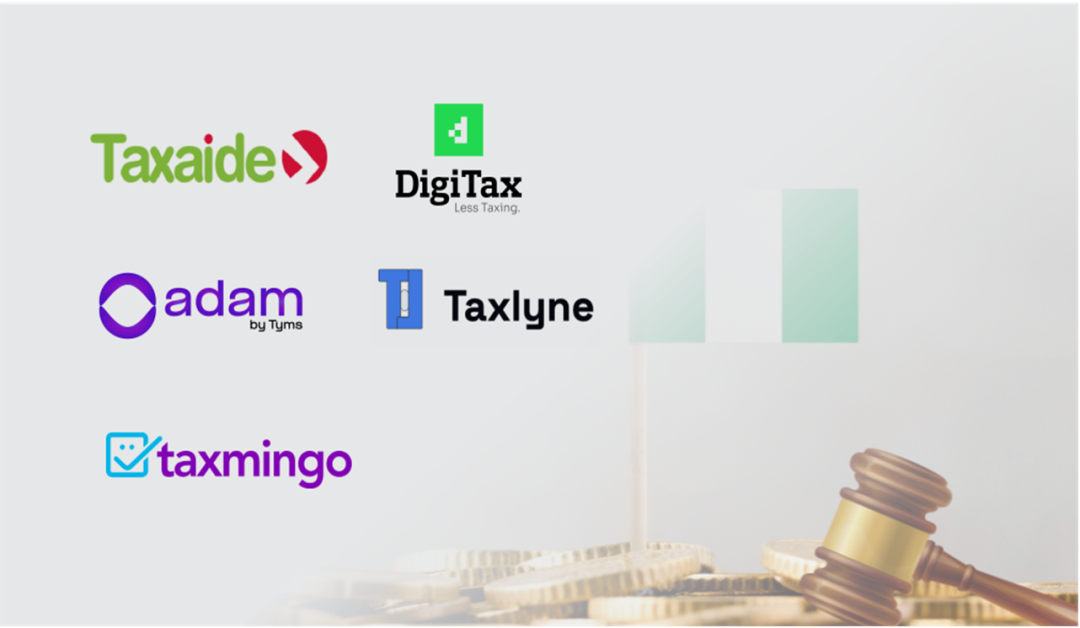
Companies like Taxmingo, Taxlyne, DigiTax, Taxaide, and Tyms are building the infrastructure that will define how tax compliance works in practice.
Each approaches the problem from a different angle, but together they form the backbone of Nigeria’s emerging digital tax economy.
As the new year unfolds, one thing is clear. The future of tax compliance in Nigeria will not be driven by paperwork or manual processes. It will be driven by platforms, data, and intelligent systems designed for scale.