


The 2026 FIFA World Cup has officially kicked off, marking another season for the biggest sporting tournament on the planet to bring excitement and unforgettable moments to millions, if not billions of viewers worldwide.
For the first time in the tournament’s history, three countries are co-hosting the competition, all on the same continent and across 16 venues:
- The United States
- Canada
- Mexico
Several matches are already sold out long before kickoff, while millions more are following the tournament from home.
These numbers are hardly surprising for an event of this scale. But what is less visible, is the years of preparation, infrastructure development, and technological innovation that have gone into making the tournament possible today.
Technology has become the backbone of modern football.
And this is not unique to this year’s edition. From the 2002 FIFA World Cup in Japan and South Korea to the most recent tournament held in Qatar, football’s biggest stage has consistently embraced the latest technology available at the time to improve both the game itself and the general viewing experience.
This year’s tournament is no different.
Several technological trends, from artificial intelligence and connected devices to advanced broadcasting systems, have all aligned to make both the on-pitch action and fan experience more immersive than ever before.
Starting from the opening match between South Africa and Mexico, here is a look at the technologies powering the 2026 FIFA World Cup and what they tell us about the future of football.
New Technology Behind FIFA World Cup 2026
1. Adidas Trionda

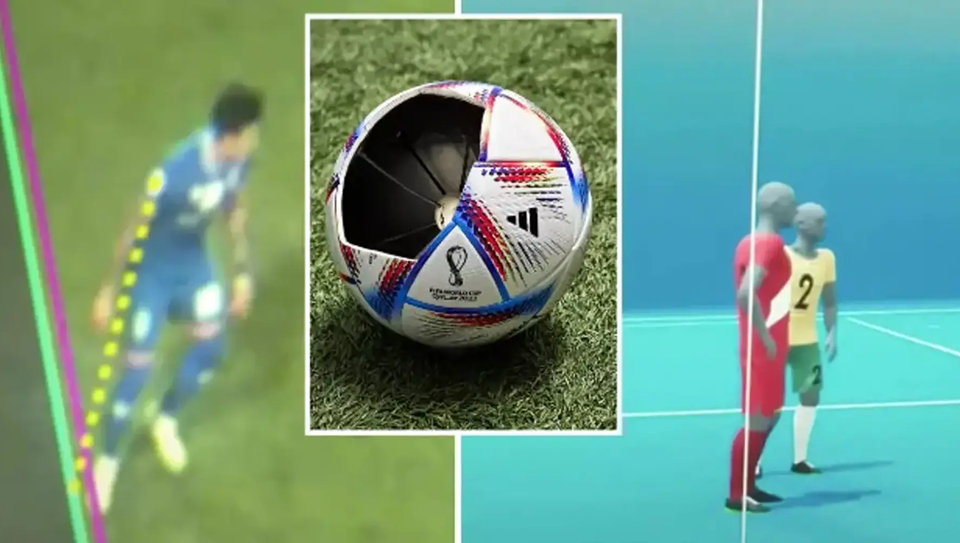
It all starts with the official match ball of the tournament. The Adidas Trionda is more than just a football. It is literally the most technologically advanced match balls ever used at a FIFA World Cup.
Embedded inside the ball is an inertial measurement unit (IMU) sensor, a chip that is capable of transmitting highly detailed motion data.
The sensor tracks the movement of the ball, its positioning, rotation, and acceleration in three-dimensional space hundreds of times every second.
This information is then sent directly to match officials and the semi-automated offside system, helping to determine the exact moment a player touches or kicks the ball.
Because the Trionda contains electronic components, it is powered by an internal rechargeable battery. So before every match, the ball is placed on a wireless charging dock to ensure the sensor system remains fully operational throughout the game.
2. Advanced Semi-Automated Offside Technology (SAOT)
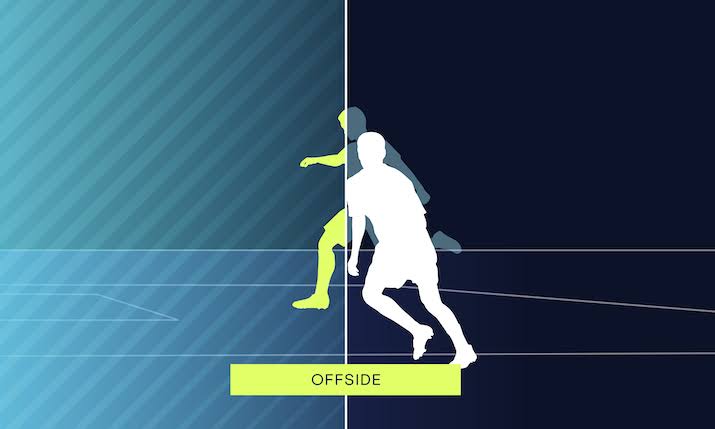
Offside decisions have come a long way from referees manually drawing lines on screens.
The latest version of FIFA’s Semi-Automated Offside Technology combines data from multiple stadium-mounted tracking cameras with information coming directly from the sensor inside the match ball.
Together, these systems track player movement and every ball contact in real time, allowing potential offside incidents to be detected within seconds. The technology significantly reduces delays while improving accuracy.
3. Instant Referee Alerts

When the system identifies a clear offside situation, it can immediately notify match officials through their communication devices, allowing decisions to be made faster and with greater confidence.
Although human referees still make the final call, AI-powered assistance helps to eliminate much of the uncertainty that normally surrounds close offside decisions.
4. AI-Powered 3D Replay Visualisations
One of the biggest improvements for television viewers comes through advanced 3D replay systems.
Using the tracking data collected during matches, broadcasters can now generate realistic three-dimensional visualisations that clearly show player positioning and movement during key moments.
For football fans, this provides a much clearer understanding of controversial decisions, especially offside calls that are often difficult to interpret from standard camera angles.
5. Referee Body Cameras
Referee body cameras are also making their debut at the tournament.
The technology gives broadcasters a first-person perspective of the match, allowing viewers to experience the speed, pressure, and intensity of elite-level football from the referee’s viewpoint.
Combined with modern video stabilisation systems, the footage is significantly smoother and more watchable than earlier experimental versions we saw at previous tournaments.
The Biggest Technology Innovation of Every World Cup Since the 2010s
2014 (Brazil): Goal-Line Technology
The 2014 FIFA World Cup marked the first use of Goal-Line Technology.
Designed to eliminate debates around “ghost goals,” the system used multiple high-speed cameras positioned around the stadium to determine whether the entire ball had crossed the goal line.
If a goal was scored, an automatic signal was sent to the referee’s watch in less than a second.
For many fans, it was the first major example of technology that directly influenced officiating decisions in football.
2018 (Russia): Video Assistant Referee (VAR)
The introduction of Video Assistant Referee (VAR) changed football forever.
For the first time at a World Cup, a team of officials working from a dedicated video operations room could review incidents involving goals, penalties, red cards, and mistaken identity.
Although VAR remains controversial in some situations, it actually improved decision-making accuracy and laid the foundation for many of today’s automated officiating systems.
2022 (Qatar): Semi-Automated Offside Technology
The Qatar World Cup introduced the first large-scale deployment of Semi-Automated Offside Technology.
Using a network of tracking cameras and sensors inside the match ball, officials could identify offside situations much faster than traditional VAR reviews.
An honourable mention is Qatar’s Modular Stadiums, an innovative move to create more arenas with prefab materials. Qatar also showcased one of the most ambitious stadium engineering projects ever attempted.
Stadium 974 was constructed using modular components and repurposed shipping containers, allowing large sections of the venue to be dismantled and reused after the tournament.
The approach highlighted a growing focus on sustainability and flexible infrastructure for future sporting events.
The story of modern football is increasingly becoming a story of technology. From goal-line systems and VAR to connected match balls, AI-powered officiating, and immersive broadcast experiences, every World Cup introduces new tools designed to make the game faster, fairer, and more engaging for fans.
The 2026 FIFA World Cup is not just the biggest tournament football has ever hosted, it is also the most technologically advanced.
And if current trends continue, the future of football may not just be decided by the players on the pitch, but by the intelligent systems working quietly behind the scenes to make every moment count.



