

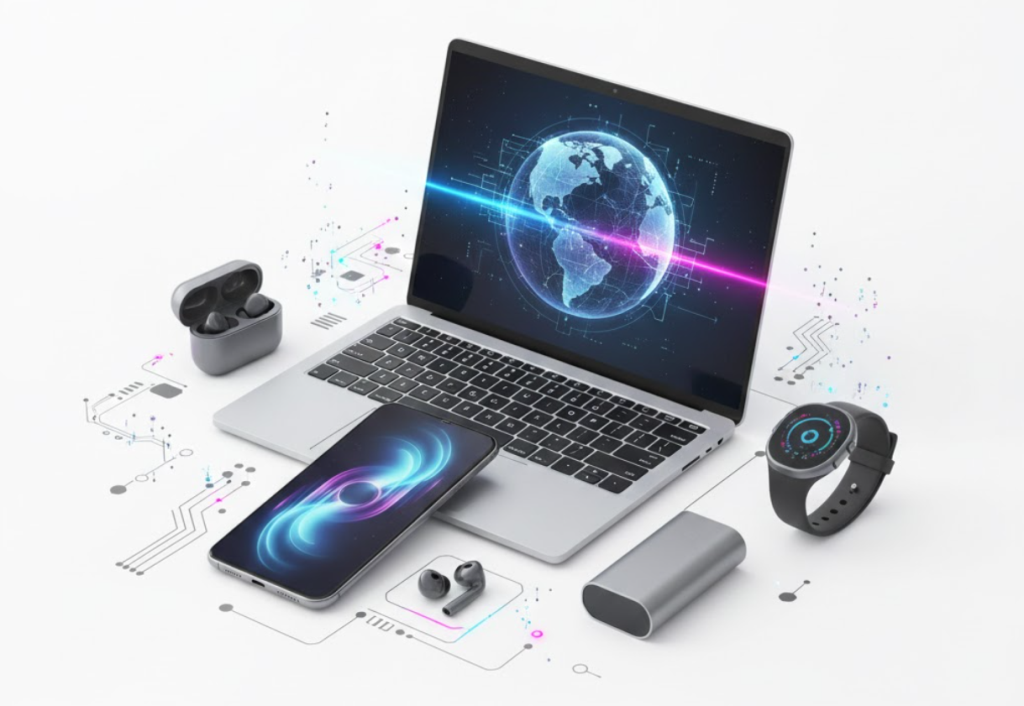
Consumer technology in 2026 is expected to go beyond faster processors and premium designs. Devices are becoming smarter and more practical, fitting better into people’s personal and work lives.
After years of hype around AI, foldables, and ultra-portable hardware, the industry is entering a phase where these innovations must prove true value.
In emerging and low-income markets like Nigeria, features such as better battery life, durability, and longer software support will determine what truly succeeds.
From smartphones and laptops to wearables and connectivity, this guide highlights the key tech trends to watch in 2026.
Smartphone Trends to Watch in 2026
In-Built AI Becomes Standard
Brands such as Samsung, Google, Apple, and TECNO are expected to launch new smartphones with more AI features that work fully offline.
This reduces dependence on constant internet access, a big challenge in emerging markets where data can be expensive or unreliable.
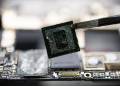
Recent benchmarks show that modern neural processing units (NPUs) in flagship phones can now handle tasks that were not possible just two years ago.
For users in cities like Lagos, Nairobi, and Accra, features such as offline translation, advanced photo editing, and voice assistance will soon work without an internet connection.
The Snapdragon 8 Elite processor, expected to power many 2026 flagship devices, includes an NPU capable of up to 80 TOPS (trillion operations per second) of AI performance.
Google’s Pixel 10 series runs AI locally on the Tensor G5 chip, while Samsung’s S25 series integrates AI directly into the operating system rather than treating it as a separate app.
Improved Battery Power
Silicon-carbon batteries and stacked cell designs will improve battery life in slimmer smartphones. Chinese manufacturers such as Oppo, Xiaomi, and Transsion (which owns TECNO, itel, and Infinix) are leading this trend, with global brands expected to follow in 2026.
This battery technology allows manufacturers to increase capacity without making phones thicker. More importantly, it solves one of the biggest problems for African consumers, which is battery life.
In markets with unstable electricity, a phone that lasts longer on a single charge is not a luxury, it is essential.
AI-powered devices also demand more energy, making stronger battery technology even more important. As AI features expand, longer battery life will no longer be optional.
More Advanced Foldable Smartphones
Foldable smartphones are slowly moving beyond the experimental stage, and 2026 is expected to bring more refined models. Brands like Samsung, Google, and TECNO are improving screen durability and hinge mechanisms, which were early weaknesses.
However, pricing is one of the biggest limitations in African markets. Even mid-range foldables are still too expensive for most consumers, meaning they will likely remain niche products until prices fall significantly.
Longer Software Support
Consumer pressure and new regulations, mainly from Europe, are pushing smartphone makers to offer between five and seven years of software updates, even for mid-range devices.
Longer support keeps phones secure and usable for more years, improving value for money and reducing electronic waste. This trend strongly benefits African and Asian markets, where people typically keep their phones much longer than users in developed regions.
Laptop Trends to Watch in 2026
AI Chips Become Standard
Processors such as the Snapdragon X-series, Intel Core Ultra, and AMD Ryzen AI chips are making NPUs a standard feature in laptops.
NPUs, or Neural Processing Units, are specialised chips designed to handle AI tasks such as facial recognition and language processing.

Unlike CPUs, which manage general tasks, NPUs focus specifically on AI workloads, similar to how GPUs handle graphics.
The laptop processor market will be highly competitive in 2026, as major manufacturers push their own AI-focused chips with different strengths.
Qualcomm’s ARM-based Snapdragon X2 Elite has emerged as a strong competitor. Independent benchmarks show it matching or outperforming Intel and AMD in single-core performance, while maintaining up to 97–99% of that performance when running on battery.
Intel’s Panther Lake processors, launching at CES 2026 in January, promise up to 50% faster CPU performance, 50% better graphics, and 40% improved performance per watt. AMD’s Ryzen AI 400 series continues to focus on power efficiency while boosting AI capability through stronger NPUs.
Improved Laptop Battery Life
Laptop makers are finally recognising that battery life matters as much as raw performance. Throughout 2026, brands are expected to compete more on battery endurance.
ARM-based laptops currently lead in battery efficiency, but traditional x86 systems are catching up fast. Intel’s Panther Lake promises major efficiency gains, while AMD is focusing on consistent, sustainable performance.
By the end of 2026, most laptops are expected to give full-day battery life under normal use. This will benefit students in areas with unstable power supply, remote workers in shared spaces, and professionals who travel frequently.
More Lightweight Laptops with Built-In 5G
More thin and lightweight laptops with built-in 4G or 5G connectivity are expected in 2026. These devices target freelancers, creators, and professionals who need constant internet access.
Built-in connectivity removes the need for Wi-Fi or phone tethering, making work more flexible and reliable, especially in areas with limited broadband access.
Wearables, Tablets, and Smart Accessories in 2026
Affordable Health-Focused Wearables
Smartwatches from brands like Apple, Samsung, Huawei, and Xiaomi will continue to evolve into stronger health platforms.
Features such as stress tracking, advanced sleep analysis, and early illness indicators will become more common, although they remain support tools rather than medical devices.
For African markets, affordability remains the biggest barrier. Brands like Xiaomi and Huawei offer capable smartwatches at lower prices, helping to expand adoption while still delivering useful features.
Tablets Replacing Entry-Level Laptops
Tablets with keyboards and styluses are becoming practical alternatives for students and light office users who cannot afford traditional laptops. Devices like iPads, Samsung Galaxy Tabs, and Android tablets now offer productivity features close to entry-level laptops.
In 2026, these tablets are expected to become more powerful while remaining affordable. This matters greatly in African education systems, where students need low-cost devices for remote learning and group work.
AR Glasses and AI-Powered Audio
Early augmented reality glasses and AI-powered earbuds will gain more attention in 2026. Features such as live translation, audio summaries, and contextual assistance are becoming more reliable as these devices move beyond early testing stages.
While currently limited to developed markets, these technologies show the future of wearable computing. AI-powered earbuds, in particular, could eventually improve communication across Nigeria’s and Africa’s many languages, though widespread use is still years away.
Conclusion
Technology in 2026 will move towards solving actual problems, not just showcasing advanced features. The most successful devices will not always be the most powerful, but the most useful, reliable, and accessible.
For smartphones, this means better battery life, durability, and offline intelligence. For laptops, it means all-day battery life and practical AI features. For wearables and accessories, it means real value rather than flashy design.
In African markets, this transition comes at the right time. Consumers here have always prioritised value over hype. A phone that lasts two days on a charge matters more than one that is slightly thinner.
Long software support and offline features justify higher upfront costs. In 2026, the best technology will not just be the most advanced but the most useful.