


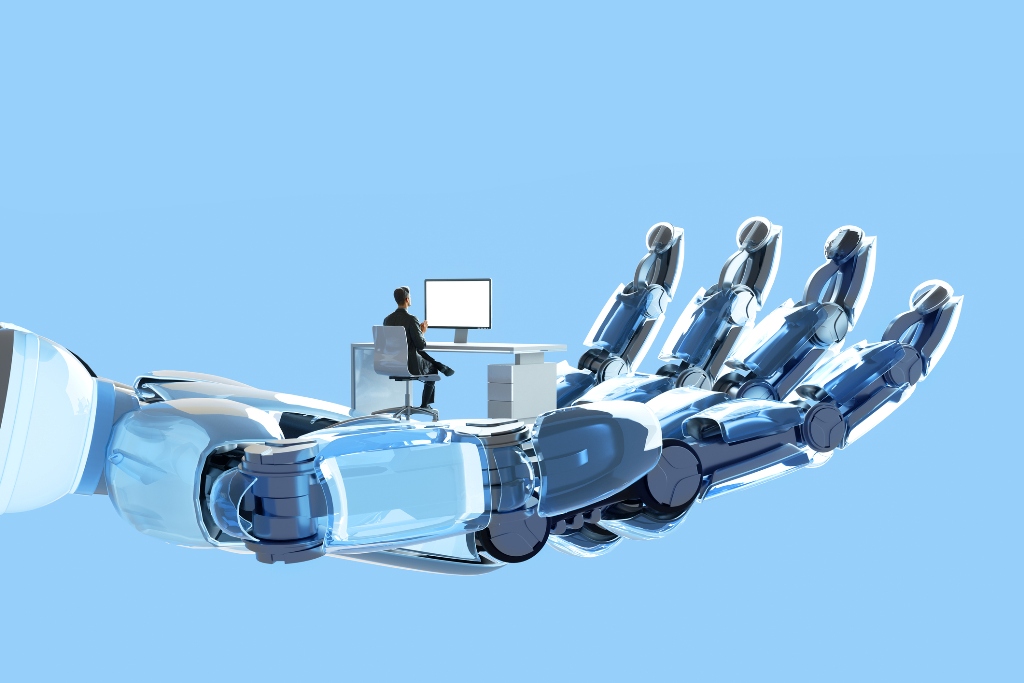
The twenty-first century is witnessing a profound redefinition of intelligence, work, and human capability.
At the centre of this shift lies what may be called the crunch capability of Artificial Intelligence: the unprecedented ability of machines to ingest, analyse, and synthesise complexity at speeds and scales far beyond human cognition.
This is not just a technical milestone. It is a civilisational turning point. And as quantum computing moves from theory to practical use, AI’s crunch capability is set to expand dramatically, reshaping economies, professions, governance, and the meaning of human contribution.
Artificial Intelligence already processes data volumes unimaginable in earlier eras. According to the International Data Corporation (IDC), global data creation exceeded 120 zettabytes in 2023 and is projected to surpass 180 zettabytes by 2025.
No government, corporation, or university can manually interpret such volumes. AI has become the indispensable engine that converts raw data into insight, prediction, and action. Yet even this power remains constrained by classical computing limits. Quantum computing promises to break those limits.
Quantum Computing and the End of Classical Limits
Traditional computers process information in binary states: zero or one. Quantum computers use qubits, which can exist in multiple states simultaneously through superposition. This allows them to evaluate vast combinations of possibilities at once.
Problems that would take today’s fastest supercomputers thousands of years could, in theory, be solved by quantum systems in hours or minutes. McKinsey estimates that quantum technologies could generate $1.3 trillion in economic value by 2035, particularly in pharmaceuticals, logistics, finance, energy, and advanced materials.
When paired with AI, the implications become transformational. Quantum-enhanced AI could simulate molecular interactions to accelerate drug discovery, optimise global supply chains, model climate systems, and tackle cryptographic challenges at unprecedented speed.
This is more than faster computing. It changes what is computable. AI will no longer be limited to analysing the past. It will explore multidimensional futures, test millions of scenarios, and identify optimal pathways with extraordinary precision.
The Future of Work: From Execution to Stewardship
For centuries, work has been defined by human effort: manual, cognitive, or creative. The Industrial Revolution mechanised physical labour.
The digital revolution automated routine mental tasks. AI is now transforming complex cognitive work. The coming quantum-AI era will shift human labour from execution to stewardship.
The World Economic Forum estimates that AI could automate 43 percent of work tasks in advanced economies by 2030, while also creating new roles in oversight, interpretation, governance, and system design.
The most valuable workers will not simply be those who perform tasks efficiently. They will be those who can direct, interrogate, and refine intelligent systems.
Work will become more strategic and judgment-driven. Expertise will no longer depend mainly on memorising facts. It will depend on interpreting signals, weighing trade-offs, and guiding machines toward human-centred outcomes.
Decision-Making in a World of Simulation
Leadership in the quantum-AI age will increasingly rely on simulation rather than intuition alone.
In logistics, quantum-enhanced AI could reduce global supply chain inefficiencies, which the United Nations estimates cost more than $1.5 trillion annually, by improving routing, inventory, and risk management.
In finance, quantum systems may model markets with a depth and speed beyond any human trader. In climate science, they could simulate atmospheric interactions with far greater accuracy, helping governments design smarter environmental policy.
Leaders who ignore such tools may appear increasingly reckless. Future leadership will depend on understanding simulations, interpreting probabilities, and balancing technological insight with ethical judgment.
The Rise of New Professions
As AI and quantum systems absorb more operational tasks, entirely new categories of work will emerge. System stewards will monitor the behaviour, limits, and risks of intelligent systems.
Complexity translators will convert technical outputs into language executives, regulators, and citizens can understand.
Scenario composers will use simulation tools to help governments and businesses plan for multiple futures. Value designers will shape the ethical, cultural, and social principles guiding technological deployment.
These roles reveal a deeper truth: the future of work will be less about what machines can do and more about how humans choose to use them.
Creativity and Innovation in the Quantum Age
AI already generates text, images, music, and product designs. Quantum computing could dramatically expand these capabilities by exploring creative possibilities at a scale never before available.
Yet human creativity remains essential.
Machines can generate options, but humans choose meaning. Machines can simulate futures, but humans define values. Machines can optimise systems, but humans determine purpose.
Rather than replacing creativity, the quantum-AI era may amplify it by removing computational barriers that once limited discovery and experimentation.
Economic Transformation and Inequality
The economic upside is immense. Accenture estimates that AI alone could add $15.7 trillion to the global economy by 2030. Quantum computing may add trillions more.
But there is risk. Without deliberate intervention, the divide between technologically empowered societies and excluded populations may widen.
Countries that invest in:
- digital infrastructure
- education
- research capacity
- ethical regulation will likely capture the greatest benefits. Those that fail to prepare may face stagnation and dependence.
A Moral and Human Imperative
Beyond economics lies a deeper challenge: identity and purpose.
As machines assume more cognitive labour, humans will be pushed to rediscover what remains uniquely human. Compassion, moral discernment, relational intelligence, empathy, and spiritual wisdom may become even more valuable in the workplace. The future of work is therefore not only a technological issue. It is a moral one.
Conclusion: A Turning Point in Human History
The crunch capability of AI, amplified by quantum computing, will redefine work in profound and lasting ways. Labour will move from execution to orchestration. Expertise will shift from knowledge to judgment. Leadership will evolve from instinct to simulation.
This is not simply another innovation cycle. It is a civilisational turning point.
The future will belong not merely to those who build these tools, but to those who can govern, humanise, and direct them wisely.



