

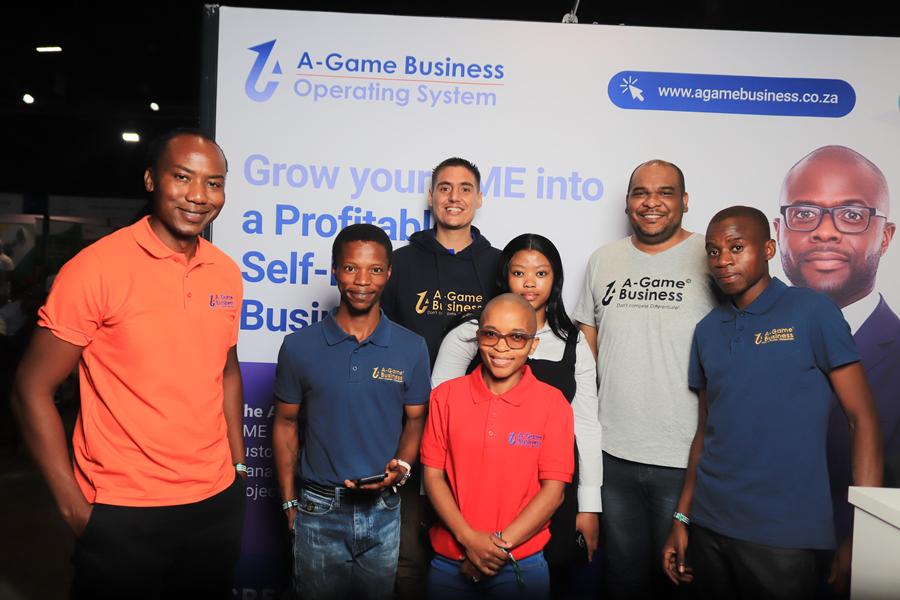
After more than a decade of research, coaching, writing, and testing practical SME development strategies, Soweto-based digital transformation expert and tech entrepreneur KK Diaz has officially launched an advanced AI-powered Business Operating System (BOS) designed to transform how small and medium enterprises operate, scale, and achieve measurable growth.
The system was launched at the inaugural SA Innovation Week, sponsored by the Technology and Innovation Agency (TIA), held in Nasrec from 16–20 March 2026.
The launch marks a significant milestone in Diaz’s 10-year intellectual and entrepreneurial journey, during which he authored eight business books, beginning with The A-Game Business Blueprint.
These works collectively capture a comprehensive SME development framework built from globally tested methodologies and locally developed strategies tailored to African business realities.
“Over the past decade, I documented and refined practical frameworks to help SMEs grow sustainably,” says Diaz. “Initially, I believed these frameworks should be implemented at a national level. When that didn’t materialise, we made a decision to build the solution ourselves.”
Operating from Soweto, with virtual teams in Johannesburg and Cape Town, Diaz and his team have translated these frameworks into a fully integrated AI-powered digital platform, the A-Game Business Operating System, enabling SMEs to move from theory to real-time execution.
The platform is built on a decade-long body of work designed to address a long-standing gap in SME development: the disconnect between strategy and execution. Historically, SMEs have relied on static business plans, fragmented software tools, periodic consulting interventions, and manual tracking and reporting.
The A-Game Business Operating System consolidates these functions into a single unified platform that integrates business strategy and planning, marketing and sales execution, CRM and pipeline management, financial tracking and performance analytics, as well as operations, projects, team accountability, and AI-powered decision support.
The introduction of this BOS positions it as a direct challenger to established enterprise and mid-market software providers such as Sage, SAP, Oracle, and Microsoft Dynamics 365.


Unlike traditional enterprise systems, which are often cost-intensive, complex to implement, and fragmented across multiple modules, the A-Game BOS offers a significantly more streamlined alternative.
It delivers an estimated 80% reduction in software and implementation costs, replaces multiple tools within a single unified platform, embeds AI-driven insights into daily workflows, and enables faster onboarding and adoption for SME teams.
Early projections indicate that businesses using the system can reduce operational inefficiencies by 50% or more, save significant time through automation and integration, and gain real-time clarity on performance and growth drivers.
“Most systems tell you what happened,” Diaz explains. “This system shows you, daily, whether your actions are actually driving growth, and what to do next.”
Beyond software, the implications of the A-Game BOS extend into the broader SME coaching and consulting landscape.
By embedding structured guidance directly into the platform, the system challenges traditional advisory models. Advancements from organizations such as OpenAI and Microsoft are accelerating the shift toward AI-assisted decision-making, reducing dependence on manual consulting processes.
According to McKinsey & Company, a significant portion of knowledge-based work is expected to be automated or augmented by AI in the coming years. Diaz believes this shift will fundamentally reshape industries.
“We are moving from a world where knowledge is monetised, to one where execution is measured,” he says. “Professionals who adapt will scale. Those who don’t will be replaced by systems.”
The launch of the A-Game Business Operating System represents a strategic opportunity for African SMEs to leapfrog legacy systems and outdated business models. Rather than adopting complex, high-cost enterprise solutions, SMEs can now access a centralised business control centre, AI-guided execution frameworks, real-time performance visibility, and scalable systems that reduce dependency on founders.
“This is about giving SME owners clarity, control, and the ability to build self-managing businesses,” says Diaz. “It’s about turning effort into measurable progress, every single day.”