


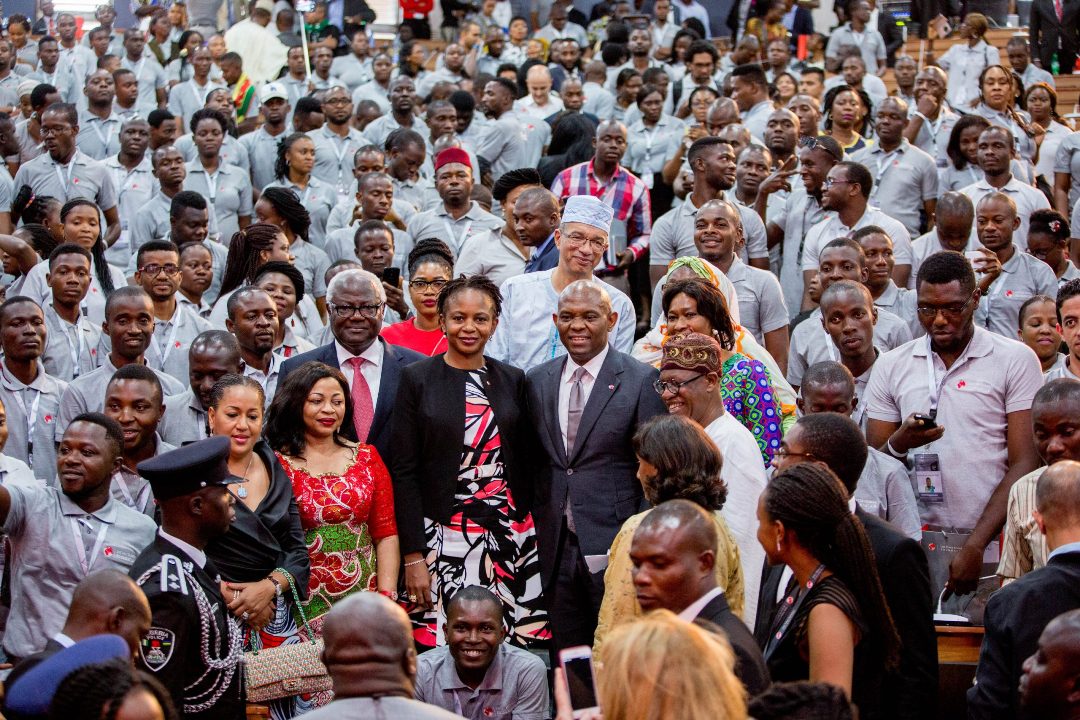
- $130 Million, 27,000 Entrepreneurs, 2.1 Million Lifted from Poverty: TEF CEO’s MSME Day Message Puts Africa’s Entrepreneurship Numbers in Perspective
On a day set aside to celebrate the enterprises that quietly power the global economy, the Tony Elumelu Foundation’s Chief Executive Officer used her World MSME Day message to do something more pointed than celebrate, she put numbers on a decade-long wager on African entrepreneurship, and the numbers demand attention.
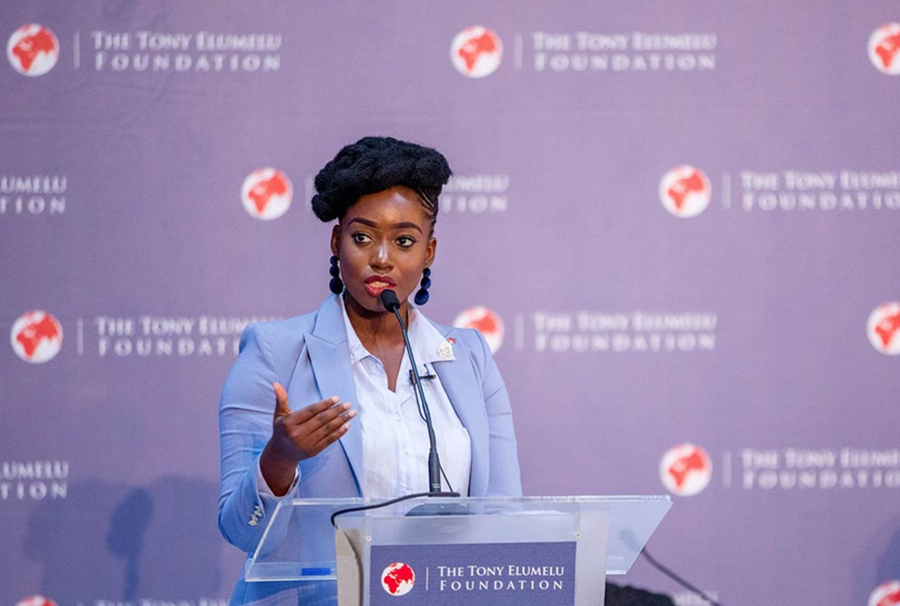
Somachi Chris-Asoluka, CEO of the Tony Elumelu Foundation, marked June 27, 2026, the United Nations’ designated day for recognising micro, small, and medium-sized enterprises, with a message to the Foundation’s entrepreneurship community that doubled as the most comprehensive public accounting of TEF’s decade-long impact the organisation has released to date.
The headline figures are striking: more than 27,000 entrepreneurs supported across all 54 African countries; over 2.5 million Africans reached through training and capacity-building programmes; more than $130 million in seed capital disbursed; over 1.5 million jobs created; more than $4.2 billion in revenue generated by supported businesses; over 4 million households positively impacted; and more than 2.1 million Africans lifted above the poverty line.
Taken together, the numbers describe not a philanthropy programme but an economic intervention at continental scale, one that has delivered a return on its $130 million in seed capital investment that most development finance institutions would find difficult to match.
What the $4.2 billion figure means
The revenue figure is the one that deserves the most analytical attention, because it reframes the standard development narrative around entrepreneurship support.
A $130 million seed capital deployment that has supported businesses generating $4.2 billion in cumulative revenue represents a revenue multiplier of approximately 32 times the capital invested. That ratio, even allowing for the time horizon across which it has accumulated, and even acknowledging that the 27,000 businesses supported vary enormously in scale and survival rates, is a consequential data point in the global conversation about whether entrepreneurship investment is a credible development strategy or a well-intentioned but inefficient use of capital.
The 2.1 million people lifted above the poverty line adds a further dimension. The World Bank’s definition of extreme poverty, income below $2.15 per day, provides the standard against which most poverty reduction claims are measured.
If TEF’s figure is verified against that or a comparable threshold, it would position the Foundation’s entrepreneurship programme among the most cost-effective poverty reduction interventions on the continent on a per-dollar basis.
The context: What MSME Day 2026 was marking
This year’s MSME Day theme, “Empowering MSMEs through Innovation and Sustainable Industrial Development”, arrives at a moment when the African startup and small business ecosystem is navigating a more complex operating environment than at any point in the Foundation’s decade of operation.
African startup funding fell sharply in 2023 and 2024 after the peak years of 2021 and 2022, with venture capital flows to the continent contracting significantly as global interest rates rose and investor risk appetite narrowed.
The entrepreneurs TEF supports many of them operating below the radar of formal venture capital, in sectors ranging from agriculture and healthcare to manufacturing and digital services have faced this tighter environment alongside the structural challenges that have always defined African small business: limited access to affordable credit, infrastructure deficits, currency volatility, and regulatory friction.
Chris-Asoluka acknowledged these headwinds directly in her message, rather than eliding them in the celebration of milestones.
“Many of you continue to face barriers, challenges, and uncertainty,” she wrote. “And still, you persist. You innovate. You adapt. You build.”
That framing, recognising difficulty while affirming resilience, is a more honest register than the unalloyed optimism that characterises much institutional MSME Day messaging, and it reflects a leadership voice speaking from genuine proximity to what African entrepreneurs actually experience.
The AI and technology inflection point
Among the contextual observations Chris-Asoluka offered, her framing of the current technological moment carries particular weight for the startup community.
“Technology is transforming industries. Artificial intelligence is redefining how we work. Climate challenges are reshaping markets and consumer needs. New opportunities emerge faster than ever before,” she wrote, describing a convergence of forces that creates both exceptional opportunity and exceptional competitive pressure for African MSMEs.
For African entrepreneurs specifically, the AI transition presents a dual challenge that their counterparts in more developed markets do not face in the same form. Access to AI tools, digital infrastructure, reliable power, and the connectivity required to deploy and benefit from artificial intelligence remains uneven across the continent.
The entrepreneurs who can navigate that unevenness, who can access and deploy AI tools to reduce costs, reach customers, and improve services, stand to leapfrog entire development stages. Those who cannot risk being left further behind.
TEF’s investment in training and capacity-building, 2.5 million Africans reached, a figure that dwarfs the 27,000 direct seed capital recipients, suggests an institutional awareness that the enablement challenge is broader than funding.
Skills, knowledge, networks, and mentorship are the infrastructure through which capital becomes productive. The Foundation’s scale on the non-financial side of that equation may ultimately be its most durable contribution.
The development finance argument Chris-Asoluka is making
Beneath the celebratory framing of the MSME Day message is a quietly radical argument about where Africa’s development resources should be directed, and who should be trusted to deploy them.
“Africa’s transformation will not be driven by aid alone. It will not be driven by governments alone. It will be driven by entrepreneurs who create value, solve problems, and generate shared prosperity,” Chris-Asoluka wrote.
That argument, made by the CEO of a foundation established by one of Africa’s most prominent private sector voices, is a direct challenge to the development finance orthodoxy that has historically channelled resources toward state institutions and bilateral aid programmes rather than private sector entrepreneurship.
TEF’s decade of data is designed to make that challenge empirically, not merely rhetorically.
Whether the $4.2 billion in revenue and 2.1 million people above the poverty line are sufficient to shift the allocation priorities of governments, multilateral institutions, and development partners toward African MSME investment at the scale the numbers suggest is warranted, that is the policy question TEF’s MSME Day message, perhaps intentionally, leaves open.
What it means for Africa’s startup ecosystem
For the founders, investors, and ecosystem builders who form Techeconomy’s readership, the TEF CEO’s message carries a specific implication beyond the headline numbers: the entrepreneurship infrastructure that TEF has spent a decade building, across 54 countries, spanning agriculture, technology, manufacturing, healthcare, and creative industries, represents a distribution network for ideas, capital, and talent that no single venture capital firm or accelerator programme can replicate.
The 27,000 TEF entrepreneurs who have received seed capital are not merely individual business owners.
They are nodes in an emerging continental entrepreneurship network, connected to each other and to the Foundation’s growing ecosystem of mentors, partners, and alumni. That network effect, the compounding value of 27,000 businesses that share a common institutional origin, training methodology, and access to the Foundation’s convening power, is the asset that the revenue and job creation figures only partially capture.
“The future belongs to those who create it,” Chris-Asoluka closed. “Keep building. Keep innovating. Keep believing. Africa is counting on you.”
For the millions of African entrepreneurs to whom that message was addressed, the Foundation’s decade of numbers suggests the belief is not merely rhetorical. It is, increasingly, evidence-based.
[This post was inspired by Somachi Chris-Asoluka, CEO, TEF’s letter to African entrepreneurs on MSMEs Day 2026]



