



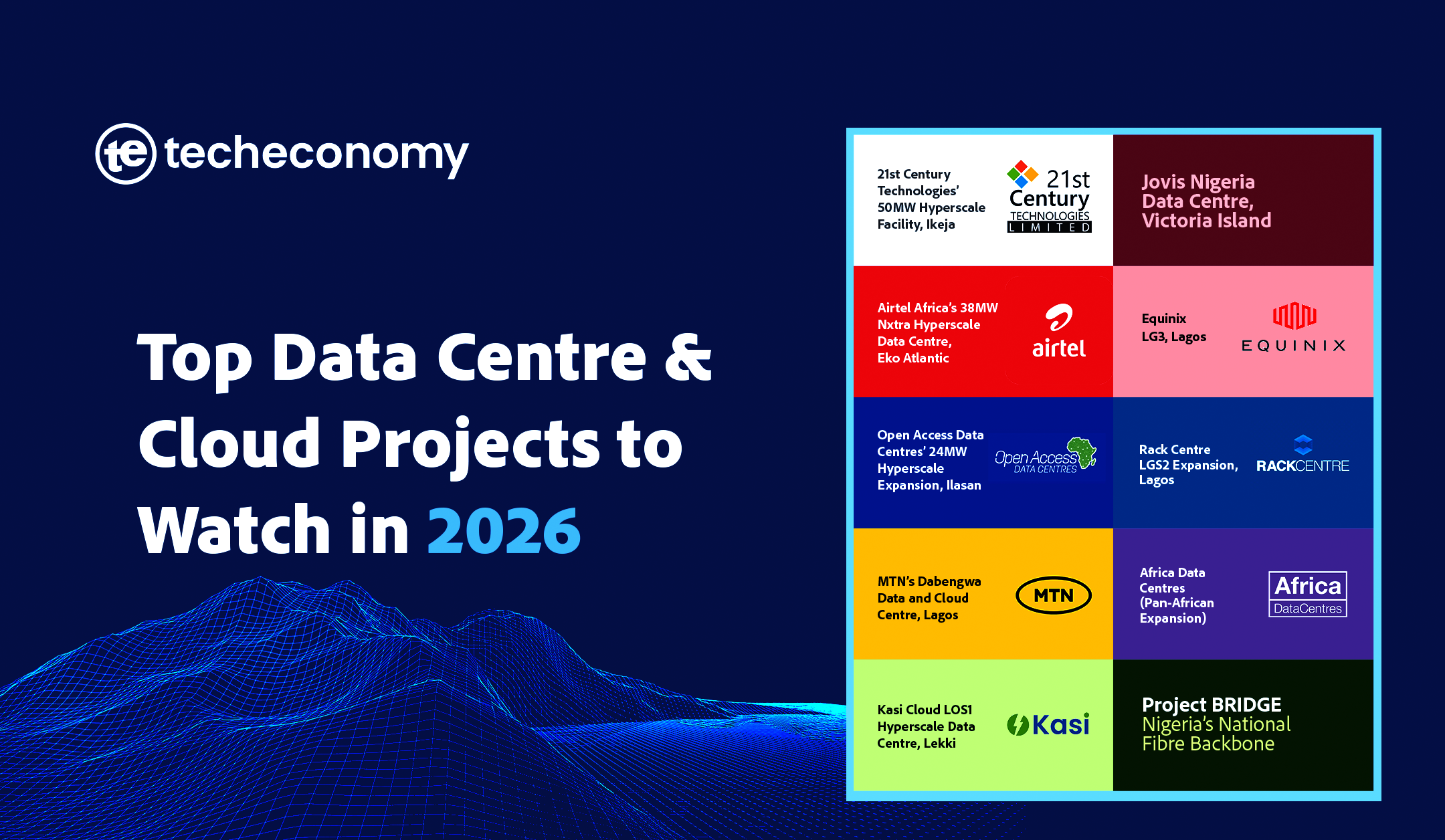
In just two years, Nigeria’s data centre market has moved from slow growth to commendable scale.
Installed capacity, which sat at just under 70MW in 2024, is projected to reach about 330–340MW by 2026, a fivefold expansion that few emerging markets can reach.
That scale of expansion results from high demand from cloud providers, financial institutions, digital platforms and AI-driven services that can no longer depend on offshore infrastructure without paying the price in latency, cost and compliance.
Valued between $280 to 300 million today, the market is expected to approach $670 million by 2030, with investments over $1.7 billion by 2027.
Colocation revenue alone is forecast to grow from about $251 million in 2025 to almost $580 million by 2030, growing at a pace of over 18% a year.
Hyperscale campuses, carrier-neutral sites and well-engineered Tier III and IV facilities designed for dense, powerful workloads are driving this growth.
Interestingly, nearly 70% of new data centre capacity planned for West Africa is being developed locally, anchoring Lagos as the region’s primary hyperscale and interconnection hub.
Supported by nationwide fibre initiatives such as Project BRIDGE, which aims to lay 90,000 kilometres of fibre across the country, and a digital economy projected to contribute up to $180 billion to Africa’s GDP by 2026, the foundations are now in place.
Taken together, these explain why 2026 has a lot in store to look forward to. This is the year Nigeria’s data centre market gains larger scale and competitiveness.
These top data centre and cloud projects to watch in 2026 are laying the foundations for how data, cloud and AI will work in Africa’s largest economy.
1. 21st Century Technologies’ 50MW Hyperscale Facility, Ikeja
What makes 21st Century Technologies’ Ikeja project impossible to ignore in 2026 is not just its size, but its intent. At 50MW, this is one of the largest hyperscale builds in West Africa, but its vision goes deeper.
The facility is being designed for a phase where artificial intelligence, sovereign cloud and national data control are immediate needs. With demand for AI compute increasing across Africa, power and reliability have become the battlegrounds. This project faces that reality head-to-head.
The Ikeja site is engineered to Tier IV standards, with full N+2 redundancy across power, cooling and network layers. That is important because AI and mission-critical cloud workloads do not tolerate downtime. This facility will set a new benchmark for resilience in Nigeria’s data centre market.
Its AI-ready architecture supports both hyperscale cloud providers and enterprises running heavy models locally, reducing dependence on offshore infrastructure and latency-prone routes. With open-access connectivity and a newly deployed regional network gateway, 21CTL is turning Ikeja into a serious interconnection hub.
This is a homegrown Nigerian hyperscale project at a time when most large facilities are foreign-owned. In 2026, data sovereignty will matter more than ever, especially for governments, banks and AI developers working with sensitive datasets.
In combining scale, local leadership and global partnerships, 21st Century Technologies is going beyond adding capacity to laying down infrastructure that supports economic growth, skilled jobs and Africa’s long-term digital independence. That is why this project belongs strongly on any watchlist.
2. Airtel Africa’s 38MW Nxtra Hyperscale Data Centre, Eko Atlantic
Airtel Africa’s Nxtra facility at Eko Atlantic is unique because it is being built for the next wave of computing, not the last one. At 38MW, this carrier-neutral hyperscale data centre expands Nigeria’s capacity at a time when AI workloads are rewriting the laws of data centre design.
High-density racks, GPU-ready halls and serious power planning are now highly indispensable. Nxtra is leaning fully into that transition.
Location is a strategic advantage here. Eko Atlantic provides direct proximity to major subsea cable routes and fibre corridors, translating into lower latency and stronger international reach. For cloud providers and enterprises, this is important.
In 2026, the ability to deploy AI and cloud services locally, while staying tightly connected to global platforms, will define competitiveness. We expect this facility to attract both hyperscalers and regional platforms looking for neutral ground in Lagos’ fast-crowding data centre sector.
Beyond capacity, Nxtra’s importance lies in timing and scale. Backed by over $120 million in investment and scheduled to go live in early 2026, it arrives just as Nigeria’s cloud market enters its next growth phase.
Its targeted power efficiency, multiple substations and regulatory alignment give it an edge with fintechs, telecoms and data-heavy enterprises under pressure to keep data onshore.
This points to the fact that telecom operators now see data centres as core to Africa’s digital economy, not a side business.
3. Open Access Data Centres’ 24MW Hyperscale Expansion, Ilasan
Open Access Data Centres’ Ilasan project earns its place on this list because it solves one of Nigeria’s biggest digital problems, which is connectivity at scale.
Expanding from 2MW to a planned 24MW by 2026, the Ilasan site is designed to serve hyperscalers, cloud platforms and AI-driven enterprises that demand both power and speed. Sitting directly next to the Equiano subsea cable landing station, it provides one of the lowest-latency environments in West Africa.
What truly differentiates this project is its open-access model. Carrier neutrality means choice, and choice drives competition, resilience and better pricing. Through its Open Access Fabric, OADC is effectively collapsing the distance between Lagos and Europe, making global cloud services feel local.
With more workloads staying in-country to meet data protection regulations, facilities like Ilasan become strategic assets rather than simple colocation sites.
The scale of investment, $240 million committed as part of an African expansion plan, cannot be ignored. This project reveals a high confidence level in Nigeria’s digital growth. Sustainability is being built in from the start, with renewable energy integration and efficient design reducing long-term operating risk.
In 2026, success will favour data centres that balance scale, connectivity and cost discipline. OADC’s Ilasan facility does exactly that, positioning Lagos as a regional hub ready to take its place in the global cloud and AI infrastructure map.
4. MTN’s Dabengwa Data and Cloud Centre, Lagos
MTN’s Dabengwa Data and Cloud Centre earns its place on this list of top data centre and cloud projects to watch in 2026 because it represents a transition in how large-scale digital infrastructure is being delivered in West Africa.
Launched in 2025 and already seeing demand outpace supply, the facility is the region’s largest prefabricated modular data centre. That is important in 2026, when speed, flexibility and reliability are no longer nice-to-haves. At full build-out, the centre provides 9MW of Tier III capacity, designed to scale in phases as demand continues to rise.
What’s most interesting is the build approach. Using 96 prefabricated containers across three floors, the centre was designed to deploy faster, expand cleanly and maintain high resilience under pressure.
This is a practical response to Nigeria’s infrastructure situation. The modular design allows MTN to add capacity without long construction cycles, while Tier III certification ensures uptime for cloud, enterprise and public sector workloads. Early adoption by government agencies and enterprises shows that trust is already in place.
In 2026, the Dabengwa Centre will not be judged just by size, but by impact. It is already supporting cloud platforms, fintech services and government systems aligned with Nigeria’s digital economy agenda.
With strong partnerships and deep local market reach, MTN is using this facility to anchor cloud services closer to users and institutions. That combination of scale, speed and adoption is why this project deserves close attention.
5. Kasi Cloud LOS1 Hyperscale Data Centre, Lekki
Kasi Cloud’s LOS1 project is ambitious by any standard, and ambition is exactly why it belongs on this watchlist. Planned as a 100MW hyperscale campus backed by a $250 million investment, LOS1 is designed to operate at a scale Nigeria has not seen before.

In 2026, scale will be more important than ever. Cloud providers and large platforms are no longer looking for incremental capacity. They want room to grow, and LOS1 is being built to provide it.
Location and backing strengthen the case. Situated on the Lekki Peninsula and supported by the Nigeria Sovereign Investment Authority, LOS1 combines strategic geography with sovereign confidence.
The facility is designed as a carrier-neutral interconnection hub, built to attract global cloud platforms while supporting local digital services.
Nigeria is not just a consumer of cloud services, but also a host for regional digital infrastructure.
Sustainability pushes LOS1 even further ahead. With a target of 95% renewable energy usage, the project sets a new benchmark for green hyperscale development in Africa. In 2026, energy efficiency will be a deciding factor for hyperscalers weighing long-term operating costs and risk.
LOS1’s focus on clean power, massive capacity and interconnection makes it a cornerstone project that will change how the world views West Africa.
6. Jovis Nigeria Data Centre, Victoria Island
The Jovis Nigeria Data Centre is among the top data centre and cloud projects to watch in 2026 because it shows where demand is heading, not where it has been.
Located in Victoria Island, the country’s financial and commercial nerve centre, the project seeks to serve banks, fintechs, corporates and digital platforms that need low latency and local hosting.
In 2026, proximity will be essential. Data-heavy services cannot afford distance when speed and compliance are on the line.
This project is also part of a growth wave changing Nigeria’s data centre market. With hundreds of megawatts of new capacity expected by 2026, competition will increase, and only well-located, well-built facilities will thrive.
Jovis benefits from experienced delivery partners and a Tier III design approach that aligns with enterprise and regulatory needs. This is a measured, useful addition to Lagos’ fast-growing infrastructure base.
What makes Jovis one to watch is timing. As data localisation regulations tighten and open banking and digital public services expand, demand for secure domestic hosting will increase.
Facilities like this help reduce reliance on offshore infrastructure while creating local jobs and skills. In 2026, the Jovis Data Centre will not just be another site in Lagos. It will be a pointer to how Nigeria’s digital economy is getting stronger, one project at a time.
7. Equinix LG3, Lagos
Equinix LG3 is key in 2026 because it marks a turning point, not an expansion. This is the first ground-up Equinix facility in West Africa, and it reveals a deeper, long-term commitment to Nigeria as a regional connectivity hub.
While earlier presence came through acquisition, LG3 is purpose-built, designed from day one to integrate Lagos into Equinix’s global interconnection platform. That alone changes how international businesses view Nigeria.
Lagos already sits at the crossroads of multiple subsea cable systems, and LG3 is built to convert geography into economic advantage. By bringing global interconnection services directly into Victoria Island, Equinix is shortening the distance between Nigerian enterprises and global markets.
This facility is expected to become a magnet for multinational firms, cloud platforms and fast-growing local companies that need secure, low-latency access to partners and customers worldwide.
What to watch in 2026 is not just occupancy, but influence. With LG3 going live in the first quarter and backed by a $100 million Africa expansion plan, Equinix is embedding Nigeria into its worldwide fabric of interconnected data centres.
That pushes Lagos from a regional hosting location to a true global exchange point. For the cloud and enterprise market, this is a structural transition, not a headline project.
8. Rack Centre LGS2 Expansion, Lagos
Rack Centre’s LGS2 expansion stands out because it combines scale, sustainability and neutrality in a way few projects in the region can match. At 12MW, it expands the company’s footprint and positions the campus as one of the largest carrier-neutral sites in West Africa.
In 2026, capacity alone will not be enough. Data centres that succeed will be those that can scale responsibly and connect efficiently, and this expansion is designed with that reality in mind.
The sustainability angle is not to be ignored. LGS2 builds on Rack Centre’s green credentials, with energy- and water-efficient design that has already set regional benchmarks. This is becoming more important as operators face high energy expenses and pressure from enterprise customers to meet environmental targets.
The site’s ability to host dense workloads while maintaining efficiency gives it an edge as demand for compute continues to climb.
What makes LGS2 particularly relevant in 2026 is its ecosystem role. With access to all major Atlantic subsea cables and dozens of carriers, Rack Centre is not just adding space, it is strengthening Lagos’ place as an interconnection hub.
With more data required to stay within national borders, facilities like this will anchor Nigeria’s digital sovereignty while supporting cloud growth at scale.
9. Africa Data Centres (Pan-African Expansion)
Africa Data Centres earns its place on this list not because of a single site, but because of its reach. In 2026, the story will move from isolated facilities to networks, and ADC is building one of the largest carrier-neutral footprints on the continent.
Its expansion across Nigeria, Kenya, South Africa, Morocco and other key markets makes it a backbone in Africa’s digital economy.
Demand is the driver. Internet usage, digital payments, enterprise cloud adoption and content consumption are all accelerating, and latency is no longer acceptable. Hosting workloads closer to users is becoming essential.
ADC’s strategy is a direct response to that pressure. Creating interconnected hubs across multiple countries, it enables cloud providers and enterprises to deploy regionally while staying compliant with local data rules.
In 2026, ADC’s importance will be measured by how seamlessly it links markets. Its facilities are designed to support hyperscale platforms, financial services and governments that need reliability and choice.
Africa’s data centre capacity is expanding, and ADC’s pan-African model doesn’t just make it a landlord, but an enabler of cross-border digital trade and growth.
10. Project BRIDGE – Nigeria’s National Fibre Backbone
Project BRIDGE belongs on this list because data centres do not operate in isolation. Fibre is the silent dependency, and in 2026 this project will determine how far Nigeria’s cloud ambitions can really go.
By planning to roll out 90,000 kilometres of open-access fibre, BRIDGE addresses the single biggest limitation facing large-scale digital infrastructure, and that is national connectivity.
What makes BRIDGE different is reach. While most data centre projects are clustered around Lagos, this initiative extends high-capacity connectivity to all 774 local government areas.
That changes the economics of cloud services. This is the moment when data centres stop serving only coastal markets and begin supporting nationwide digital services in health, education, finance and public administration.
In practical terms, BRIDGE is the foundation beneath every hyperscale build planned for 2026 and beyond. Without reliable fibre backhaul, scale is theoretical.
With it, cloud platforms can provide consistent performance across the country. For investors and operators, this project is the infrastructure that makes every other project on this list viable.