


ADVERTISEMENT
Monday, June 15, 2026
Tech | Business | Economy
No Result
View All Result
  • Technology
    • Trends
    • Telecoms
      • Broadband
    • ConsumerTech
      • Gadgets and Appliances
      • Apps
      • Accessories
      • Reviews
      • Unboxing
    • EnterpriseTECH
    • Security & Data Protection
    • How To
  • Business
    • Company News
    • StartUPs
      • Founder’s Story
      • Funding
    • Deals
    • People & Moves
    • SME & Entrepreneur Focus
    • BUSINESS SENSE FOR SMEs
    • Competition & Market Positioning
    • Commerce & Mobility
    • Travel
    • WomenPreneurs
  • Economy
    • Macroeconomic Trends
      • Macro Monday
      • TE Insights
    • Finance
      • Banks
      • Fintech
      • Insurance
      • Digital Assets
      • Personal Finance
    • Policies
      • Tech & Society
    • Market Analysis
    • Jobs & Workforce Economy
  • Features
    • Guest Writer
      • Chidiverse
      • Digital Assets
      • GameTech
    • EventDIARY
    • IndustryINFLUENCERS
    • MarkTECH
    • TBS
    • NewsEXTRA
  • Editorial
  • Brand Content
  • TECHECONOMY TV
Monday, June 15, 2026
Tech | Business | Economy
No Result
View All Result
Tech | Business | Economy
No Result
View All Result

Home » TSA & Remita: 7 Quick Facts Every Nigerian Should Know

TSA & Remita: 7 Quick Facts Every Nigerian Should Know

Latifat Fashina by Latifat Fashina
May 13, 2025
in Fintech
Reading Time: 2 mins read
0
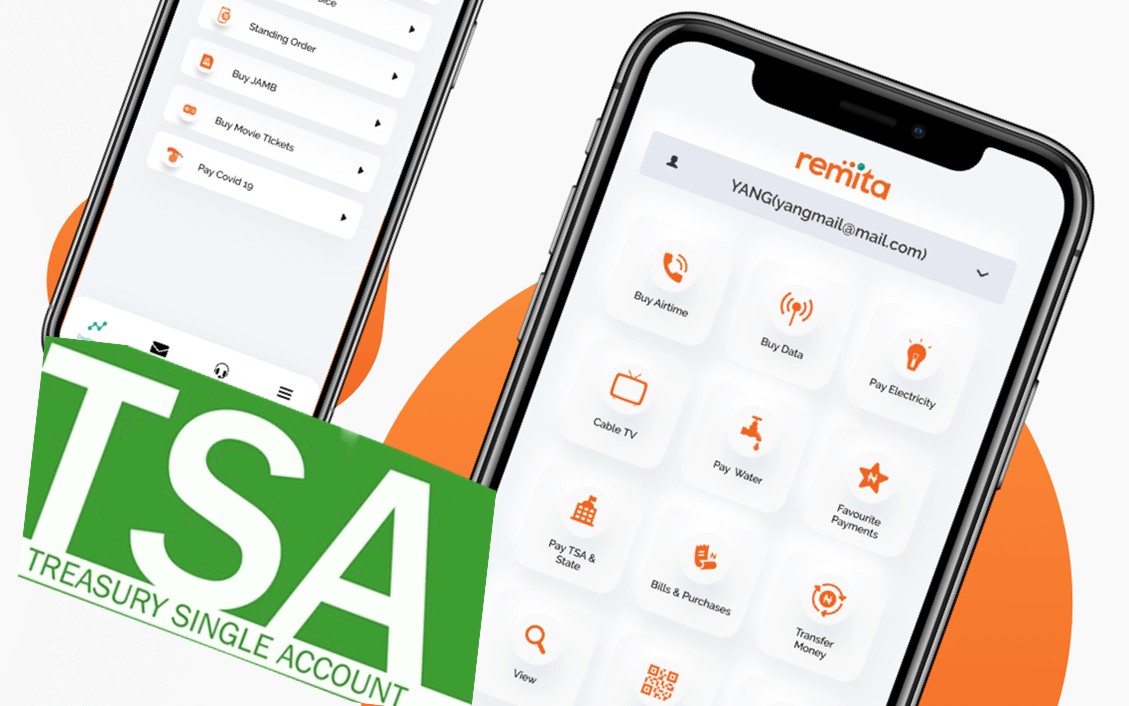
Remita and TSA

Remita | TSA

Public conversations around the Treasury Single Account (TSA) have resurfaced. This makes it crucial for Nigerians to understand how the TSA contribute to fiscal transparency and financial efficiency.

  1. TSA Was Designed to Centralise Public Funds and Block Leakages: Introduced in 2011 and fully implemented in 2015, the TSA was established to consolidate government revenues into a single account at the Central Bank of Nigeria (CBN). It replaced a disjointed system that enabled mismanagement and leakages.
  2. Remita Was Chosen After Transparent Bid: Originally developed by SystemSpecs and now operated by Remita Payment Services Limited, Remita was selected after a major bid process that included international companies.
  3. Saves Nigeria billions of Naira in monthly interest payments: Over 17,000 accounts held by MDAs across commercial banks were shut down after TSA implementation, reducing duplication, waste, and administrative costs. Nigeria saved ₦45 billion monthly in interest payments
  4. TSA Enables Real-Time Visibility and Accountability: With Remita’s integration, government agencies can monitor inflows and outflows in real time. This enhances compliance with budgets and reduces the potential for fraud.
  5. TSA Reinforces Fiscal Discipline in Government Spending: Funds in the TSA can only be accessed after legislative appropriation, preventing unauthorised withdrawals and enforcing fiscal discipline.
  6. TSA in Nigeria Has Been Endorsed locally and Internationally: Nigeria’s TSA implementation has been recommended by the local private and public institutions, and World Bank as a model of best practice. Remita proved that indigenous solutions can solve complex national problems
  7. Remita Facilitates Payments Without Holding Government Funds: Remita functions as a payment gateway. It does not keep, invest, or control public money. All payments flow directly into the CBN.

The TSA remains one of the most transformative public finance reforms in Nigeria’s history. In these times of economic uncertainty, the TSA is more than a fiscal tool.

It is a strategic national asset that demands consistent institutional commitment, recognition of local innovation, and a genuine effort to uphold accountability and fairness in public-private partnerships.


0Shares
Previous Post

TikTok Rolls Out AI Tool That Animates Photos into Videos

Next Post

TechX Africa 2025: ATC Africa Leads Dialogue on Homegrown Solutions for Digital Growth

Latifat Fashina

Latifat Fashina

LATIFAT FASHINA is the Business/Finance Reporter at Techeconomy. She can be reached via: latifat.fashina@techeconomy.ng

Related Posts

Winston Osuchukwu | Infrastructure Gaps Nigerian Lenders Can’t Ignore

Thee Infrastructure Gaps Nigerian Lenders Can’t Afford to Ignore 

June 12, 2026
Yuno Partners Onafriq

Yuno Integration with Onafriq Opens 43 African Markets and One Billion Mobile Wallets to Global Merchants

June 9, 2026

Monnify Processes ₦25 trillion Transactions in 2025, in Steps into the Spotlight

June 9, 2026
Load More
Next Post
ATC Africa

TechX Africa 2025: ATC Africa Leads Dialogue on Homegrown Solutions for Digital Growth

Leave a Reply Cancel reply

Your email address will not be published. Required fields are marked *

I agree to the Terms & Conditions and Privacy Policy.

This site uses Akismet to reduce spam. Learn how your comment data is processed.

TECHECONOMY YOUTUBE CHANNEL

  • About Us
  • Careers
  • Contact Us
  • Privacy Policy

© 2026 TECHECONOMY.

No Result
View All Result
  • Technology
  • Business
  • Economy
  • Features
  • Editorial
  • Brand Content
  • TECHECONOMY TV

© 2026 TECHECONOMY.

This website uses cookies. By continuing to use this website you are giving consent to cookies being used. Visit our Privacy and Cookie Policy.

