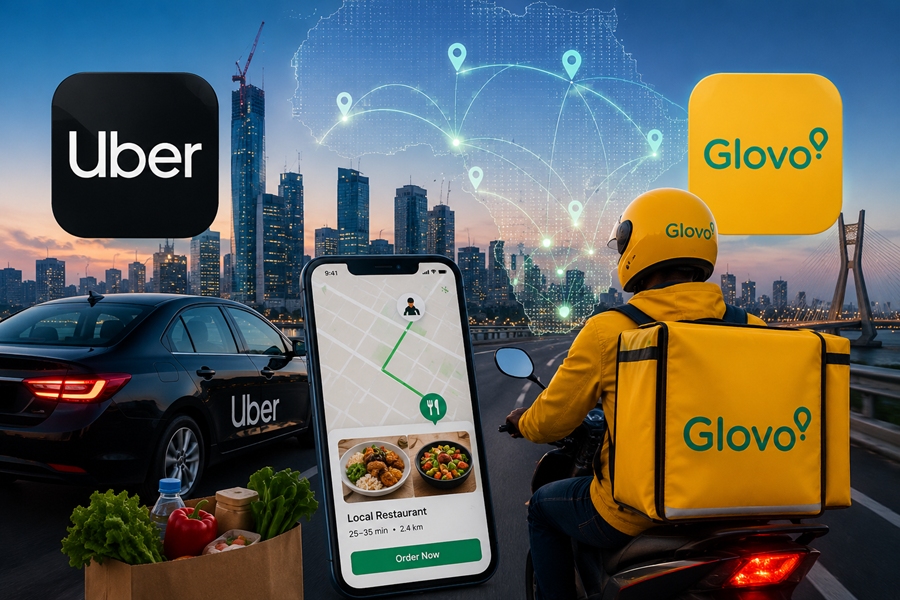
Uber’s proposed $14.8 billion acquisition of German food delivery giant Delivery Hero could have far-reaching implications for Nigeria’s digital commerce ecosystem, potentially bringing one of the world’s biggest mobility companies into direct control of Glovo Nigeria, one of the country’s leading food and grocery delivery platforms.
The all-cash offer values Delivery Hero at €41.50 per share and would expand Uber’s food delivery footprint to nearly 100 markets worldwide, strengthening its position against global rivals including DoorDash, Just Eat Takeaway and Meituan.
Although Uber currently operates ride-hailing services in Lagos and Abuja, it does not run Uber Eats in Nigeria.
Delivery Hero, however, owns Glovo, which has become one of Nigeria’s fastest-growing on-demand delivery platforms, offering restaurant meals, groceries, pharmaceuticals and retail deliveries through thousands of local merchants.
If regulators approve the acquisition, Uber would inherit Delivery Hero’s operations across Africa, including Nigeria, giving the company an immediate foothold in the country’s expanding quick-commerce market.
Industry analysts say the deal could introduce:
- Stronger investment in logistics technology.
- Faster delivery powered by AI and route optimisation.
- More merchant partnerships.
- Increased competition in Nigeria’s last-mile delivery ecosystem.
Digital commerce race intensifies
Nigeria’s food delivery sector has witnessed significant growth over the past five years, driven by rising smartphone penetration, digital payments and urbanisation.
Besides Glovo, operators including Chowdeck, Heyfood and FoodCourt continue to compete for consumers seeking convenience in major cities.
An Uber-backed Glovo could further intensify competition by combining Uber’s expertise in mobility, mapping, payments and logistics with Delivery Hero’s established merchant network.
Regulatory hurdles remain
The acquisition is expected to face antitrust scrutiny in several jurisdictions because of the combined company’s market share.
To ease regulatory concerns, Delivery Hero plans to divest operations in 14 overlapping markets to investment firm SSW Partners before the transaction is completed, which Uber expects in the second half of 2027.
Why Nigerians should care
While the acquisition is global, Nigeria could emerge as one of its biggest African beneficiaries.
For consumers, the deal could translate into improved delivery experiences, expanded merchant options and stronger investment in local logistics infrastructure.
For startups, it reinforces growing investor confidence in Africa’s digital commerce sector, where competition is increasingly shifting beyond ride-hailing into integrated mobility, food delivery and local commerce.