


For many Nigerians living with albinism, the greatest struggle is not their skin sensitivity, fragile eyesight or the scorching sun, it is being seen, heard and treated as complete human beings.
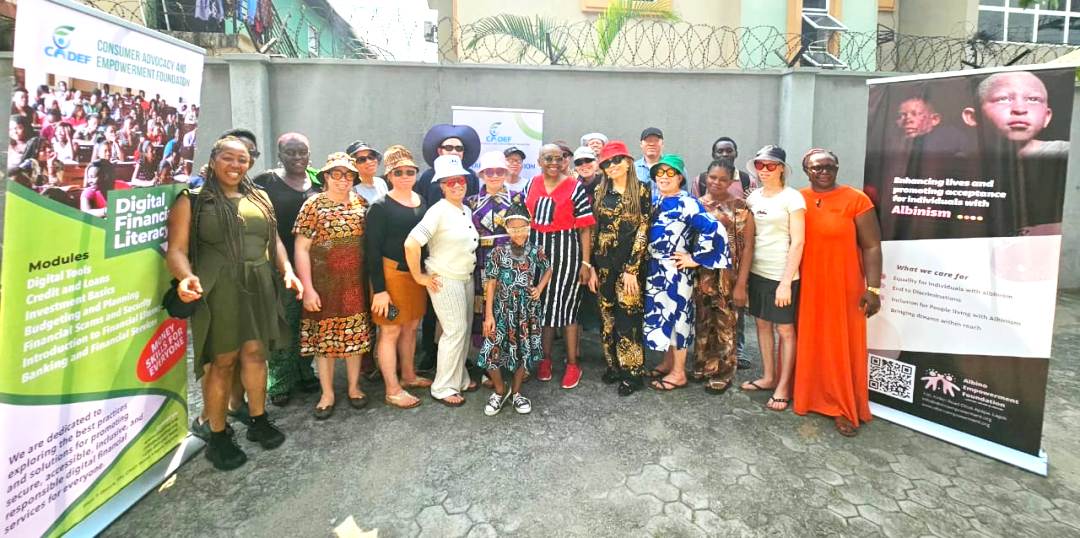
That truth echoed powerfully last Saturday when the Consumer Advocacy and Empowerment Foundation (CADEF) partnered with the Albino Empowerment Foundation to host an empowerment and listening session for Persons Living With Albinism (PLWA).
What unfolded was not a charity event defined by handouts, but a deeply human gathering shaped by lived experiences, courage and a collective demand for dignity.
Speaking at the event, Professor Chiso Ndukwe-Okafor, CADEF’s executive director, set the tone.
She stressed that real progress only becomes possible when people are respected and included, not pitied. While relief items such as food, protective clothing and materials to address skin and eye care were shared, she noted that the most powerful moments came when participants spoke for themselves.
“They reminded us that dignity begins when people are seen fully and treated equally,” she said, adding that self-awareness and knowledge of fundamental human rights are essential tools for self-advocacy.
According to her, understanding one’s rights equips people to demand fairness, inclusion and accountability, a principle CADEF holds firmly in its belief that an informed consumer is an empowered one.
The voices from the room made that point unmistakably clear.
Speaking on the broader meaning of inclusion, Ifeoma Ngesina, founder of the Albino Empowerment Foundation, said inclusion for persons with albinism is fundamentally about dignity and equal rights.
“It is about being seen, being heard and being part of decisions that affect our lives, not being reduced to stereotypes or treated as weak simply because of our skin,” she said.
Ngesina noted that much of the discrimination faced by persons with albinism is driven by myths and rumours, compounded by insufficient public enlightenment.
“But when persons with albinism are included in schools, workplaces, leadership spaces and the media, those harmful beliefs begin to fade,” she added.
According to her, inclusion goes beyond access to opportunities; it builds confidence, nurtures leadership and reinforces the truth that every person, regardless of appearance, has value and potential.
Ms. Kobi Ikpo, an Advisory Board Member of CADEF, challenged participants to take ownership of how society relates with them.
“If you do not tell people how to treat you, they will not know how to address you,” she said. In her view, the time for endless complaints has passed; what is needed now is experience-sharing, education and confident self-presentation. “Once you accept yourself as a complete human being deserving of respect, it reflects in how you carry yourself, and that confidence commands respect.”
For Afolake Odudinu, the conversation turned to the harsh realities many families still face. She highlighted how lack of parental enlightenment continues to shape the future of children with albinism.
Some struggle in school not because they lack intelligence, but because poor eyesight is misunderstood as dullness. Too often, such children are withdrawn from school and pushed into lifelong disadvantage.

She recalled a painful encounter with an albino woman selling bottled water under the scorching sun, her skin badly damaged.
“Sometimes all you can do is pray,” she said, noting that skin cancer treatment in Nigeria remains out of reach for many.
Beyond education and health, Odudinu also spoke about social and marital challenges, where stigma still shadows many albinos seeking companionship and family life.
Another strong intervention came from Efosa Peter, who warned that empowerment without sincerity is dangerous.
He shared how he once joined an organisation claiming to empower albinos, only to discover it had become political, with resources never reaching those who needed them most.
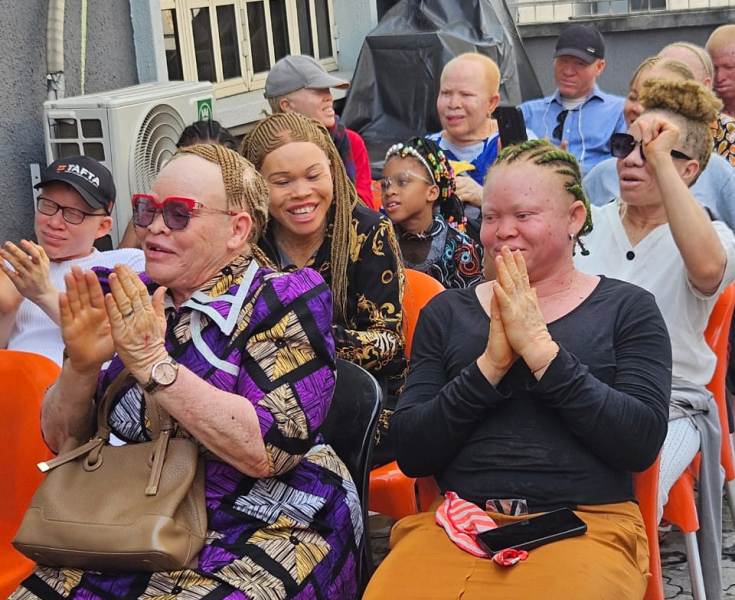
“I hate pity. I don’t want to be pitied, I want empowerment,” he said firmly.
Peter described persons with albinism as uniquely gifted with creativity and deep thinking, urging leaders to ensure empowerment initiatives are driven by genuine motives.
As a father of three and an associate pastor, he recounted moments of raw ignorance, including people insisting on checking his newborn child for albinism, and stressed that confidence built through self-development is key to overcoming such encounters.
“Empowerment must include self-esteem and self-motivation,” he said. “Many people withdraw because of past experiences. When you see yourself as whole, others will follow.”
Education emerged again as a powerful equaliser in the story shared by Rose Adudu, now a teacher. She spoke of severe bullying during her school years, sometimes from teachers themselves. Yet, guided by a fearless father, she resolved early to excel academically.
Her discipline, she said, shaped her life and now informs how she mentors younger people. She recounted helping to enrol a young albino girl in school after engaging teachers and school leadership, though the child was later withdrawn by her parents. Still, that effort led to additional support staffing, proving that advocacy, even when imperfect, can spark change.
“Your character will speak for you,” Adudu said, recalling how she faced rejection from her husband’s family before her values eventually won acceptance.
The closing message to participants was both spiritual and practical. Discrimination, they were reminded, exists everywhere, even beyond Nigeria’s borders. Yet every individual has a purpose and a mark to leave on the world. Content creators were encouraged to use their platforms to educate while entertaining, leveraging digital tools to challenge myths and shift perceptions.
For CADEF and the Albino Empowerment Foundation, the event is not a one-off gesture. Plans are already underway to make it an annual programme held at the start of each year.
Beyond that, CADEF says it is advancing work on Digital Financial Inclusion Rights for Persons With Disabilities, reinforcing its commitment to inclusion that is intentional, not optional.
What stood out most from the gathering was a simple but powerful message: people living with albinism do not want sympathy, they want opportunity, understanding and respect. And when society listens, not with pity but with purpose, real inclusion becomes possible.