ADVERTISEMENT
Tuesday, June 2, 2026
Tech | Business | Economy
No Result
View All Result
  • Technology
    • Trends
    • Telecoms
      • Broadband
    • ConsumerTech
      • Gadgets and Appliances
      • Apps
      • Accessories
      • Reviews
      • Unboxing
    • EnterpriseTECH
    • Security & Data Protection
    • How To
  • Business
    • Company News
    • StartUPs
      • Founder’s Story
      • Funding
    • Deals
    • People & Moves
    • SME & Entrepreneur Focus
    • BUSINESS SENSE FOR SMEs
    • Competition & Market Positioning
    • Commerce & Mobility
    • Travel
    • WomenPreneurs
  • Economy
    • Macroeconomic Trends
      • Macro Monday
      • TE Insights
    • Finance
      • Banks
      • Fintech
      • Insurance
      • Digital Assets
      • Personal Finance
    • Policies
      • Tech & Society
    • Market Analysis
    • Jobs & Workforce Economy
  • Features
    • Guest Writer
      • Chidiverse
      • Digital Assets
      • GameTech
    • EventDIARY
    • IndustryINFLUENCERS
    • MarkTECH
    • TBS
    • NewsEXTRA
  • Editorial
  • Brand Content
  • TECHECONOMY TV
Tuesday, June 2, 2026
Tech | Business | Economy
No Result
View All Result
Tech | Business | Economy
No Result
View All Result

Home » Volkswagen, Uber Partner to Launch Commercial Robotaxi Fleet in U.S. by 2026

Volkswagen, Uber Partner to Launch Commercial Robotaxi Fleet in U.S. by 2026

Joan Aimuengheuwa by Joan Aimuengheuwa
April 24, 2025
in Commerce & Mobility
Reading Time: 2 mins read
0
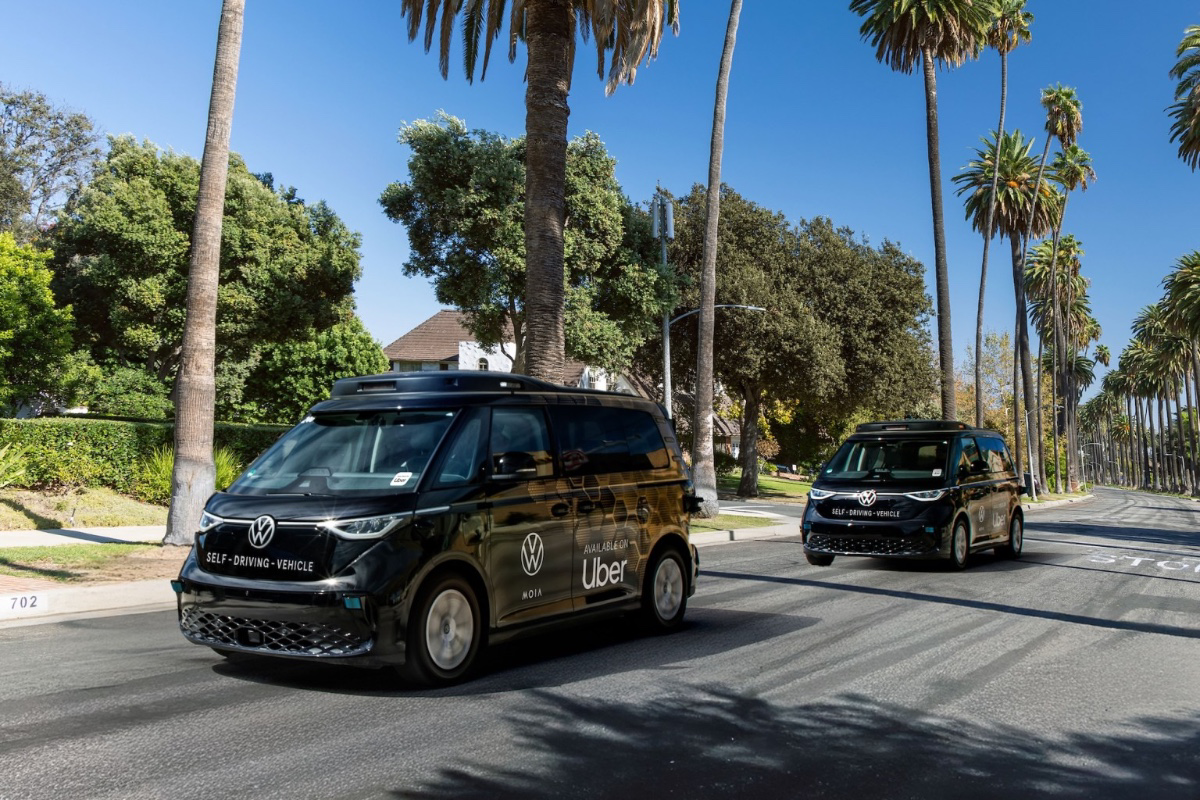
Volkswagen, Uber to Launch Commercial Robotaxi

Source: Volkswagen

Volkswagen of America and Uber have revealed plans to deploy a fleet of autonomous electric vans in Los Angeles by the end of 2026. 

The vehicles — retro-styled ID. Buzz vans fitted with self-driving technology — will serve as the backbone of a robotaxi service set to begin commercial operations with human safety operators before transitioning to full autonomy a year later.

Testing begins this year. Approval from California’s Department of Motor Vehicles is the first phase. Once that’s secured, Volkswagen’s autonomous subsidiary, Volkswagen ADMT, will start test drives on public roads in LA.

Regulatory clearance from the California Public Utilities Commission will also be needed to run the ride-hailing service commercially.

The vehicles won’t be fully autonomous at launch. For at least a year, there will be trained operators behind the wheel. “Each step will proceed only after any necessary regulatory approvals have been received,” a company spokesperson confirmed.

Subscribe to our Telegram channel for the latest updates.

Follow the latest developments with instant alerts on breaking news, top stories, and trending headlines.

Join Channel

Volkswagen is being cautious, calculated, and regulatory-compliant and this isn’t its first attempt at self-driving. After its investment in Argo collapsed alongside Ford’s, Volkswagen pivoted.

It turned to Mobileye, the autonomous tech company now powering the ID. Buzz’s self-driving system. The two companies are now tightly aligned. Volkswagen ADMT kicked off its first autonomous testing programme in Austin last year with a fleet of 10 vehicles.

Uber, meanwhile, has been busy sewing partnerships across the industry. From Waymo in Austin to other AV firms in delivery and freight, the ride-hailing giant is hedging its future on autonomy — but not on exclusivity. This collaboration with VW adds yet another company to its ecosystem of autonomous suppliers.

Volkswagen’s plan goes beyond building the cars, it’s also betting on providing the tech and software infrastructure for robotaxi fleets at scale.

Christian Senger, CEO of Volkswagen Autonomous Mobility, said: “Volkswagen is not just a car manufacturer — we are shaping the future of mobility, and our collaboration with Uber accelerates that vision. What really sets us apart is our ability to combine the best of both worlds—high-volume manufacturing expertise with cutting-edge technology and a deep understanding of urban mobility needs.”

The ID. Buzz AD, the star of this new project, is not a new experiment. Volkswagen’s development of the self-driving variant stretches back to 2021. The vehicle features 13 cameras, nine LIDARs, five radars, and redundant systems across critical functions like braking, steering, and power.

Testing originally began in Germany and only recently expanded to the U.S. The aim is to introduce thousands of these vehicles across major American cities within the next ten years.

Volkswagen is being careful. It has made no promises about which cities are next, but it’s clear that LA is only the beginning.

For now, the ID. Buzz remains a rare sight. Only 1,162 units were sold in the U.S. in 2024, and 1,901 more followed in early 2025.

0Shares
MTN Live It 100 Thematic Campaign
Previous Post

ADMIRe: Coalition Set to Tackle the Hidden Crisis of Medical Equipment Waste

Next Post

Moving Africa from Aid to Investment

Joan Aimuengheuwa

Joan Aimuengheuwa

Joan thrives at helping individuals and businesses scale via storytelling...

Related Posts

inDrive campaign against bullying

inDrive Launches Global Social Initiative Against Bullying

June 2, 2026
UAE–Nigeria partnership

UAE–Nigeria Partnership: Building a New Era of Trade, Innovation and Shared Prosperity

May 29, 2026

How Abu Dhabi Funds Minna – Bida Road Project in Nigeria

May 28, 2026
Load More
Next Post
Moving Africa from Aid to Investment by AfDB

Moving Africa from Aid to Investment

Leave a Reply Cancel reply

Your email address will not be published. Required fields are marked *

I agree to the Terms & Conditions and Privacy Policy.

This site uses Akismet to reduce spam. Learn how your comment data is processed.

Techeconomy Podcast
Techeconomy Podcast

The Techeconomy Podcast is a thought-leadership show exploring the powerful intersection of technology, business, and the economy, with a strong focus on Africa’s fast-evolving digital landscape.

Financing the Future: Venture Debt, Local Capital & African Innovation | TBS May 2026 Webinar
byTecheconomy

Africa’s innovation ecosystem is evolving, but where will the funding for the next generation of startups come from?

In this edition of the Techeconomy Business Series (TBS) May 2026, industry experts explore how local capital, venture debt, and smarter investment structures are redefining startup growth and innovation across Africa.

🎙️ Featured Speakers:

* Ebunoluwa Ashley-Dejo

* Damilare Davola

* Success Ajilore (STN & Accelerated Plus)

Key conversations in this webinar include:

✔️ The future of startup financing in Africa

✔️ Venture debt and alternative funding models

✔️ The role of local investors in scaling innovation

✔️ Sustainable investment strategies for African startups

✔️ Opportunities and challenges in the African tech ecosystem

Subscribe for more conversations shaping Africa’s digital economy and innovation landscape.

#TBS2026 #AfricanInnovation #VentureDebt #StartupFinance #TechInAfrica #Techeconomy #AfricanStartups #InnovationEconomy

Financing the Future: Venture Debt, Local Capital & African Innovation | TBS May 2026 Webinar
May 27, 2026
Techeconomy
PROTECTING INNOVATION IN AFRICA’S STARTUP ECOSYSTEM
April 29, 2026
Techeconomy
BUILDING TRUST IN AFRICA ECOSYSTEM
February 27, 2026
Techeconomy
Navigating a Career in Tech Sales
January 29, 2026
Techeconomy
How Technology is Transforming Education, Health, and Business
November 27, 2025
Techeconomy
Search Results placeholder
MTN Live It 100 Thematic Campaign
ADVERTISEMENT
  • About Us
  • Careers
  • Contact Us
  • Privacy Policy

© 2026 TECHECONOMY.

No Result
View All Result
  • Technology
  • Business
  • Economy
  • Features
  • Editorial
  • Brand Content
  • TECHECONOMY TV

© 2026 TECHECONOMY.

This website uses cookies. By continuing to use this website you are giving consent to cookies being used. Visit our Privacy and Cookie Policy.