



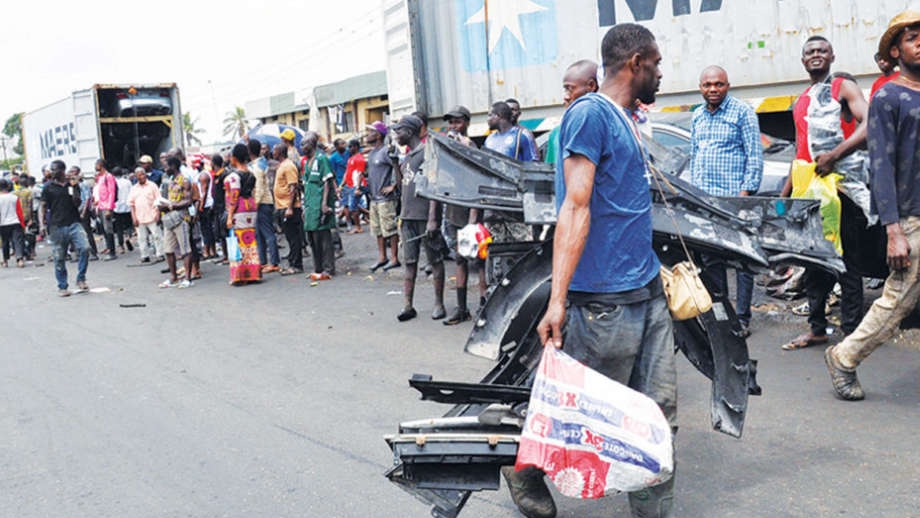
Lagos does not wake up smelling foul. It is made to. On a recent drive past a popular bus stop, I saw a commercial bus driver leaning casually against the back of his danfo, relieving himself in full public view.
A few metres away, commuters stood waiting for their ride, some covering their noses, others pretending not to notice. The smell hung stubbornly in the air.
Yet, we ask: Why do bus parks stink?
One can walk into many of our well-known markets, Oshodi, Mile 12, Oyingbo, Ajah, Ikotun and even parts of Balogun, before you see the traders, before you hear the bargaining, the stench greets you.
The sharp, choking smell of urine baked into concrete by years of neglect.
It is easy to blame the government. It is fashionable to accuse the system. But the uncomfortable truth is this: we are the reason Lagos stinks.
Public urination in Lagos has become disturbingly normalised. From bus conductors to traders, from street hawkers to pedestrians caught in traffic, too many people see nothing wrong in turning walls, gutters, and street corners into makeshift toilets.
It is not just about a lack of facilities, though that is part of the problem. It is also about attitude.
Some markets have toilets, but many traders refuse to use them because they cost ₦50 or ₦100. Some bus parks have facilities, but drivers claim they are too far or poorly maintained. Convenience now trumps decency.
Let us be honest: infrastructure gaps worsen the problem.
Lagos, a city of over 20 million people, does not have enough accessible, functional, and affordable public toilets. In many bus terminals and informal parks, there are none. In several markets, the facilities are inadequate, broken, or unsanitary.
Where toilets exist, maintenance is often poor. Broken doors, no running water, blocked pipes, and filthy floors discourage use. The result? People resort to the nearest wall or gutter.
The real challenge is that urban planning has not kept pace with population growth. Informal settlements and roadside commercial clusters spring up without sanitation planning.
Motor parks expand without structured facilities. Markets grow organically, but hygiene infrastructure does not grow with them.
The environment pays the price.
This is not merely about bad odour. It is a public health crisis.
In densely populated areas like Lagos, poor sanitation spreads illness rapidly. Children playing near contaminated drains are exposed. Food vendors operating close to polluted gutters unintentionally put customers at risk.
The World Health Organisation consistently links poor sanitation to preventable diseases. Lagos cannot aspire to be a global city while tolerating basic hygiene failures.
Lagos brands itself as Africa’s economic powerhouse. Investors are courted. Tourism is promoted. Conferences and international events are hosted.
But what impression does a visiting investor form when a bus stop smells like an open sewer? Clean cities attract capital. Orderly environments signal seriousness. Filthy public spaces communicate indifference.
The truth is that a city that smells bad pays for it, financially and reputationally.
Sanitation is not just technical; it is moral.

Solving this problem requires both behavioural reform and systemic intervention.
We must start with a massive investment in public toilet infrastructure. This is not rocket science. If we want more people to use toilets, build more toilets.
The Lagos State Government, in partnership with local councils and private investors, must dramatically increase the number of clean, affordable public toilets across bus stops, markets, and transport corridors.
A public-private partnership (PPP) model would work well with technology deployed for cashless payment, sensor-based cleaning schedules, and digital reporting systems.
The toilets must be visible, accessible, and affordable.
Secondly, consistent and humane enforcement of sanitation laws. Lagos has environmental laws. It is time to enforce them.
Environmental health officers should patrol high-risk areas. Fines for public urination must be applied without bias. When a few offenders are penalised publicly and fairly, behaviour begins to shift.
Thirdly, the market and transport union must own their space. The National Union of Road Transport Workers (NURTW) and market leadership bodies should enforce hygiene rules within their domains.
They can mandate toilet use, provide internal sanitation marshals, and impose penalties on erring members.
Peer regulation often works better than external policing.
In addition, behavioural change campaigns are indispensable. I am thinking of a sustained, aggressive public awareness campaign.
Billboards, radio jingles, social media campaigns, schools, religious institutions and community engagement programmes must push a simple message: Public space is your space.
Singapore transformed its sanitation culture through consistent public education and strict enforcement. Lagos can learn.
And lastly, building toilets is not enough. Maintenance determines usage. There must be clear accountability: who cleans, how often, and who inspects?
Data-driven monitoring, using simple reporting apps or community feedback systems, can help identify failing facilities quickly.
This is the reality: Clean facilities encourage usage. Dirty ones encourage walls.
Today, Lagos stands at a crossroads.
It cannot aspire to smart-city status while tolerating unsanitary practices. It cannot preach megacity ambition while bus parks reek of neglect.
But change is possible. Cities do not smell by accident. They smell by habit. If Lagos must smell different, we must behave differently.
The solution is not complicated.
It starts with us!
*Elvis Eromosele, a corporate communications expert and sustainability advocate, wrote via: elviseroms@gmail.com