


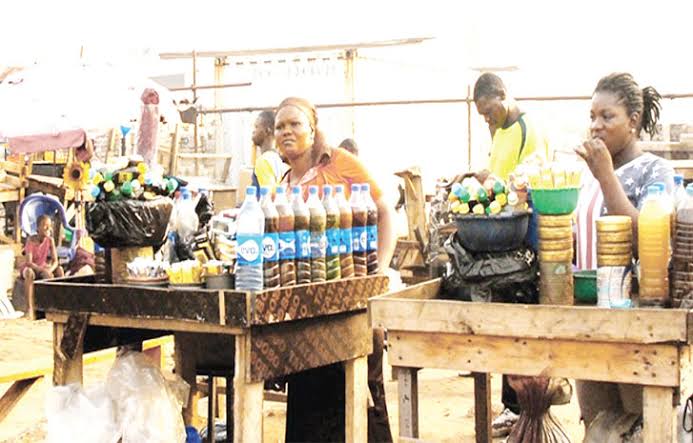
Street hawking has been a prevalent phenomenon in Lagos for decades, driven by the need to address societal challenges such as unemployment, poverty, and accessibility to consumer goods.
According to the National Bureau of Statistics, a significant number of Lagos’ estimated 11 million “micro enterprises” rely on street selling as their primary source of income.
Many of these vendors who have not received formal education, face potential crises due to imminent clampdown. Their ability to make ends meet becomes even more challenging.
Currently, the Lagos State Government, through the Lagos Environmental Sanitation Corps (LAGESC), is adamant about clamping down on roadside hawkers, street trading, and alcohol sales in various public spaces.
Reasons
One of the primary motivations for the clampdown is the desire to eliminate what the government perceives as an environmental menace. The state government is committed to enforcing existing environmental laws and eradicating activities that violate these laws.
Street trading on prohibited areas like roadsides, pedestrian bridges, setbacks, medians, and major highways is considered illegal. The government insists that these activities contribute to environmental degradation and disrupt the orderliness of the city.
Henry Okoli, a UK-based Business Analyst said street hawking is a common practice in most developing countries, and had to do it when he was young.
“I hated it. I was shy and found the whole experience very embarrassing and traumatic at times.”
Every time I see children hawking in the streets I feel so much anger and sadness as I can’t help but imagine that an entire generation is being wasted. I think of the opportunity cost for the nation and opportunities lost for the kids, Henry added.
Additionally, the government expresses concerns over the sale and consumption of alcoholic drinks by motorists at parks, garages, and roadsides. The Lagos State Government, along with agencies like the Federal Road Safety Corps (FRSC), has been campaigning against drinking and driving to reduce road accidents.
It is believed that consuming alcoholic drinks before or while driving increases the risk of accidents. However, the continued sale of alcoholic beverages in parks, despite the ban, encourages commercial vehicle drivers to engage in this dangerous habit.
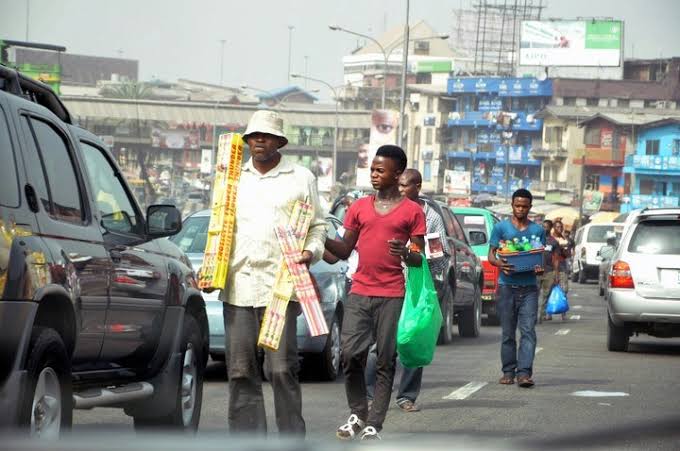
The recent seizure of alcoholic drinks worth millions of naira during a raid on parks and garages further highlights the government’s worries about the high rate of liquor sales in these areas. This concern aligns with the government’s efforts to create a safer environment and curb the consumption of alcohol by motorists, ultimately reducing the incidence of road accidents.
Furthermore, the Lagos State Government aims to promote a cleaner and more aesthetic environment in line with the T.H.E.M.E.S. Agenda of Governor Babajide Sanwo-Olu. The enforcement of environmental sanitation laws and the eradication of street hawking are seen as crucial steps toward achieving this goal.
Implications
Should traffic/street hawking be banned in Nigeria? Are the hawkers, especially the children and amateurs, fulfilling their true potential? Can this practice be regulated to improve standards with a measure of professionalism? What’s a better alternative?
It is worth noting that while the government’s clampdown on street hawking may address environmental concerns and enhance safety, there are economic implications to consider.
Multinational Corporations (MNCs) and local organizations have recognized the effectiveness of reaching consumers through the hawking channel.
Approximately 60% of goods sold by MNCs in Nigeria pass through this distribution channel before reaching the final consumer. Restricting or eliminating street hawking may disrupt this channel and impact businesses reliant on this distribution method.
Hamza Mohammed stated that if you were to interview 100 hawkers, he assures you that none of them had the ambition of becoming street hawkers when they were growing up. By offering alternatives such as employment or education, we can observe how swiftly the number of hawkers diminishes.
This principle can be applied to a majority of the problems faced by Nigerians. If an economy is created that fosters private investment, we will witness a rapid resolution of many of our issues simply by generating employment opportunities, he said.
The government emphasizes the need for pedestrians to utilize strategically-erected pedestrian bridges across major highways to ensure their safety, mitigating the risk of accidents caused by overspeeding motorists.
According to Somotun Adetola, a resident of Lagos State, the prohibition of street hawking will only be feasible when the standard of living for Nigerian citizens improves.
Currently, the state of the economy is discouraging, and a significant portion of the population struggles to make ends meet. There is a pressing need for the government to undertake substantial efforts to address these challenges.
Final Notes
In conclusion, the Lagos State Government’s clampdown on street hawking and related activities stems from its commitment to environmental preservation, road safety, and promoting a cleaner and safer state.
While the government’s efforts are aimed at addressing these concerns, it is essential to strike a balance between achieving these goals and considering the economic implications for businesses and individuals involved in street hawking.



