



On the surface, the “Data on Trial” consumer engagement, hosted by MTN Nigeria in Lagos on Saturday, mirroring courtroom session, was framed as an exercise in corporate transparency, a public auditing of data billing systems designed to soothe the chronic frustrations of Nigerian subscribers battling perceived data depletion.
But beneath the operational explanations offered by the largest telecommunications company in Nigeria, a much heavier economic reality was being laid bare.
When Dr. Karl Toriola, MTN Nigeria’ chief executive officer took the lectern, the session shifted from simple consumer education to the existential economics of the telecommunications sector.
By flatly dismissing growing consumer demands for cheap, unlimited mobile data plans, Toriola did not just reject a product feature; he issued a reality check on the physical and financial limits of Nigeria’s digital infrastructure.
To understand Toriola’s position, one must look beyond the immediate corporate pushback and examine the underlying mechanics of mobile network architecture, macro-inflationary pressures, and the global precedent of telecom pricing.
The Architecture Problem: Why “Unlimited” is an Illusion
The core of Toriola’s argument rests on a fundamental law of physics that consumer advocacy often overlooks: cellular network capacity is finite.
Unlike fixed-line fiber optics, which can continuously scale bandwidth to individual buildings, mobile networks rely on radio spectrum emitted from base stations (cell towers).
Every tower has a strict threshold for the number of simultaneous active data streams it can support before packets drop, speeds plummet, and the user experience collapses.
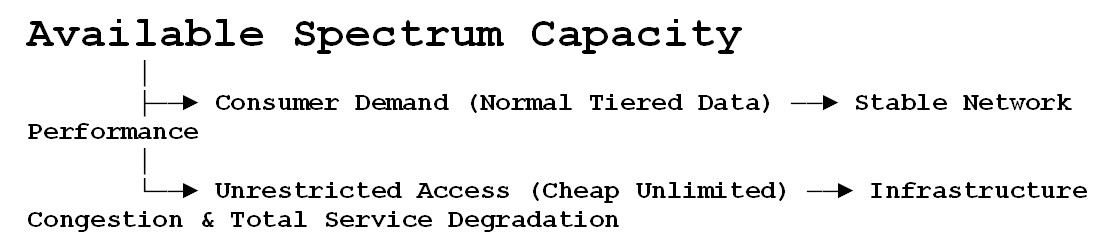
Toriola made it clear that the economics of mobile network capacity make unlimited data offerings structurally impossible at the price points Nigerian consumers are demanding.
“The issue of unlimited data on mobile network, it does not exist anywhere in the world, except you are paying $400 a month or whatever. There are high bundles and fair usage policies,” he explained. “On mobile networks, it does not really exist. There is a limit, because you can never build enough capacity for everyone to be on an unlimited bundle, and you think you will provide quality service that will be decent.”
Globally, true uncapped mobility is a luxury. When operators in developed markets advertise unlimited plans, they are almost universally bound by Fair Usage Policies (FUP).
Pass a certain threshold, say 50GB or 100GB, and your connection is throttled to slower speeds. Where true, unthrottled unlimited mobile data does exist, it sits behind premium pricing walls that are entirely decoupled from the average revenue per user (ARPU) realistic in the Nigerian macroeconomic landscape.
The Aviation Analogy and Infrastructure Cannibalization
To contextualize the danger of artificially subverting these economics, Toriola drew a sharp parallel to the aviation sector, arguing that artificially suppressing the price of any high-capacity service destroys the industry providing it.
“If you decide to give everybody in Nigeria unlimited local air tickets for N200,000 in a month, do you think the airline industry will survive? It won’t. It doesn’t work that way,” Toriola warned. “We cannot give unlimited as much as we desire it. We won’t be able to build the network that people would be able to use in what way whatsoever. That is the reality.”
The analogy is telling. If an airline sells unlimited passes below operational costs, every flight fills to maximum capacity instantly. The physical assets (airplanes) degrade faster, fuel costs skyrocket, queue times become unmanageable, and the airline eventually goes bankrupt because it cannot generate the capital required to maintain or expand its fleet.
In the telecom parallel, cheap unlimited data triggers a data deluge, heavy downloaders and video streamers saturate the cell towers 24/7. For MTN, the consequences would be dual-pronged:
Severe Service Degradation: Regular users paying for basic packages would find themselves unable to connect due to localized network congestion.
Capital Expenditure Starvation: The revenue generated from low-cost unlimited plans would fail to cover the immense capital required to purchase additional spectrum, deploy more fiber backhaul, and power base stations via expensive diesel and solar setups amid Nigeria’s grid unreliability.
The Context: An Industry under Fiscal Siege
Toriola’s firm stance cannot be separated from the broader financial pressures bearing down on Nigerian telcos. The industry has been caught in a vice grip of soaring operational costs, driven by currency devaluation and hyperinflation, while consumer purchasing power has simultaneously shrunk.
Telcos have repeatedly petitioned regulators for tariff reviews just to maintain baseline profitability. Although, the Nigerian Communications Commission (NCC) approved 50 per cent increase in tariff last year, it appears the telcos may ask for more soon!
By opening up its billing system to public scrutiny through the “Data on Trial” initiative, MTN attempted to prove that the rapid disappearance of consumer data isn’t an algorithmic heist; it is the natural byproduct of modern, content-heavy smartphone ecosystems operating on high-speed 4G and 5G networks.
However, by pairing that transparency with an uncompromising stance on cheap unlimited data, MTN is signaling a structural boundary. The message to consumers and regulators alike is clear: in the digital economy, you cannot bypass the laws of infrastructure capacity.
If Nigeria wants an internet ecosystem that actually works, it must be prepared to pay for it incrementally. The alternative isn’t cheap unlimited data, it is no data at all.



