



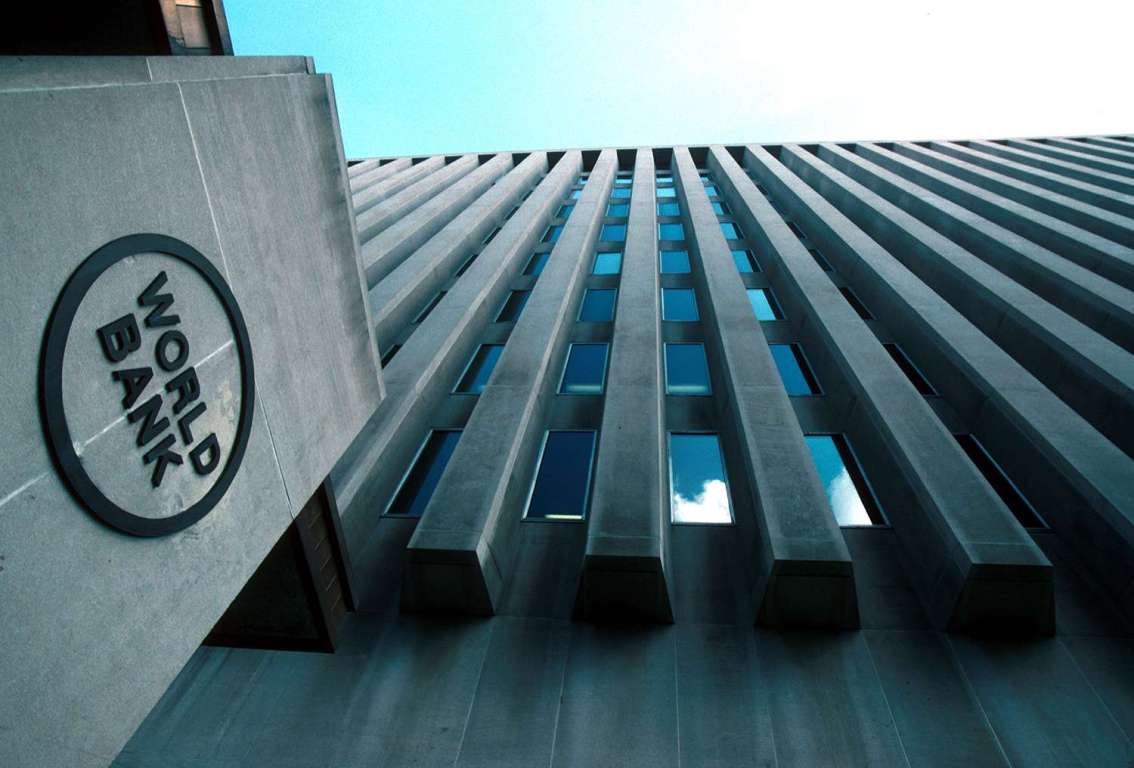
The World Bank has raised Nigeria’s economic growth projection for 2026 4.4%, up from the 3.7% estimate made in June 2025.
This aligns closely with the Central Bank of Nigeria’s forecast of 4.49% for the same period.
The upgrade was announced in the Bank’s 2026 “Global Economic Prospects” report, released Tuesday, January 13, 2026.
The global lender also revised Nigeria’s 2027 growth forecast upward, from 3.8% to 4.4%. It estimated that Nigeria’s economy expanded by 4.2% in 2025, exceeding the 3.6% projection from mid-2025.
Globally, the World Bank lifted its 2026 growth forecast from 2.4% to 2.6%, with 2025 growth revised to 2.7%, up from 2.3%. The 2027 global growth rate is now projected at 2.7%, slightly higher than the previous 2.6% estimate.
The report noted that the global economy is proving more resilient than expected, despite ongoing trade tensions and policy uncertainties.
While growth remains concentrated in advanced economies, it is unlikely to reduce extreme poverty, with the 2020s on track to be the weakest decade since the 1960s.
“The resilience reflects better-than-expected growth, especially in the United States, which accounts for about two-thirds of the upward revision to the forecast in 2026,” the World Bank revealed.
The financial institution revealed that global growth will slow in 2026 as trade-related boosts fade, but easing monetary conditions and fiscal expansion are expected to cushion the impact.

The World Bank added that inflation is projected to ease to 2.6% in 2026, with growth strengthening in 2027 as trade and policy uncertainties ease.
Indermit Gill, the World Bank Group’s chief economist, noted the tension between resilience and economic dynamism:
“With each passing year, the global economy has become less capable of generating growth while appearing more resilient to policy uncertainty. But economic dynamism and resilience cannot diverge for long without fracturing public finance and credit markets,”
Gill warned that the world economy is set to grow more slowly than it did in the troubled 1990s while carrying record levels of public and private debt. He urged governments in emerging and advanced economies to liberalise private investment and trade, rein in public consumption, and invest in new technologies and education to avoid stagnation and unemployment.
Sub-Saharan Africa Growth Forecast
The World Bank projects sub-Saharan Africa’s growth will rise to 4.3% in 2026 and 4.5% in 2027.
Growth in developing economies is expected to slow slightly to 4% in 2026 from 4.2% in 2025, before climbing to 4.1% in 2027, supported by improving trade, commodity prices, financial conditions, and investment flows.
Low-income countries are expected to see stronger growth, averaging 5.6% over 2026–2027, driven by rising domestic demand, recovering exports, and moderating inflation. \
Nevertheless, per capita income in developing economies is projected to grow just 3% in 2026, keeping the gap with advanced economies wide.
“At this pace, per capita income in developing economies is expected to be only 12% of the level in advanced economies,” the institution stated.
Ayhan Kose, the World Bank Group’s director of the Prospects Group, warned that public debt in emerging and developing economies is at its highest in over 50 years. He urged that restoring fiscal credibility is urgent.
“Well-designed fiscal rules can help governments stabilise debt, rebuild policy buffers, and respond more effectively to shocks.”
“But rules alone are not enough: credibility, enforcement, and political commitment ultimately determine whether fiscal rules deliver stability and growth.”
Kose added that more than half of developing economies have implemented fiscal rules, which can improve budget balances by 1.4% of GDP over five years and increase the likelihood of sustained improvement.