


ADVERTISEMENT
Saturday, May 30, 2026
Tech | Business | Economy
No Result
View All Result
  • Technology
    • Trends
    • Telecoms
      • Broadband
    • ConsumerTech
      • Gadgets and Appliances
      • Apps
      • Accessories
      • Reviews
      • Unboxing
    • EnterpriseTECH
    • Security & Data Protection
    • How To
  • Business
    • Company News
    • StartUPs
      • Founder’s Story
      • Funding
    • Deals
    • People & Moves
    • SME & Entrepreneur Focus
    • BUSINESS SENSE FOR SMEs
    • Competition & Market Positioning
    • Commerce & Mobility
    • Travel
    • WomenPreneurs
  • Economy
    • Macroeconomic Trends
      • Macro Monday
      • TE Insights
    • Finance
      • Banks
      • Fintech
      • Insurance
      • Digital Assets
      • Personal Finance
    • Policies
      • Tech & Society
    • Market Analysis
    • Jobs & Workforce Economy
  • Features
    • Guest Writer
      • Chidiverse
      • Digital Assets
      • GameTech
    • EventDIARY
    • IndustryINFLUENCERS
    • MarkTECH
    • TBS
    • NewsEXTRA
  • Editorial
  • Brand Content
  • TECHECONOMY TV
Saturday, May 30, 2026
Tech | Business | Economy
No Result
View All Result
Tech | Business | Economy
No Result
View All Result

Home » World Scam 2022: Top Five Schemes Cybercriminals Are Running Qatar 2022

World Scam 2022: Top Five Schemes Cybercriminals Are Running Qatar 2022

Techeconomy by Techeconomy
November 18, 2022
in Security & Data Protection
Reading Time: 4 mins read
1
World Cup Scam - Image by Kaspersky

World Cup Scam - Image by Kaspersky

The FIFA World Cup Qatar 2022 is the most awaited sports event of 2022 for football fans and kicks off on November 20.

As well as exciting hundreds of millions of fans worldwide, it’s also attracted the interest of cybercriminals looking to make a fast buck. 

To get a better overview of how scammers are trying to monetise football fans’ interest, Kaspersky experts have analysed World Cup-related phishing websites from around the globe designed to steal users’ identifying and banking data.

Kaspersky researchers have found fake pages offering everything from tickets or event merch, to match streaming services, plus numerous giveaways and NFT scams exploiting the World Cup.

1. Ticketing scams

As with all major global sports events, fake tickets are the spread bait most used to lure victims and this World Cup is no exception.

Subscribe to our Telegram channel for the latest updates.

Follow the latest developments with instant alerts on breaking news, top stories, and trending headlines.

Join Channel

Additionally, Qatar 2022 is only offering digital tickets, increasing the risk of running into malicious resources.

Kaspersky experts discovered numerous phishing pages offering to buy tickets for FIFA matches. Needless to say, users will lose personal data, banking details, and money. 

Additionally, scammers may start also using the stolen data for other purposes or sell it on the Dark Web.
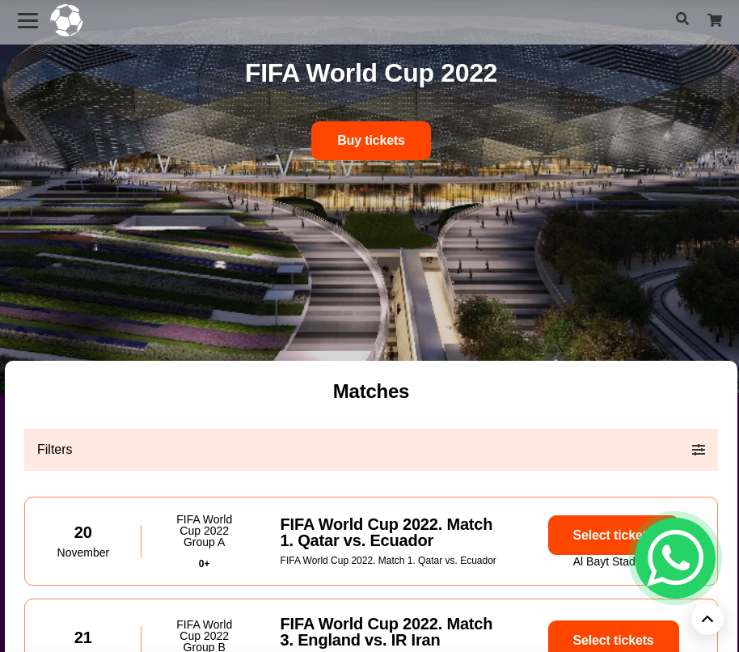
World Cup Scam
An example of a phishing page

2. Gifts

No big public event is complete without fraudsters imitating extremely generous giveaways. Kaspersky experts also found phishing pages offering to win two tickets to the World Cup.

This is quite popular where usually each user becomes a ‘lucky’ winner; with the chosen ones only needing to pay a delivery fee.
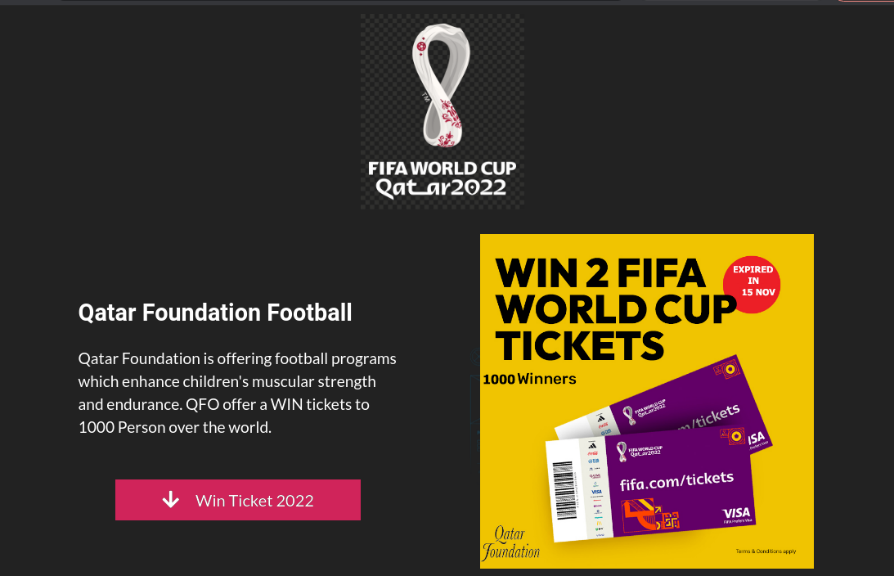
World Cup Scam
An example of a phishing page offering to win 2 FIFA tickets

3. Merchandise

Another way to steal users’ data is via fake FIFA-related merchandise stores. While the offer of a T-shirt of your favourite team, phone cases with popular players, or signed soccer balls sounds good, after entering your data and transferring money to make a purchase, fans lose their cash to fraudsters instead.

4. Crypto and NFT frauds

A distinctive feature of the threat landscape ahead of the 2022 World Cup has been the active spread of various crypto scams, mostly exploiting the popularity of NFTs.

Some offer to make a bet on a match and win cryptocurrency, others to win worldwide related NFT art.

All the user needs to do is to enter crypto wallet credentials, so the ‘prize’ transfers directly. In such a scenario, scammers gain access to all savings and related wallet data.

World Cup related crypto scam
An example of the World Cup related crypto scam

Another scheme is crypto investment fraud which is a bright example of a dubious investment. Fraudsters actively create real coins and convince a user to invest in it while promising the victim potential currency growth. In real life, such initiatives are almost never a success as users have spent money on something that will never develop.

World Cup Scam
An example of the World Cup related NFT scam

5. Flights and accommodations

Pandemic imposed limitations will also see the 2022 World Cup stage many offline events with live viewers, involving thousands of tourists in Qatar – something scammers have not missed. Kaspersky experts have observed numerous phishing pages imitating airline services offering tickets to Doha.

The analysed webpage shows all the classic signs of a scam – nice appearance, wrong spelling, freshly registered domain, and limited functionality of the site.

Although the site mimics a global airfare aggregator, the user can only choose Qatar in the list of destination countries. Once flight details are entered, the victim is offered the chance to enter personal data along with ID and credit information.
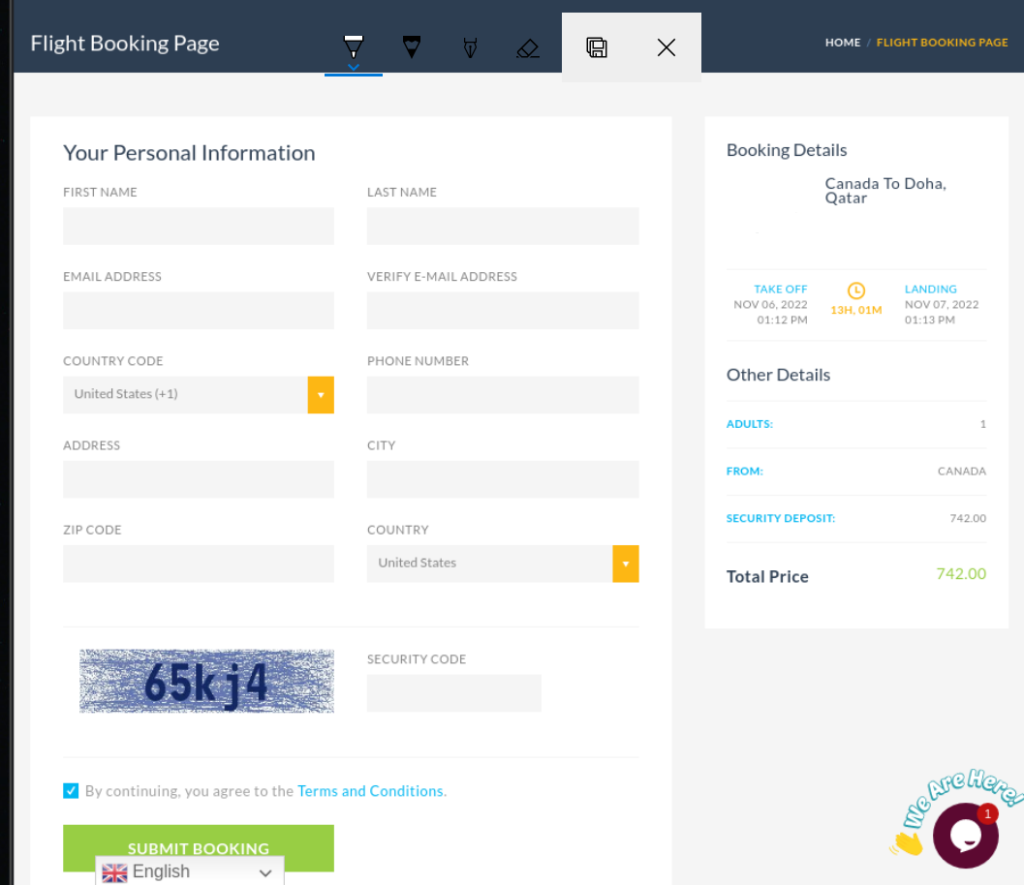
World Cup Scam
An example of a phishing page offering to buy a plane ticket

‘Major sports events always attract the attention of cybercriminals. With this World Cup, scammers got very creative, as we have observed a variety of fraudulent schemes employed. We see how they are trying to benefit most from the situation and exploit as many trendy topics as possible, including a growing number of NFT scams related to the World Cup. At the same time, there are many so-called traditional scams out there from giveaways and fake tickets to merch stores. These schemes are simple, yet, effective and is why such fraudulent pages are eternal companions of big events. We encourage users to be attentive when they receive offers that seem too good to be true and carefully check the validity of the messages they receive,’ comments Olga Svistunova, a security expert at Kaspersky.


0Shares
MTN Live It 100 Thematic Campaign
Previous Post

Flutterwave and World Record Holder, Tobi Amusan Collabo on $end Mobile for the African Diaspora 

Next Post

Check Point Software’s Cybersecurity Predictions for 2023

Techeconomy

Techeconomy

Related Posts

Africa Physical Security market | CCTV

Genetec: Africa’s Security Infrastructure Has Entered Major Transformation Phase

May 28, 2026
Chimezie Emewulu Seamfix | Digital Identity

From His Father’s Kidnapping to 100 Million Identities: Seamfix CEO on Driving Africa’s Digital Trust Revolution

May 28, 2026

How Smart Glasses are Rewriting the Rules of Consent in South Africa

May 27, 2026
Load More
Next Post
Check Point Software’s Cybersecurity Predictions for 2023

Check Point Software’s Cybersecurity Predictions for 2023

Comments 1

  1. Jacob burn says:
    10 months ago

    I thought I had found true love, but it turned out to be a scam. I lost $80,000 to someone I believed cared about me. I was devastated, ashamed, and alone. Then I reached out to James Lucas. He listened without judgment and worked tirelessly to recover my money. Within days, I had it all back. More than that, James helped restore my faith in people. If you’re in the same situation, contact James at jameslucas7800@gmail.com he’s a lifesaver

    Reply

Leave a Reply Cancel reply

Your email address will not be published. Required fields are marked *

I agree to the Terms & Conditions and Privacy Policy.

This site uses Akismet to reduce spam. Learn how your comment data is processed.

Techeconomy Podcast
Techeconomy Podcast

The Techeconomy Podcast is a thought-leadership show exploring the powerful intersection of technology, business, and the economy, with a strong focus on Africa’s fast-evolving digital landscape.

Financing the Future: Venture Debt, Local Capital & African Innovation | TBS May 2026 Webinar
byTecheconomy

Africa’s innovation ecosystem is evolving, but where will the funding for the next generation of startups come from?

In this edition of the Techeconomy Business Series (TBS) May 2026, industry experts explore how local capital, venture debt, and smarter investment structures are redefining startup growth and innovation across Africa.

🎙️ Featured Speakers:

* Ebunoluwa Ashley-Dejo

* Damilare Davola

* Success Ajilore (STN & Accelerated Plus)

Key conversations in this webinar include:

✔️ The future of startup financing in Africa

✔️ Venture debt and alternative funding models

✔️ The role of local investors in scaling innovation

✔️ Sustainable investment strategies for African startups

✔️ Opportunities and challenges in the African tech ecosystem

Subscribe for more conversations shaping Africa’s digital economy and innovation landscape.

#TBS2026 #AfricanInnovation #VentureDebt #StartupFinance #TechInAfrica #Techeconomy #AfricanStartups #InnovationEconomy

Financing the Future: Venture Debt, Local Capital & African Innovation | TBS May 2026 Webinar
May 27, 2026
Techeconomy
PROTECTING INNOVATION IN AFRICA’S STARTUP ECOSYSTEM
April 29, 2026
Techeconomy
BUILDING TRUST IN AFRICA ECOSYSTEM
February 27, 2026
Techeconomy
Navigating a Career in Tech Sales
January 29, 2026
Techeconomy
How Technology is Transforming Education, Health, and Business
November 27, 2025
Techeconomy
Search Results placeholder
MTN Live It 100 Thematic Campaign
ADVERTISEMENT
  • About Us
  • Careers
  • Contact Us
  • Privacy Policy

© 2026 TECHECONOMY.

No Result
View All Result
  • Technology
  • Business
  • Economy
  • Features
  • Editorial
  • Brand Content
  • TECHECONOMY TV

© 2026 TECHECONOMY.

This website uses cookies. By continuing to use this website you are giving consent to cookies being used. Visit our Privacy and Cookie Policy.

