


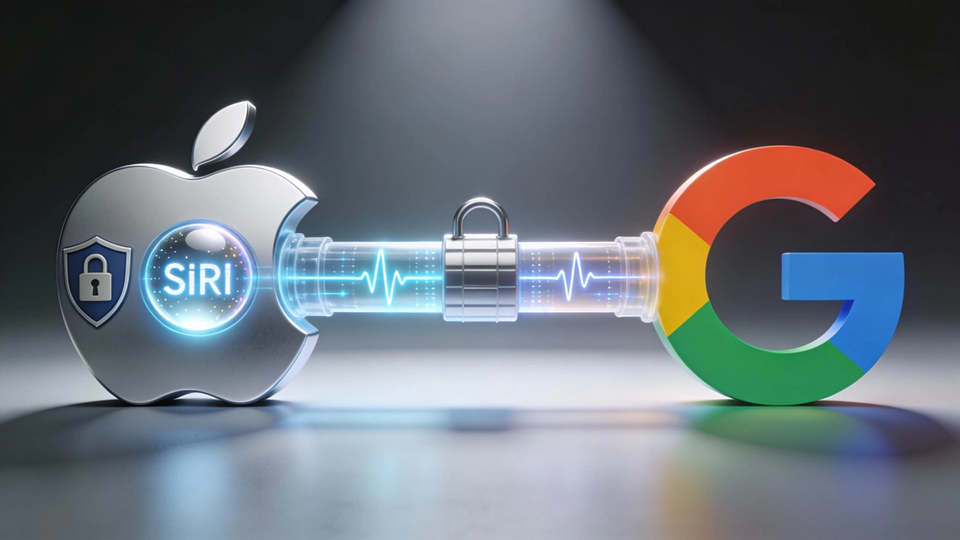
Earlier this week, Apple unveiled its next-generation Siri AI experience, which is arguably the most interesting part of the Apple Intelligence package coming to iOS 27.
Presented by Tim Cook himself at WWDC as part of what is expected to be one of his final keynote appearances before transitioning from CEO to Executive Chairman of Apple’s Board of Directors, the announcement is a significant software development for the iOS ecosystem.
Coming after years of watching competitors like Google, Microsoft and OpenAI push the boundaries of AI assistance, the new Siri sounds exactly like what most users expected.
Siri is becoming smarter, more conversational and far more useful than previous versions. It can understand context and offer greater utility to users in a more natural way.
These capabilities form part of Apple’s broader intelligence initiative unveiled by Tim Cook.
What the New Siri Can Do and Why Google Matters
Unlike previous versions, the new Siri is designed to operate beyond simple voice commands.
Instead of responding to one-off requests, it can now hold extended conversations, understand follow-up questions and carry out more complex tasks involving multiple apps.
Users can ask Siri to summarise emails, organise schedules, search for information and create content across the Apple ecosystem without repeatedly issuing commands.
Apple also took personalisation further with this update. Based on demonstrations at WWDC, Siri can now understand information stored across apps such as Messages, Notes, Photos and Calendar, allowing it to generate responses that are more aware of a user’s daily activities and workflow.
But the most significant part of the announcement was Google’s involvement.
While Apple has always emphasised privacy and on-device processing, Google’s AI technology provides much of the reasoning and language capability needed to power these advanced features.
In practical terms, Apple is combining its ecosystem expertise with Google’s AI infrastructure to deliver an experience that Siri has struggled to provide for years.
But Why Is Apple Relying on Google?
Apple’s decision to depend on Google’s AI infrastructure for this Siri upgrade immediately changes the conversation. As one of the world’s biggest and wealthiest technology companies, the question is no longer what Siri can do, but why Apple needs Google’s help to do it.
Apple has built its reputation on controlling its hardware, software, chips and services, creating one of the most tightly integrated ecosystems in technology. That philosophy has long been one of Apple’s greatest strengths, but artificial intelligence appears to present a different challenge.
Rather than aggressively competing to build the most capable AI models, Apple seems comfortable allowing others to handle that layer while it focuses on delivering the final user experience.
By partnering with Google, Apple gains access to some of the most advanced AI capabilities available today while avoiding the enormous costs associated with building and scaling world-class AI infrastructure from scratch. Some observers, however, may argue that Apple is large enough to undertake that challenge on its own.
The AI industry is increasingly being defined by companies that control both the models and the platforms that run them. Apple’s reliance on Google therefore raises questions about whether the company is being strategically patient or whether large-scale AI deployment simply falls outside its core strengths.
The Apple Intelligence features arriving with iOS 27 are unlikely to be as revolutionary as the marketing surrounding them suggests. Many of the capabilities announced already exist in one form or another on competing platforms.
What Apple is offering is not necessarily a technological breakthrough, but a carefully designed and tightly integrated version of AI for hundreds of millions of iPhone users.



