
ADVERTISEMENT
Friday, June 19, 2026
Tech | Business | Economy
No Result
View All Result
  • Technology
    • Trends
    • Telecoms
      • Broadband
    • ConsumerTech
      • Gadgets and Appliances
      • Apps
      • Accessories
      • Reviews
      • Unboxing
    • EnterpriseTECH
    • Security & Data Protection
    • How To
  • Business
    • Company News
    • StartUPs
      • Founder’s Story
      • Funding
    • Deals
    • People & Moves
    • SME & Entrepreneur Focus
    • BUSINESS SENSE FOR SMEs
    • Competition & Market Positioning
    • Commerce & Mobility
    • Travel
    • WomenPreneurs
  • Economy
    • Macroeconomic Trends
      • Macro Monday
      • TE Insights
    • Finance
      • Banks
      • Fintech
      • Insurance
      • Digital Assets
      • Personal Finance
    • Policies
      • Tech & Society
    • Market Analysis
    • Jobs & Workforce Economy
  • Features
    • Guest Writer
      • Chidiverse
      • Digital Assets
      • GameTech
    • EventDIARY
    • IndustryINFLUENCERS
    • MarkTECH
    • TBS
    • NewsEXTRA
  • Editorial
  • Brand Content
  • TECHECONOMY TV
Friday, June 19, 2026
Tech | Business | Economy
No Result
View All Result
Tech | Business | Economy
No Result
View All Result

Home » Nigeria’s Inflation Rate Hits 22% as Food Price Increases

Nigeria’s Inflation Rate Hits 22% as Food Price Increases

Joel Nwankwo by Joel Nwankwo
May 16, 2023
in Finance
Reading Time: 2 mins read
1
inflation rate

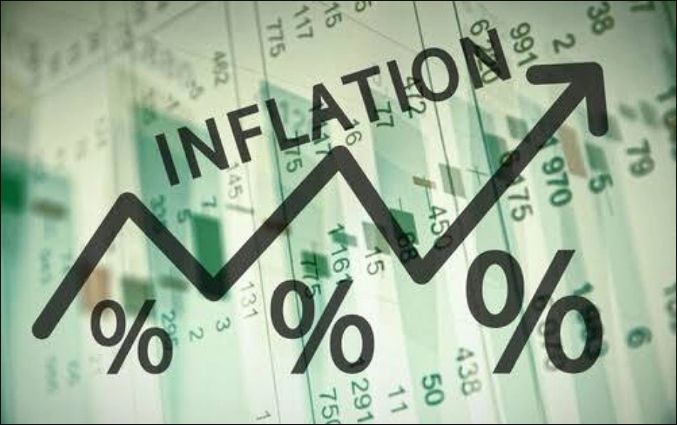
The consumer price index (CPI) for Nigeria, which measures inflation or the change in the cost of goods and services, has announced that the country’s inflation rate increased from 21.91% in February to 22.04% in March 2023. According to the National Bureau of Statistics’ (NBS) most recent CPI report, which was released on Saturday, this is the case.

The country’s inflation rate has now increased three times in a row since the year’s start, according to data from March. The headline inflation rate increased to 22.04% in March 2023 from 21.91% in February 2023, according to the CPI report from NBS.

The current means that a fixed amount of money can purchase a smaller quantity of goods and services than it could otherwise. The real worth of money has been significantly diminished, which has decreased the purchasing power of money for people.

According to the report, the headline inflation rate for March 2023 increased by 0.13% points from that for February 2023. The headline inflation rate was 6.13% points higher year over year than the 15.92% rate that was registered in March 2022.

This demonstrates that the headline inflation rate rose in March 2023 as compared to the same month the year before (March 2022).

“The contributions of items on the divisional level to the increase in the headline index are food & non-alcoholic beverages (11.42%); housing, water, electricity, gas & other fuel (3.69%); clothing & footwear (1.69%); transport (1.43%); furnishings, household equipment & maintenance (1.11%); education (0.87%); health (0.66%); miscellaneous goods & services (0.37%); restaurant & hotels (0.27%); alcoholic beverage, tobacco & kola (0.24%); recreation & culture (0.15%) and communication (0.15%).”

Also read: Watch Debt Profile, Control Expenditure,’ WTO DG Warns Nigeria

More Strain on Disposable Income

Increased inflation rates may have detrimental effects on an economy’s long-term real growth rate or long-term real activity level. According to this research, inflation hinders long-term planning, reduces savings and capital accumulation, and creates economic uncertainty, all of which limit growth and development.

A remarkable decline in real monthly salaries is being seen in many nations as a result of Nigeria’s severe inflationary issue and a global slowdown in economic growth, which is being contributed to by the conflict in Ukraine and the world oil crisis.

For the sake of human growth, the impact of inflation on consumption and spending has not received the necessary attention in the nation. In the public service where increased minimum wages are always clamored for, inflation will, despite nominal adjustments, quickly erode the real value of minimum wages in Nigeria.


0Shares
MTN Live It 100 Thematic Campaign
Previous Post

Carry1st Brings Mobile Premier League to Africa

Next Post

The Role of FMCG in Tackling Climate Change

Joel Nwankwo

Joel Nwankwo

Joel Nwankwo is a tech journalist. He is passionate about telling stories as it relates to Africa's social and financial tech advancements. You can reach him at joel.nwankwo@techeconomy.ng

Related Posts

Taiwo Oyedele, Presidential Committee chairman | Tax Reforms | Modernisation | Guidelines

FG Releases Transition Guidelines for Tax Acts 2025, 12 Months after Presidential Assent

June 18, 2026
Great Nigerian Insurance

Great Nigerian Insurance Gets SEC Approval for N15.6 Billion Rights Issue

June 18, 2026

Dollar to Naira Exchange Rate Today, June 17, 2026

June 17, 2026
Load More
Next Post
Lovelyn Okafor writes on FCMG and LCimate Change

The Role of FMCG in Tackling Climate Change

Comments 1

  1. Pingback: A Sachet Economy - News Curators

Leave a Reply Cancel reply

Your email address will not be published. Required fields are marked *

I agree to the Terms & Conditions and Privacy Policy.

This site uses Akismet to reduce spam. Learn how your comment data is processed.

TECHECONOMY YOUTUBE CHANNEL

  • About Us
  • Careers
  • Contact Us
  • Privacy Policy

© 2026 TECHECONOMY.

No Result
View All Result
  • Technology
  • Business
  • Economy
  • Features
  • Editorial
  • Brand Content
  • TECHECONOMY TV

© 2026 TECHECONOMY.

This website uses cookies. By continuing to use this website you are giving consent to cookies being used. Visit our Privacy and Cookie Policy.