


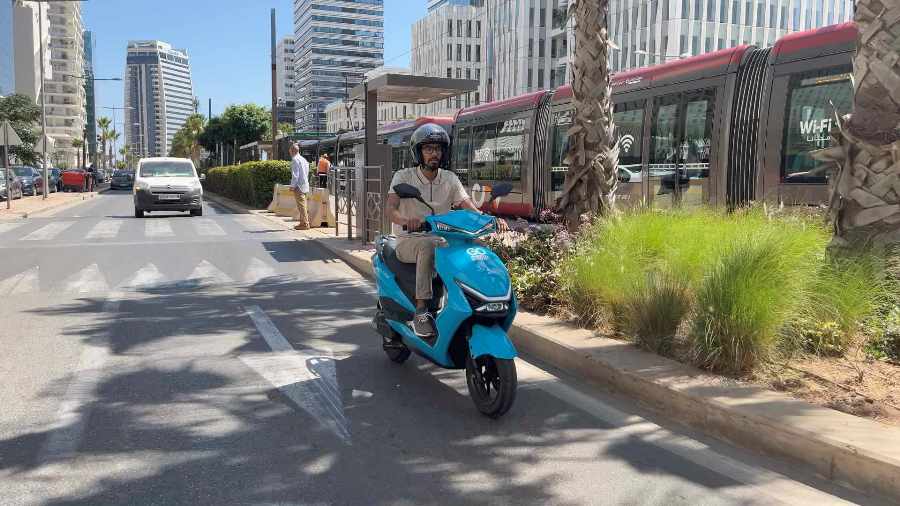
GoSwap, a Moroccan startup which specializes in automated battery swapping solutions for electric scooters, has secured it first round of funding from the Azur Innovation Fund, with an ambition to raise more than 20 million dirhams (approximately $5,444).
With this transaction, GoSwap is laying the groundwork for an ambitious expansion: accelerating the deployment of its network of battery swapping stations and supporting the development of more accessible electric mobility in Morocco’s major cities.
A structuring market for urban mobility in Africa
In many African cities, two-wheelers play a central role in everyday mobility. Driven by rapid urbanization, insufficient public transport and the growth of delivery services, this segment has established itself as a pillar of the urban economy.
In this context, the electrification of two-wheelers appears to be one of the most immediate levers for reducing mobility costs and urban emissions.
A strategic partnership to support rapid growth
The investment from the Azur Innovation Fund will enable GoSwap to accelerate the deployment of its network of battery swap points in Casablanca where 20 swap cabinets are already operational at CashPlus stores, Petrom and Shell stations.
It is also expected to support the expansion of the network to other cities in the Kingdom and the integration of new models of electric motorcycles compatible with the GoSwap solution.
A model to remove obstacles for the adoption of electric motorcycles
GoSwap is developing a model based on instant battery swapping, an approach inspired by solutions already deployed on a large scale in Asia to accelerate the adoption of electric mobility.
GoSwap is based on a unique model in Morocco:
- An electric scooter sold without a battery, which greatly reduces the cost of acquisition
- A lithium battery provided to users and exchangeable at will
- A network of connected cabinetsallowing the exchange of a discharged GoSwap battery for a full one, in less than 10 seconds
- An economic model based on a pay-as-you-go basis, with an average cost of MAD 25 to MAD 29.4 per 100 km
- Unlimited range, no charging time and no need to buy a battery
- Unlimited battery warranty to avoid wear and tear or replacement worries
- Vehicle tracking: geolocation, remote immobilization and fleet tracking and many other advantages
This system eliminates the hassle of charging time and battery replacement, while reducing the total cost of ownership.
GoSwap users can save up to 60% compared to a combustion motorcycle.
An immediate environmental impact
The demand for cleaner and more cost-effective urban mobility solutions is growing rapidly in major cities. Electric two-wheelers appear to be a suitable answer to everyday use, in particular for urban journeys and delivery activities.
These players – self-employed delivery drivers, e-commerce platforms, company fleets – have a structural need for reliable, economical and sustainable mobility solutions.
Scooters using the GoSwap system would reduce CO₂ emissions by around 60% compared to a thermal equivalent, thanks to the absence of emissions in use and the optimization of battery operation.
Thanks to this first round of funding, GoSwap will accelerate the deployment of its network of exchange stations – in Casablanca, then Marrakech and other cities in the Kingdom – and actively contribute to national efforts for green mobility.
Hamza Slimani, co-founder of GoSwap said:
“The entry of Azur Innovation Fund is a key moment for GoSwap. Our ambition is to make electric mobility accessible to all by reducing the cost of acquiring and using electric motorcycles while increasing their range. As traffic and transportation costs have become major issues, offering an economical and reliable solution is becoming essential to contribute to cleaner cities.”
Adnane Filali, managing partner at Azur Innovation Management, added:
“With tens of millions of two-wheelers on the continent, the electrification of these uses represents a major challenge for African cities. GoSwap provides a particularly relevant answer, because it is not limited to one vehicle, it offers a complete battery swapping service, capable of supporting both urban mobility and new uses related to digital commerce and delivery. It is this ability to meet economic, operational and environmental needs that we have chosen to support.”



