

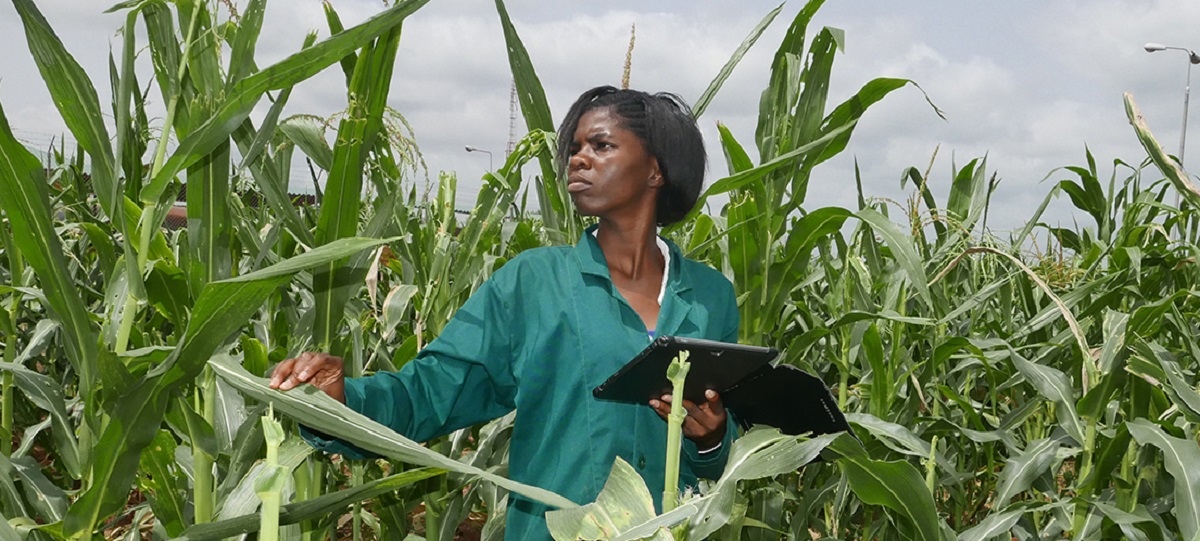
In a major move to address the persistent challenges of food insecurity and low agricultural productivity, the World Bank has approved a fresh $500 million credit facility for Nigeria.
The funding, provided through the International Development Association (IDA), is specifically earmarked for the Nigeria Sustainable Agricultural Value Chains for Growth Project, popularly known as AGROW.
This intervention comes at a critical time when the country is battling rising food inflation and a widening gap between local production and national demand.
The project is designed to transition smallholder farming from a subsistence-based activity into a commercially viable enterprise that can fuel the nation’s economic diversification.
A Lifeline for Smallholder Farmers
The primary focus of the AGROW initiative is to empower the millions of small-scale farmers who form the backbone of Nigeria’s agricultural landscape. Despite being the largest employer of labor in the country, the sector has long been hamstrung by outdated practices and a lack of modern infrastructure.
According to a statement released by the global lender on Thursday:
“The World Bank has approved a $500m International Development Association credit for the Nigeria Sustainable Agricultural Value Chains for Growth Project, aimed at increasing smallholder farmers’ productivity, strengthening agricultural value chains, and creating jobs while improving food and nutrition security.”
The credit facility aims to bridge the gap between rural production and urban consumption by improving the links between farmers and the wider market. By focusing on aggregation and post-harvest handling, the project seeks to reduce the significant losses often recorded by farmers due to poor storage facilities and lack of processing capacity.
Tackling Structural Constraints
The World Bank highlighted that Nigeria’s agricultural potential remains largely untapped because of systemic issues. In its assessment of the local landscape, the bank pointed out that the sector continues to underperform due to climate shocks and a lack of quality inputs.
The global lender noted:
“Agriculture remains Nigeria’s largest source of employment, yet low productivity, limited access to quality inputs, climate shocks, and weak market linkages for smallholder farmers have constrained its potential to generate better jobs and affordable food.”
To combat these hurdles, the AGROW project will deploy a results-based matching grant facility. This mechanism is intended to support agribusinesses that actively source their raw materials from smallholder farmers, thereby creating a guaranteed market for rural produce and encouraging private-sector participation.
Focusing on Essential Commodities
While the project covers various aspects of the value chain, specific attention is being given to crops that are essential for national food security.
These include rice, maize, cassava, and soybean, staples that have seen significant price fluctuations in recent months.
The bank explained the operational framework of the intervention, stating:
“The project will improve seed and fertiliser regulatory systems, expand early-generation seed supply, enhance private sector production of high-quality seed and farmers’ access to quality fertiliser, and promote transparent and responsible land-based investments.”
Beyond physical inputs, the project will also leverage technology. A national digital farm and farmer registry will be established to provide localized weather information and digital advisory services. This data-driven approach is expected to help farmers adapt to changing climate patterns.
Strategic Economic Implications
Matthew Verghis, the World Bank Country Director for Nigeria, emphasized that the $500 million credit is a strategic investment in the country’s future. He believes that the ripple effects of the project will extend beyond the farms into the broader economy.
Verghis stated:
“AGROW is a transformative step for Nigeria’s agriculture, empowering smallholder farmers, unlocking private sector–led growth, and strengthening food security in a sustainable way.”
He further elaborated on the expected reach of the project, noting:
“This project is expected to benefit up to one million smallholder farmers, mobilise significant private investment, and increase yields across targeted crops. At the same time, it will help to ensure improved food and nutrition security.”
Bridging the Investment Gap
The project is not just about direct credit; it is also designed to act as a catalyst for further investment. The World Bank anticipates that the six-year project, spanning from 2026 to 2032, will attract an additional $220 million in private agribusiness investment.
This synergy between multilateral funding and private capital is seen as the only sustainable way to scale agricultural operations. As the bank noted:
“The initiative aligns with Nigeria’s priorities of boosting agricultural productivity, creating jobs, and enhancing value addition, while supporting broader efforts to transition smallholder farming into commercially viable agribusinesses.”
Nigeria’s Growing Debt Profile
While the $500 million credit is a welcome development for the sector, it also adds to Nigeria’s growing external debt obligations. Data from the Debt Management Office (DMO) indicates that the World Bank remains Nigeria’s largest multilateral creditor.
Reflecting on the country’s financial commitments, analysts point out that as of late 2025:
“Nigeria’s exposure to the World Bank Group stood at $19.54bn, comprising $18.18bn from the International Development Association and $1.36bn from the International Bank for Reconstruction and Development.”
This represents approximately 40% of the country’s total external debt stock. However, since the IDA credits are concessional, they remain a preferred source of funding for long-term development projects compared to commercial loans.
The Road to 2032
As the AGROW project takes off, the focus of stakeholders will be on transparency and effective implementation. Previous interventions have often struggled with bureaucratic bottlenecks and reaching the actual farmers at the grassroots level.
The World Bank assured that the programme would be monitored closely, stating:
“The programme would be supported by strong coordination, monitoring, and citizen engagement mechanisms, with an emphasis on the inclusion of women and youth.”
If successfully executed, the $500 million injection could be the turning point Nigeria needs to finally achieve self-sufficiency in food production and turn its agricultural sector into a global powerhouse.