
An April 2026 report on the best gig jobs found that part-time dentists make more per hour than any other freelancers in America.
A new study by GoTu, the largest dental talent marketplace, reveals which side jobs pay the most and how hard they are to get into.
Key side jobs trends in America:
- Part-time dentists earn $88 per hour, the highest rate among all gig economy jobs, bringing in over $123K yearly.
- With the fastest job growth at nearly 30%, freelance cybersecurity consultants are in high demand as companies face new AI threats.
- Massage therapists can start earning $39 per hour with just a certificate, making it one of the easiest high-paying gig jobs to take on.
The research examined hourly wages across different gig jobs to find which ones pay workers the most. Jobs were ranked based on what freelancers actually charge per hour on average.
The report also looked at annual income potential, how fast each sector is growing, and what someone needs to get started in that role.
Each job also received a barrier to entry score from 1 to 5, where 1 means no formal education required and 5 means advanced degrees and licensing are needed.
Here’s a look at the top 10 highest-paying gig economy jobs:
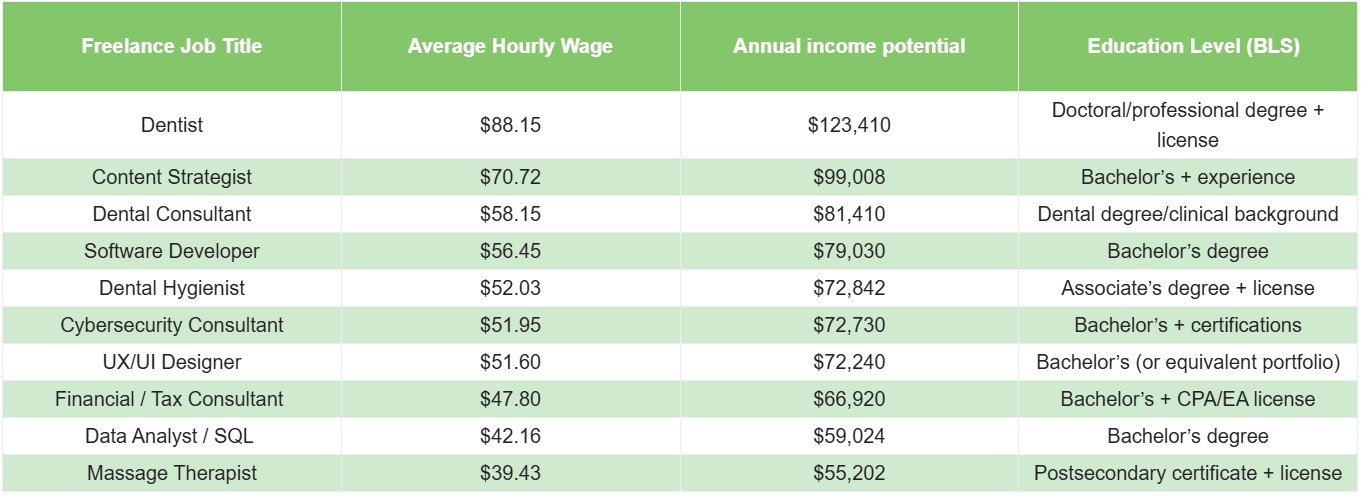
1. Dentist
- Average hourly wage:$88.15
- Annual income potential:$123.4K
- Education level:Doctoral/professional degree + license
Freelance dentists earn the most among all gig workers, charging around $88 per hour. That translates to over $123K yearly for those working a typical freelance schedule of about 1,400 hours.
Dental work has shifted toward independent practice models, where dentists rent chair space at clinics rather than taking salaried positions.
This opened up more roles, and the field is now growing 4% annually. Getting into freelance dentistry takes time, though, as it requires going through dental school and obtaining state licensing.
2. Content Strategist
Content strategists come second, earning nearly $71 hourly. They work with brands to plan what content gets created, when it goes out, and who it targets. At this rate, their annual income reaches about $99K.
Content strategists are also in high demand, as the job openings have been growing 6% over recent years.
Unlike dentistry, strategists only need a bachelor’s degree plus some years of experience, making it a popular side job for college graduates who want flexible work.
3. Dental Consultant
Dental consultants rank third, charging $58 per hour on average. These professionals help dental offices improve their operations, train staff, or set up new practices.
With yearly earnings around $81K, the role is more for experienced dentists who want to step back from patient care.
The consulting side of dentistry is expanding faster than clinical work, growing 9% annually. And like freelance dentists, consultants need clinical backgrounds and degrees.
4. Software Developer
Software developers are also among the highest-paid gig roles. These freelancers build apps for clients who need custom solutions or short-term help. For these types of tasks, they usually charge about $56 hourly, making close to $79K per year.
Despite how fast AI is taking over coding, developer jobs are still growing 15% annually, which is actually one of the fastest rates among all gig jobs.
While a bachelor’s degree is typical, some freelancers enter the field through boot camps, making it a more accessible tech role.
5. Dental Hygienist
Dental hygienists round out the top five, earning $52 per hour on average. They clean teeth, take X-rays, and screen patients for oral diseases, usually working a few days per week at different dental offices. Yearly income reaches around $73K for those maintaining regular schedules.
The role requires an associate’s degree and state licensing, making it more accessible than becoming a dentist while still paying well above median gig wages. Hygienist positions are also growing 7% annually.
Cary Gahm, co-founder of GoTu, commented on the study:
“The gig economy rewards specialized skills over credentials in some cases, but healthcare roles still require degrees. That’s actually why dentists and hygienists can charge premium rates, as their work requires licensing and a more extensive background. What’s changed is how these workers structure their careers. In the past, most dental professionals worked full-time at one practice. Now they are like real freelancers: rotating between multiple offices, setting their own schedules, and in many cases earning more than their salaried colleagues.”