

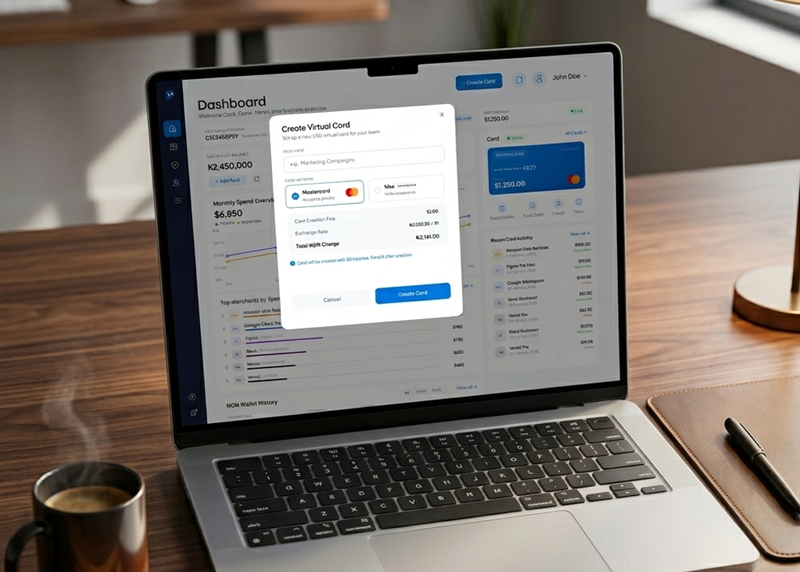
Cashwise Finance has introduced Orbit, virtual dollar cards platform built specifically for businesses, teams and departments, moving early users off a waitlist and into the product this month.

The product addresses a problem Elsie Godwin, co-founder and Chief Operating Officer of Cashwise says she kept encountering: staff members using personal fintech accounts to pay for company tools, company funds being exposed to multiple platforms and team members on one card, and finance teams reconciling business spend from WhatsApp screenshots because no dedicated business card infrastructure existed.
Godwin has said the idea crystallised after watching a remote staff member at a Lagos startup unable to run the company’s Google Ads campaign because she couldn’t reach her line manager to verify card details tied to a single shared account.
“You didn’t build a business to become a human ATM,” Godwin said.
Orbit by Cashwise gives each team member their own dedicated virtual dollar card, with spending limits set by the business, visibility into real-time spend, and centralized control, designed for recurring business expenses such as Google Ads, Meta Ads, TikTok Ads, and subscription tools including Notion, Figma, Adobe, Canva, AWS and various AI platforms.
Built for Businesses, startups, Marketing agencies, exporters and global businesses, Godwin said the product was shaped by direct feedback from businesses rather than formal research, and that its development was further validated through her acceptance into the Entrepreneurs for Global Change LeapX Bootcamp and Entrepreneur-in-Residence programme.
How Orbit by Cashwise Works
Per Cashwise, Orbit is structured around three core steps:
- Business sets up a central account. A company registers on Orbit and manages the account from an admin/finance dashboard rather than through an individual’s personal card.
- Dedicated cards are issued per team, department or project. Instead of one shared card routed through a single person, each team member or use-case gets its own virtual dollar card, funded from the business’s central balance.
- Role-Based access for teams – assign multiple user roles so finance teams, administrators and employees can access the platform based on their responsibilities
- Spend limits and visibility are set centrally. Admins define how much each card can spend, monitor transactions in real time, and adjust or revoke access without needing to track down whoever is holding the card.
The result, according to Godwin, is that a marketing campaign or software subscription no longer stalls because one person is unreachable; spend authority sits with the business, not with an individual’s personal account and reconciliation can be done by a click of a few buttons.