
ADVERTISEMENT
Saturday, May 30, 2026
Tech | Business | Economy
No Result
View All Result
  • Technology
    • Trends
    • Telecoms
      • Broadband
    • ConsumerTech
      • Gadgets and Appliances
      • Apps
      • Accessories
      • Reviews
      • Unboxing
    • EnterpriseTECH
    • Security & Data Protection
    • How To
  • Business
    • Company News
    • StartUPs
      • Founder’s Story
      • Funding
    • Deals
    • People & Moves
    • SME & Entrepreneur Focus
    • BUSINESS SENSE FOR SMEs
    • Competition & Market Positioning
    • Commerce & Mobility
    • Travel
    • WomenPreneurs
  • Economy
    • Macroeconomic Trends
      • Macro Monday
      • TE Insights
    • Finance
      • Banks
      • Fintech
      • Insurance
      • Digital Assets
      • Personal Finance
    • Policies
      • Tech & Society
    • Market Analysis
    • Jobs & Workforce Economy
  • Features
    • Guest Writer
      • Chidiverse
      • Digital Assets
      • GameTech
    • EventDIARY
    • IndustryINFLUENCERS
    • MarkTECH
    • TBS
    • NewsEXTRA
  • Editorial
  • Brand Content
  • TECHECONOMY TV
Saturday, May 30, 2026
Tech | Business | Economy
No Result
View All Result
Tech | Business | Economy
No Result
View All Result

Home » Which Country is Launching CBDC in Africa After Nigeria? 

Which Country is Launching CBDC in Africa After Nigeria? 

Yinka Okeowo by Yinka Okeowo
September 6, 2022
in Finance
Reading Time: 4 mins read
0

Nigeria is leading the race in Africa when it comes to the adoption of the Central Bank Digital Currency (CBDC). Its Central Bank launched the eNaira (CBDC) in October 2021. 

 CBDCs are digital tokens, similar to cryptocurrency, issued by a central bank. They are pegged to the value of that country’s fiat currency.

In Nigeria, the Central Bank has been at the forefront of ensuring that Nigerians begin to embrace the eNaira, which has not gained the traction the authorities expect. But it currently has 200,000 subscribers, the apex bank said.

CBN cites financial inclusion as one of its main reasons for rolling out eNaira. But the eNaira only works with digital wallets available on the Google Play Store and Apple Store. Not everybody in Nigeria has a smartphone. Imagine if the eNaira was built without using a smartphone.

Nonetheless, the financial regulator has not relented in making sure that the eNaira becomes more generally acceptable.

Subscribe to our Telegram channel for the latest updates.

Follow the latest developments with instant alerts on breaking news, top stories, and trending headlines.

Join Channel

Recently, it organized a hackathon in collaboration with the Africa Fintech Foundry (AFF). It has also introduced an Unstructured Supplementary (USSD code).

Other Countries? 

The International Monetary Fund (IMF) claims in a blog post that although governments issue CBDCs for a variety of reasons, several benefits could be particularly significant for the region.

“Promoting financial inclusion is the first step. CBDCs, especially if made for offline use, could provide financial services to people who previously lacked bank accounts. 

Digital transactions can be carried out for little or no money in remote locations without internet connectivity. “

Ghana 

Findings by TechEconomy reveal that countries like Ghana, South Africa, Tanzania, and Kenya are yet to officially launch their CBDCs. Some of these countries.

Some of these countries, like Ghana and Tanzania, are the latest African countries making preparations to launch or test their viability. For example, Ghana’s CBDC, eCedi, is heating up the race to roll out e-cash on the continent.

The Bank of Ghana, by contrast, is testing a general-purpose or retail CBDC, the e-Cedi, which can be used by anyone with either a digital wallet app or a contactless smart card that can be used offline.

South Africa

As part of the second stage of Project Khokha, the South African Reserve Bank is experimenting with a wholesale CBDC that can only be used by financial institutions for interbank payments. 

Additionally, the nation is taking part in a cross-border experiment with the central banks of Singapore, Malaysia, and Australia.

Uganda

Currently, the Bank of Uganda is carrying out preliminary studies on whether or not a central bank digital currency should be considered, especially exploring what policy objectives

The Ugandan government has not banned cryptocurrencies but has concerns about risks from the technology including consumer protection and financial inclusion. 

Conclusion ​​

Nigeria was the second country after the Bahamas to roll out a CBDC.

From what we have gathered, several sub-Saharan African central banks are exploring or in the pilot phase of a digital currency, following Nigeria’s October introduction of the eNaira, last year. 

In the next few months, we expect countries like Ghana and South Africa to fully launch their digital currencies. 

0Shares
MTN Live It 100 Thematic Campaign
Previous Post

Pantami to Lead Stakeholders to NITRA ICT Growth Conference 2.0

Next Post

Showmax Appoints Opeoluwa Filani as GM Nigeria Operations

Yinka Okeowo

Yinka Okeowo

My call is report on technology, innovation and the business of the digital economy.

Related Posts

Naira and British Pounds, IMTOs | Pound

Pound to Naira FX Rate Today, May 29, 2026

May 29, 2026
Hot money in Nigeria - Naira | official market | Dollar

Dollar to Naira FX Rate for Today, May 29, 2026

May 29, 2026

Ghana Suspends Proposed 0.75% Wallet-to-Bank Transfer Fee, VASPA Applauds

May 28, 2026
Load More
Next Post

Showmax Appoints Opeoluwa Filani as GM Nigeria Operations

Comments 0

  1. Pingback: Which Country is Launching CBDC in Africa After Nigeria?  – TechEconomy.ng - NEWS TV GLOBAL

Leave a Reply Cancel reply

Your email address will not be published. Required fields are marked *

I agree to the Terms & Conditions and Privacy Policy.

This site uses Akismet to reduce spam. Learn how your comment data is processed.

Techeconomy Podcast
Techeconomy Podcast

The Techeconomy Podcast is a thought-leadership show exploring the powerful intersection of technology, business, and the economy, with a strong focus on Africa’s fast-evolving digital landscape.

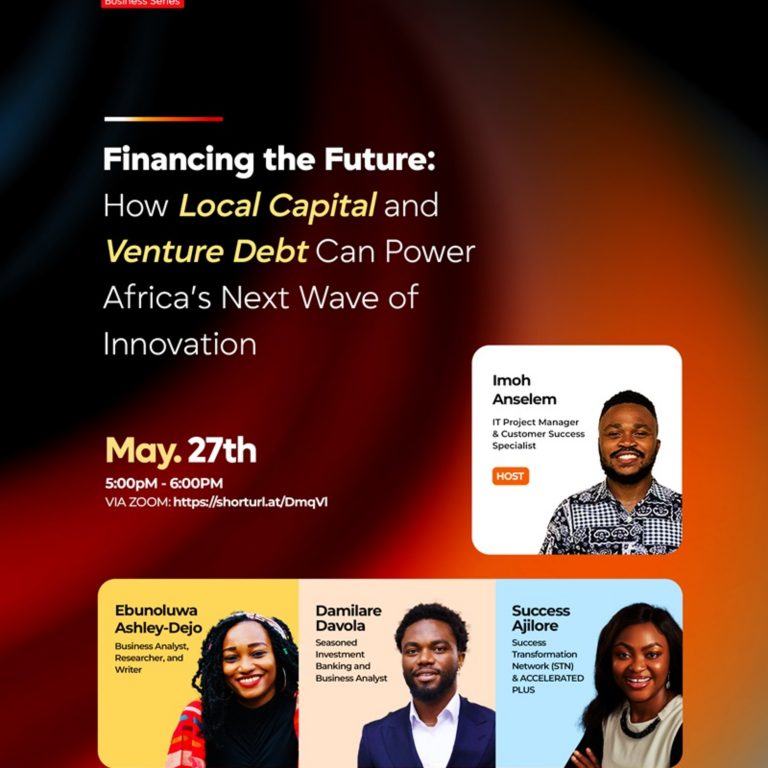
Financing the Future: Venture Debt, Local Capital & African Innovation | TBS May 2026 Webinar
byTecheconomy

Africa’s innovation ecosystem is evolving, but where will the funding for the next generation of startups come from?

In this edition of the Techeconomy Business Series (TBS) May 2026, industry experts explore how local capital, venture debt, and smarter investment structures are redefining startup growth and innovation across Africa.

🎙️ Featured Speakers:

* Ebunoluwa Ashley-Dejo

* Damilare Davola

* Success Ajilore (STN & Accelerated Plus)

Key conversations in this webinar include:

✔️ The future of startup financing in Africa

✔️ Venture debt and alternative funding models

✔️ The role of local investors in scaling innovation

✔️ Sustainable investment strategies for African startups

✔️ Opportunities and challenges in the African tech ecosystem

Subscribe for more conversations shaping Africa’s digital economy and innovation landscape.

#TBS2026 #AfricanInnovation #VentureDebt #StartupFinance #TechInAfrica #Techeconomy #AfricanStartups #InnovationEconomy

Financing the Future: Venture Debt, Local Capital & African Innovation | TBS May 2026 Webinar
May 27, 2026
Techeconomy
PROTECTING INNOVATION IN AFRICA’S STARTUP ECOSYSTEM
April 29, 2026
Techeconomy
BUILDING TRUST IN AFRICA ECOSYSTEM
February 27, 2026
Techeconomy
Navigating a Career in Tech Sales
January 29, 2026
Techeconomy
How Technology is Transforming Education, Health, and Business
November 27, 2025
Techeconomy
Search Results placeholder
MTN Live It 100 Thematic Campaign
ADVERTISEMENT
  • About Us
  • Careers
  • Contact Us
  • Privacy Policy

© 2026 TECHECONOMY.

No Result
View All Result
  • Technology
  • Business
  • Economy
  • Features
  • Editorial
  • Brand Content
  • TECHECONOMY TV

© 2026 TECHECONOMY.

This website uses cookies. By continuing to use this website you are giving consent to cookies being used. Visit our Privacy and Cookie Policy.