


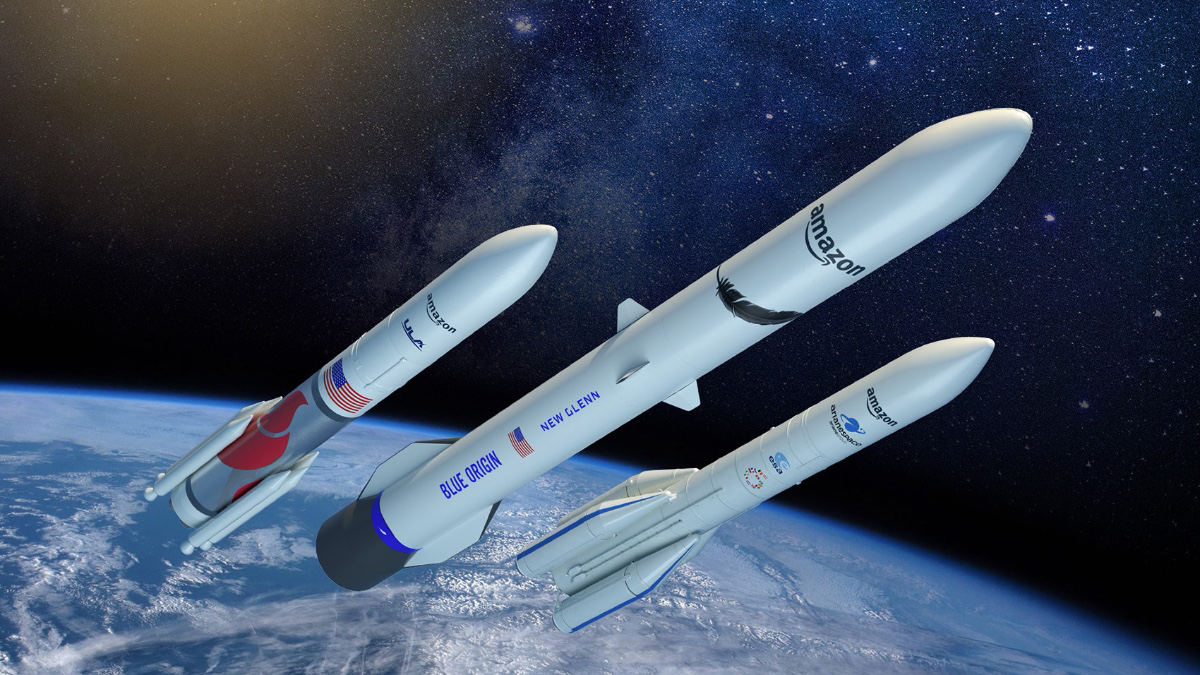
Amazon has agreed to acquire Globalstar in a deal valued at $11.57 billion, adding satellite assets and spectrum as it builds out its own network to compete in the space-based connectivity market.
The company said the acquisition will strengthen its low Earth orbit project, known as Project Kuiper, though it still trails SpaceX and its Starlink service by a wide margin.
Through the deal, Amazon gains Globalstar’s existing satellites, spectrum licences and infrastructure. That includes about two dozen satellites already in orbit, which will support its drive into direct-to-device services.
This technology allows mobile phones to connect directly to satellites without relying on ground towers, a feature seen as key for emergency use and coverage in remote areas.
Amazon plans to roll out its own satellite internet service later this year. It is also working towards deploying about 3,200 satellites by 2029, with a regulatory deadline requiring roughly half of that number to be in orbit by July next year.
Globalstar’s network will continue to support services already used by Apple devices. The company powers features such as Emergency SOS and Find My on iPhones and Apple Watches, and Amazon confirmed it has signed an agreement to maintain those services.
Apple had invested about $1.5 billion in Globalstar in 2024, securing a 20% stake to expand its satellite-based communication features. A new network backed by Apple is expected to increase Globalstar’s satellite count to 54.
Amazon said the acquisition will also allow it to introduce direct-to-device services from 2028. The system is expected to support voice, text and data connections, particularly in areas where mobile networks are unavailable.
Panos Panay, senior vice president of devices and services at Amazon, said: “There are billions of customers out there living, travelling, and operating in places beyond the reach of existing networks, and we started Amazon Leo to help bridge that divide.”
He added: “By combining Globalstar’s proven expertise and strong foundation with Amazon’s customer-obsession and innovation, customers can expect faster, more reliable service in more places, keeping them connected to the people and things that matter most.”
Despite the expansion, Amazon still faces strong competition. Starlink already operates the largest satellite network in the world, with more than 10,000 satellites and over 9 million users globally.
The service accounts for a significant share of SpaceX’s revenue and is growing through partnerships with telecom operators, including T-Mobile.
Analysts say scale is a big advantage for SpaceX. However, Amazon’s access to Globalstar’s spectrum could help it move faster in direct-to-device services, an area where competition is increasing.
Paul Jacobs, Globalstar’s chief executive, said: “We have long believed low Earth orbit satellite constellations offer the most effective path to truly connect users and devices anywhere and anytime.”
The deal offers Globalstar shareholders $90 per share, or the option to receive Amazon stock. That represents a premium of more than 30% compared with the company’s share price before talks became public.
Shares in Globalstar rose after the announcement, while Amazon’s stock also moved higher.
The transaction is expected to close in 2027, subject to regulatory approvals, including clearance from the Federal Communications Commission, and the achievement of certain deployment milestones.



