


ADVERTISEMENT
Monday, May 18, 2026
Tech | Business | Economy
No Result
View All Result
  • Technology
    • Trends
    • Telecoms
      • Broadband
    • ConsumerTech
      • Gadgets and Appliances
      • Apps
      • Accessories
      • Reviews
      • Unboxing
    • EnterpriseTECH
    • Security & Data Protection
    • How To
  • Business
    • Company News
    • StartUPs
      • Founder’s Story
      • Funding
    • Deals
    • People & Moves
    • SME & Entrepreneur Focus
    • BUSINESS SENSE FOR SMEs
    • Competition & Market Positioning
    • Commerce & Mobility
    • Travel
    • WomenPreneurs
  • Economy
    • Macroeconomic Trends
      • Macro Monday
      • TE Insights
    • Finance
      • Banks
      • Fintech
      • Insurance
      • Digital Assets
      • Personal Finance
    • Policies
      • Tech & Society
    • Market Analysis
    • Jobs & Workforce Economy
  • Features
    • Guest Writer
      • Chidiverse
      • Digital Assets
      • GameTech
    • EventDIARY
    • IndustryINFLUENCERS
    • MarkTECH
    • TBS
    • NewsEXTRA
  • Editorial
  • Brand Content
  • TECHECONOMY TV
Monday, May 18, 2026
Tech | Business | Economy
No Result
View All Result
Tech | Business | Economy
No Result
View All Result

Home » Blockchain’s Ripple Effect: Transforming Cross-Border Remittances and Financial Inclusion in Developing Economies

Blockchain’s Ripple Effect: Transforming Cross-Border Remittances and Financial Inclusion in Developing Economies

Techeconomy by Techeconomy
August 16, 2023
in EnterpriseTECH
Reading Time: 3 mins read
0
Cross-border remittances and Africa blockchain by BCC Research, AI | Dlab

Cross-border remittances and blockchain (Image: BCC Research)

Writer: MICHAEL OGWUDE

Blockchain, introduced in 2008, has been a total game-changer worldwide, especially in the financial sector. It’s like a superhero swooping in to solve the financial problems countries grapple with.

One highlight of blockchain is its ability to tackle cross-border remittances, making financial transactions between countries seamless. It’s like a magic wand waving away the complexities of international money transfers.

Cross-border remittances are essential for developing economies to engage in foreign trade and other financial activities with neighboring and foreign countries.

In line with this, blockchain, a secure, fast, and transparent way of performing financial transactions, is being leveraged by developing economies to grow even faster.
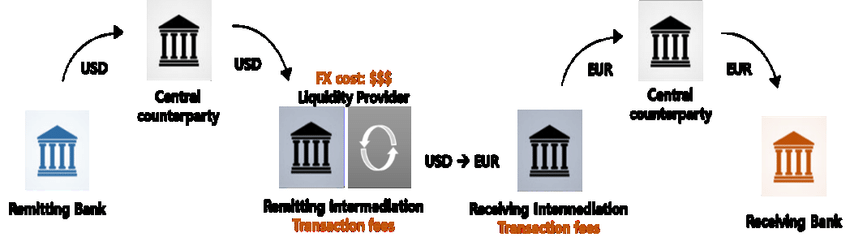
Traditional Cross-border remittances - by ResearchGate
Traditional Cross-border remittances (Diagram by ResearchGate/Google)

Overcoming Challenges with Blockchain: Efficiency Through Decentralization

Former CEO of Digital Asset Holdings – Blythe Masters, a popular blockchain adherent, said in a speech, “Blockchain is going to revolutionize the way we do business.”

Subscribe to our Telegram channel for the latest updates.

Follow the latest developments with instant alerts on breaking news, top stories, and trending headlines.

Join Channel

Before the creation and utilization of blockchain, the financial sector was very much centralized. In cross-border remittances, there is usually an intermediary or, in some cases, more than one, which is costly to those developing economies. Besides the cost, there was also a delay in the transaction process. Blockchain, through cryptocurrencies, for example, makes cross-border remittance easier with peer-to-peer (P2P) transfers, a payment made by individuals with different accounts directly to each other with the help of the internet. This takes out the stress faced by individuals and companies, in waiting for their local banks to process transactions, saving both cost and time.

Economic Empowerment and Financial Engagement

Blockchain helps economically developing countries easily engage in international trade. Most individuals in such countries do not have access to traditional banking systems, making them non-participants in economic activities they should typically have access to.

Since blockchain allows for internet banking through P2P and various other transfer means, these individuals can put their mobile phones to good use. Blockchain can help them perform in the financial system because there are not many barriers, and thanks to smartphones, making improved financial choices bolsters well-being.
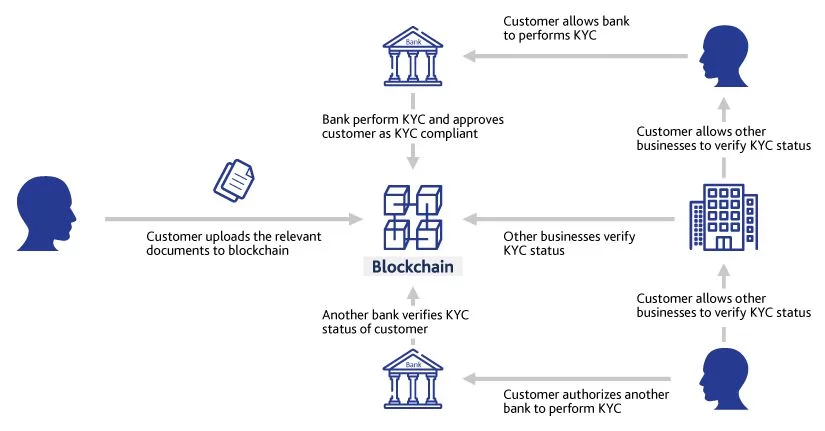
Blockchain Cross-border remittance process
Cross-border remittance process using Blockchain Technology

Limitation of Error

Unlike traditional cross-border remittances, blockchain reduces errors during transactions. Traditionally, an error may occur due to multiple intermediaries, leading to transaction delays and frustration.

However, with blockchain, transactions can, with ease, be settled. This is because it offers a secure and precise technology that blocks any error, unless made from the individual’s side. The process used by blockchain technologies is fast and transparent; the parties involved in the transaction are sure there can be no manipulation once the transaction is in progress since it is direct.

Conclusion

As global transformation occurs, more developing countries are starting to accept blockchain through cryptocurrencies like BTC, Ripple, and Ethereum. As a result of this, developing economies can catch up with those ahead of them and enjoy all the benefits that come with it,  including efficiency, security, and affordability.

Nothing comes with ease. Developing economies must know that in adopting blockchain for cross-border remittances, adequate provision must be made to accommodate growth.

The improvement of technological output in such countries is one means, another is the provision of sufficient information about blockchain and its advantages in financial transactions. Lastly, such economies’ governments should have better regulations guiding blockchain networks.

0Shares
Previous Post

Six Signs You Might Need a Financial Planner

Next Post

Google Introduces New West Africa Director to NITDA, Assures More Collaboration 

Techeconomy

Techeconomy

Related Posts

Valene Nagiah, head of Asset Tracking and Management at V-Track | Africa enterprise IT

Nagiah: Africa’s Enterprise Faces IT Visibility and Financial Risks 

May 13, 2026
NITDA and IDCA

NITDA, IDCA Launch National Digital Infrastructure Initiative

May 13, 2026

Telecoming Expanding AI Mobile Technology in South Africa

May 13, 2026
Load More
Next Post
Google West Africa Director, Olumide Balogun, and the Director General, National Information Technology Development Agency (NITDA), Kashifu Inuwa, CCIE, while presenting the former with NITDA'S Strategic RoadMap and Action Plan (SRAP) document, during a visit to NITDA'S corporate headquarters, in Abuja

Google Introduces New West Africa Director to NITDA, Assures More Collaboration 

Leave a Reply Cancel reply

Your email address will not be published. Required fields are marked *

I agree to the Terms & Conditions and Privacy Policy.

This site uses Akismet to reduce spam. Learn how your comment data is processed.

Techeconomy Podcast
Techeconomy Podcast

The Techeconomy Podcast is a thought-leadership show exploring the powerful intersection of technology, business, and the economy, with a strong focus on Africa’s fast-evolving digital landscape.

PROTECTING INNOVATION IN AFRICA’S STARTUP ECOSYSTEM
byTecheconomy

Protecting Innovation in Africa’s Startup Ecosystem . A timely conversation for the future of African entrepreneurship.

PROTECTING INNOVATION IN AFRICA’S STARTUP ECOSYSTEM
April 29, 2026
Techeconomy
BUILDING TRUST IN AFRICA ECOSYSTEM
February 27, 2026
Techeconomy
Navigating a Career in Tech Sales
January 29, 2026
Techeconomy
How Technology is Transforming Education, Health, and Business
November 27, 2025
Techeconomy
INNOVATION IN MOBILE BANKING
October 30, 2025
Techeconomy
Search Results placeholder
ADVERTISEMENT
  • About Us
  • Careers
  • Contact Us
  • Privacy Policy

© 2026 TECHECONOMY.

No Result
View All Result
  • Technology
  • Business
  • Economy
  • Features
  • Editorial
  • Brand Content
  • TECHECONOMY TV

© 2026 TECHECONOMY.

This website uses cookies. By continuing to use this website you are giving consent to cookies being used. Visit our Privacy and Cookie Policy.


