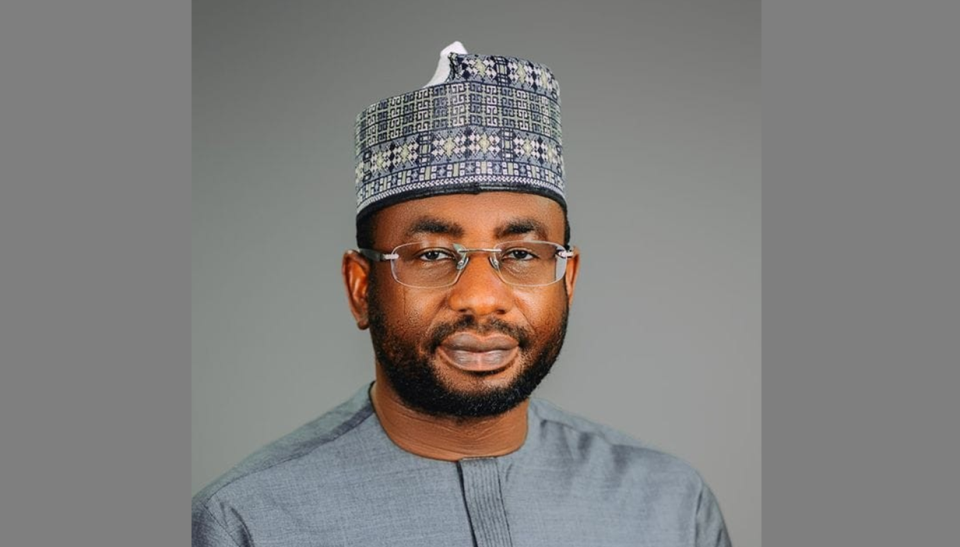
Kashifu Inuwa, the director general of the National Information Technology Development Agency, has raised concerns over the rapidly evolving cybersecurity risks driven by artificial intelligence, urging immediate and coordinated national action.
Speaking ahead of the formal inauguration of a proposed cybersecurity advisory council, Inuwa disclosed that the Ministry of Communications, Innovation and Digital Economy plans to convene at least two additional stakeholder engagement sessions.
According to him, the move underscores a deliberate commitment to inclusivity and transparency, mirroring the collaborative framework adopted in developing Nigeria’s National AI Strategy.
He explained that the increasing integration of artificial intelligence into everyday systems has significantly altered the cybersecurity landscape, introducing more complex and unpredictable threats.
“AI is changing the game and elevating the threat landscape. The more we integrate AI into our lives, the more we need to change the way we look at cybersecurity. There are two fundamental issues we need to think about,” he said.
The NITDA boss highlighted the dual nature of emerging threats, noting that cyberattacks are now being carried out both on AI systems and through AI technologies, thereby expanding the scope and scale of vulnerabilities.
He further warned about the rise of advanced AI-driven social engineering tactics, particularly the growing use of deepfake technology.
“We are also witnessing increasingly sophisticated AI-driven social engineering. The emergence of deepfakes makes it difficult to distinguish between AI-generated audio or video and authentic content. There have even been instances where such technology is used during virtual calls,” he noted.
“This is the reality of the world we live in today, and it is not a challenge any single entity can address in isolation. The only way forward is to strengthen collaboration and deepen synergy between governments and the private sector,” he added.
Inuwa stressed that cybersecurity resilience depends heavily on collective responsibility, cautioning that weaknesses within any single organisation could expose entire networks to risk.
“We are only as strong as our weakest link. If one entity is compromised, it creates risks for others within the network,” he stated, referencing recent incidents in which financial institutions were exploited to gain access to broader payment systems and even government infrastructure.
Commending the Minister for initiating the cybersecurity advisory council, the NITDA DG described it as a crucial platform for enhancing cooperation, facilitating information sharing, and building a more resilient national digital ecosystem.
He reaffirmed the agency’s commitment to supporting the council and collaborating with stakeholders across sectors to strengthen Nigeria’s cybersecurity framework in the face of evolving AI-driven threats.