


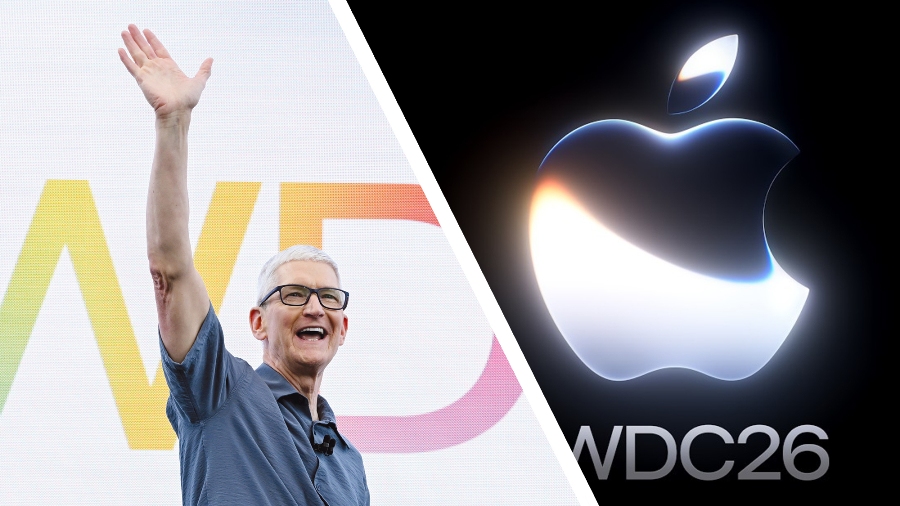
This month started with a wave of software announcements from the biggest technology ecosystems.
First, Google came up with a series of security and AI upgrades across Android and its broader services. Then Apple followed with its annual Worldwide Developers Conference (WWDC).
Unlike some of Apple’s more consumer-focused launch events, WWDC 2026 did not begin with the usual excitement surrounding new hardware and software improvements.
But eventually, the company introduced some of the most significant software updates across its ecosystem, at least for the next year.
Last year’s edition delivered its own notable milestones. The biggest highlights from WWDC 2025 included:
- The introduction of the Liquid Glass design language across all Apple device form factors.
- A unified operating system naming convention that aligns with calendar years.
- Apple opened portions of its on-device LLMs to third-party developers.
WWDC 2026, however, focused heavily on artificial intelligence, ecosystem integration and performance optimisation.
From a redesigned Siri experience and deeper Apple Intelligence integration to platform-wide efficiency improvements, Apple spent most of last week announcing refinements to how users interact with every one of their devices.
Here is a recap of the most significant announcements from the event.
Siri AI & Apple Intelligence Expansion
Last week, Apple unveiled the most ambitious update to Siri in years, repositioning the assistant as a far more capable AI layer across the company’s ecosystem.
Techeconomy reported that rather than acting as a simple voice assistant like the previous version, Siri now functions as an intelligent system designed to understand deeper personal context and maintain awareness across applications.
Aside from Siri’s upgrade, Apple’s Visual Intelligence now extends beyond the camera and integrates more deeply into the operating system.
During the keynote presentation on Apple Intelligence, Tim Cook illustrated that users can now identify objects, landmarks, products and on-screen content while receiving contextual information directly within supported applications.
Apple Intelligence also gains more advanced image editing capabilities, including Spatial Reframing for repositioning subjects within a scene and an enhanced Extend tool that can intelligently expand the boundaries of an image and still maintain visual consistency.
Performance & Design Enhancements
Aside from AI, Apple also emphasised platform optimisation and interface refinement.
Faster App Performance:
Apple says application launch times are significantly faster across supported devices, while media-heavy applications like Photos will be noticeably quicker when rendering and indexing.
Improved Data Transfers:
AirDrop is also receiving substantial efficiency improvements, leading to faster transfer speeds and better reliability when sharing large files between Apple devices.
Liquid Glass Refinements:
Apple continues to improve on the Liquid Glass design of last year with updated visual elements, better transparency controls and improved consistency across iPhone, iPad and Mac interfaces.
Platform And Operating System Updates
As expected, Apple introduced updates across every one of its major operating systems and device form factors.
iOS 27 & iPadOS 27:
The latest versions of iOS and iPadOS come with deeper Apple Intelligence integration, expanded writing tools within native applications and additional personalisation features across the user experience.
macOS 27 “Golden Gate”:
The newest version of macOS features a rebuilt Spotlight search experience that is powered by the same Apple Intelligence on iOS and iPadOS.
With this update, users get smoother system animations and it also marks another step in Apple’s gradual transition away from Intel-era software support.
watchOS 27:
watchOS also got some interface refinements, health-focused enhancements and a more intelligent Siri experience designed specifically for wearable interactions.
visionOS 27:
Apple did not leave the visionOS behind. The company expanded its spatial computing ambitions with new immersive media capabilities, including the ability to transform standard panoramic photos into more engaging spatial environments.
Privacy, Safety & Digital Trust
User privacy remains a central theme within Apple’s AI strategy. The privacy-focused upgrades introduced at the WWDC include:
Enhanced Child Safety Controls:
Parents can now convert standard accounts into protected Child Accounts more easily. New controls include expanded browsing restrictions, content management tools and improved screen-time monitoring.
AI Content Verification:
As AI content becomes harder to differentiate from what is real, Apple is doing its own part by making sure Apple Intelligence-generated and AI-modified images can now include cryptographic verification metadata, helping platforms and users identify AI-assisted content more reliably.
Hardware Requirements
Finally, not every feature announced at WWDC 2026 will be available to every Apple user.
Many of the most advanced Apple Intelligence features require newer hardware, including recent iPhone models and Apple Silicon-powered Macs and iPads. To be on the safe side, upgrade your iPhone to at least the iPhone 12 to get the full Siri AI experience and more.
Just like WWDC 2025, WWDC 2026 was more about making Apple’s ecosystem smarter, faster and more interconnected.
While artificial intelligence attracted the most attention, the main story was Apple’s effort to integrate AI into everyday workflows without disrupting the familiar experience that keeps its users within its ecosystem.



