

ADVERTISEMENT
Sunday, May 17, 2026
Tech | Business | Economy
No Result
View All Result
  • Technology
    • Trends
    • Telecoms
      • Broadband
    • ConsumerTech
      • Gadgets and Appliances
      • Apps
      • Accessories
      • Reviews
      • Unboxing
    • EnterpriseTECH
    • Security & Data Protection
    • How To
  • Business
    • Company News
    • StartUPs
      • Founder’s Story
      • Funding
    • Deals
    • People & Moves
    • SME & Entrepreneur Focus
    • BUSINESS SENSE FOR SMEs
    • Competition & Market Positioning
    • Commerce & Mobility
    • Travel
    • WomenPreneurs
  • Economy
    • Macroeconomic Trends
      • Macro Monday
      • TE Insights
    • Finance
      • Banks
      • Fintech
      • Insurance
      • Digital Assets
      • Personal Finance
    • Policies
      • Tech & Society
    • Market Analysis
    • Jobs & Workforce Economy
  • Features
    • Guest Writer
      • Chidiverse
      • Digital Assets
      • GameTech
    • EventDIARY
    • IndustryINFLUENCERS
    • MarkTECH
    • TBS
    • NewsEXTRA
  • Editorial
  • Brand Content
  • TECHECONOMY TV
Sunday, May 17, 2026
Tech | Business | Economy
No Result
View All Result
Tech | Business | Economy
No Result
View All Result

Home » FG Turns to Asset Sales to Fund 2026 Budget

FG Turns to Asset Sales to Fund 2026 Budget

At the heart of this strategy is a target to raise ₦189.16 billion in 2026 through the sale and privatisation of national assets

Peter Oluka by Peter Oluka
January 12, 2026
in Finance
Reading Time: 2 mins read
0
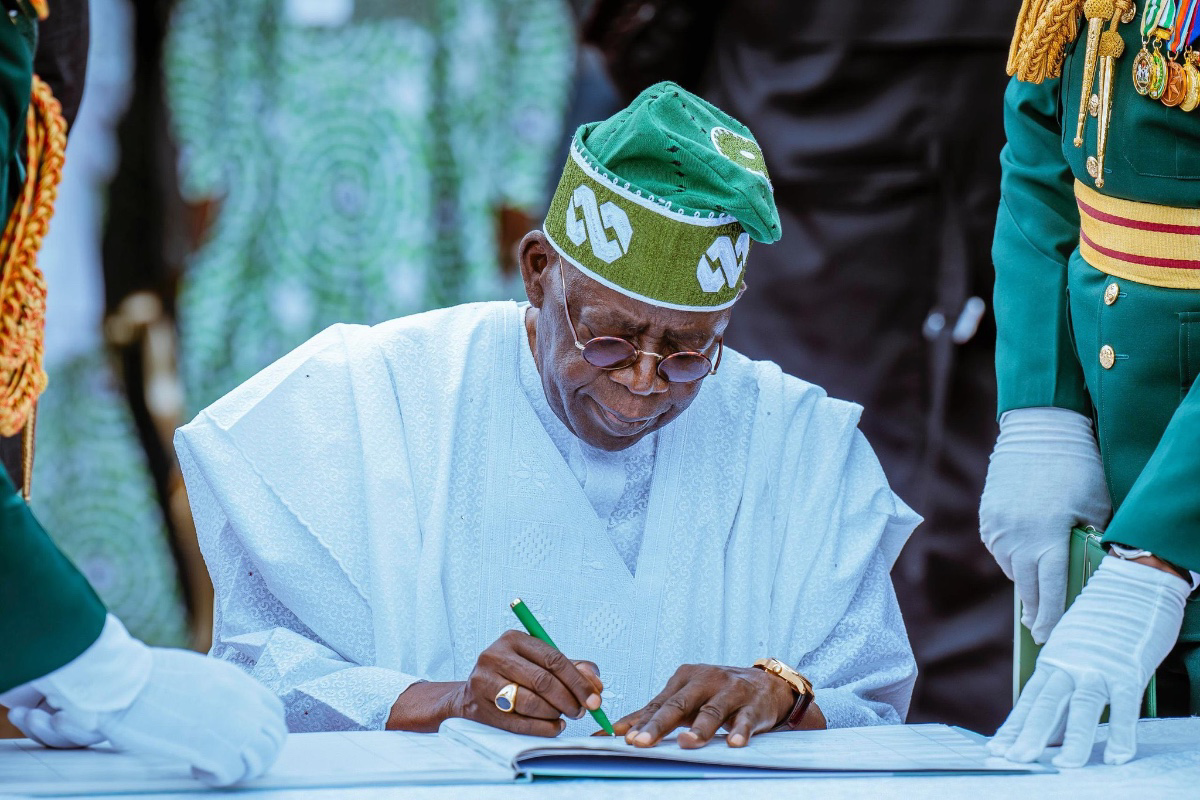
Tinubu Tables Nigeria’s Biggest Budget Yet at ₦58.1trn | FG assets

President Bola Tinubu

As Nigeria prepares to implement what is set to be one of its largest national budgets in history, the Federal Government is confronting a familiar challenge: where to find the money.

With projected revenues falling far short of planned spending, policymakers have begun tapping unconventional sources to keep the fiscal ship afloat, including selling parts of the nation’s own assets.

At the heart of this strategy is a target to raise ₦189.16 billion in 2026 through the sale and privatisation of national assets, a figure that may seem modest against a ₦58.47 trillion total expenditure plan but carries significant symbolic weight.

Asset disposals are now positioned as a necessary alternative to heavy borrowing and as a sign that the government is willing to rethink how it finances public services and capital investment.

The plan appears in the 2026 Appropriation Bill, which shows total projected revenue and inflows of ₦33.20 trillion, less than two-thirds of the government’s spending ambitions.

Subscribe to our Telegram channel for the latest updates.

Follow the latest developments with instant alerts on breaking news, top stories, and trending headlines.

Join Channel

The resulting ₦25.27 trillion deficit will have to be filled with a mix of asset sales, debt financing, and external project loans.

For ordinary Nigerians, the fiscal maneuvering reflects a broader story of economic pressure. Revenue shortfalls have dogged successive budgets, with the government routinely missing revenue targets and turning instead to borrowing through bonds, Treasury Bills, and other instruments.

Behind the numbers are decisions that could shape public services and national priorities for years to come.

The government’s asset portfolio includes enterprises spanning oil and gas, transport, agriculture, and industry, sectors long central to Nigeria’s growth story but also seen as ripe for private sector investment.

In 2025, for instance, policymakers confirmed plans to privatise 91 federal assets, including refineries, depots, agricultural firms, and aviation services, to enhance efficiency and attract fresh capital.

Critics argue that asset sales alone cannot shoulder Nigeria’s expanding fiscal burden. With debt servicing consuming trillions of naira and recurring expenditure towering over available revenue, some analysts say the government must strengthen non-oil revenue streams, including taxes and digital economy levies, if it is to achieve sustainable financing.

Still, the inclusion of asset sales in the 2026 financing mix signals a shift in fiscal thinking. What was once a peripheral strategy is now a central plank of the government’s budget story, at a time when raising revenue without further indebting the nation has become a political and economic imperative.

As Nigeria’s lawmakers continue to scrutinise the budget, the question many are asking is not just how much the government plans to spend, but how it intends to pay for it, and what that means for citizens waiting for better roads, schools, health care, and jobs.

0Shares
Previous Post

5.7% Air Passenger Demand Growth in November 2025 – IATA

Next Post

Nigeria’s First 2026 Treasury Bill Auction Oversubscribed at ₦1.5 Trillion

Peter Oluka

Peter Oluka

Peter Oluka (@peterolukai), editor of Techeconomy, is a multi-award winner practicing Journalist. Peter’s media practice cuts across Media Relations | Marketing| Advertising, other Communications interests. Contact: peter.oluka@techeconomy.ng

Related Posts

CBN OMO | Olayemi Cardoso | FX Manual

Cardoso Unveils Revised FX Manual to Deepen Nigeria’s Foreign Exchange Reforms

May 16, 2026
CoinEx | Crypto Savings vs Traditional Savings

Crypto Savings vs. Traditional Bank Savings Accounts: What is the Difference?

May 16, 2026

FCMB Backs REA ₦257.6 billion Fund Raise to Develop 191MW Solar Capacity

May 14, 2026
Load More
Next Post
CBN Treasury bills - old naira notes, Nigerian Banking System | auction

Nigeria’s First 2026 Treasury Bill Auction Oversubscribed at ₦1.5 Trillion

Leave a Reply Cancel reply

Your email address will not be published. Required fields are marked *

I agree to the Terms & Conditions and Privacy Policy.

This site uses Akismet to reduce spam. Learn how your comment data is processed.

Techeconomy Podcast
Techeconomy Podcast

The Techeconomy Podcast is a thought-leadership show exploring the powerful intersection of technology, business, and the economy, with a strong focus on Africa’s fast-evolving digital landscape.

PROTECTING INNOVATION IN AFRICA’S STARTUP ECOSYSTEM
byTecheconomy

Protecting Innovation in Africa’s Startup Ecosystem . A timely conversation for the future of African entrepreneurship.

PROTECTING INNOVATION IN AFRICA’S STARTUP ECOSYSTEM
April 29, 2026
Techeconomy
BUILDING TRUST IN AFRICA ECOSYSTEM
February 27, 2026
Techeconomy
Navigating a Career in Tech Sales
January 29, 2026
Techeconomy
How Technology is Transforming Education, Health, and Business
November 27, 2025
Techeconomy
INNOVATION IN MOBILE BANKING
October 30, 2025
Techeconomy
Search Results placeholder
ADVERTISEMENT
  • About Us
  • Careers
  • Contact Us
  • Privacy Policy

© 2026 TECHECONOMY.

No Result
View All Result
  • Technology
  • Business
  • Economy
  • Features
  • Editorial
  • Brand Content
  • TECHECONOMY TV

© 2026 TECHECONOMY.

This website uses cookies. By continuing to use this website you are giving consent to cookies being used. Visit our Privacy and Cookie Policy.


