

At the start of 2025, there were 5.56 billion internet users worldwide; Nigeria alone had 107 million internet users and 38.7 million social media user identities.
This reveals that African markets are large, mobile-first and still unevenly connected.
Most African businesses do not need a platform trophy. They need customers who pay. With tight marketing budgets, every wasted click is real money lost.
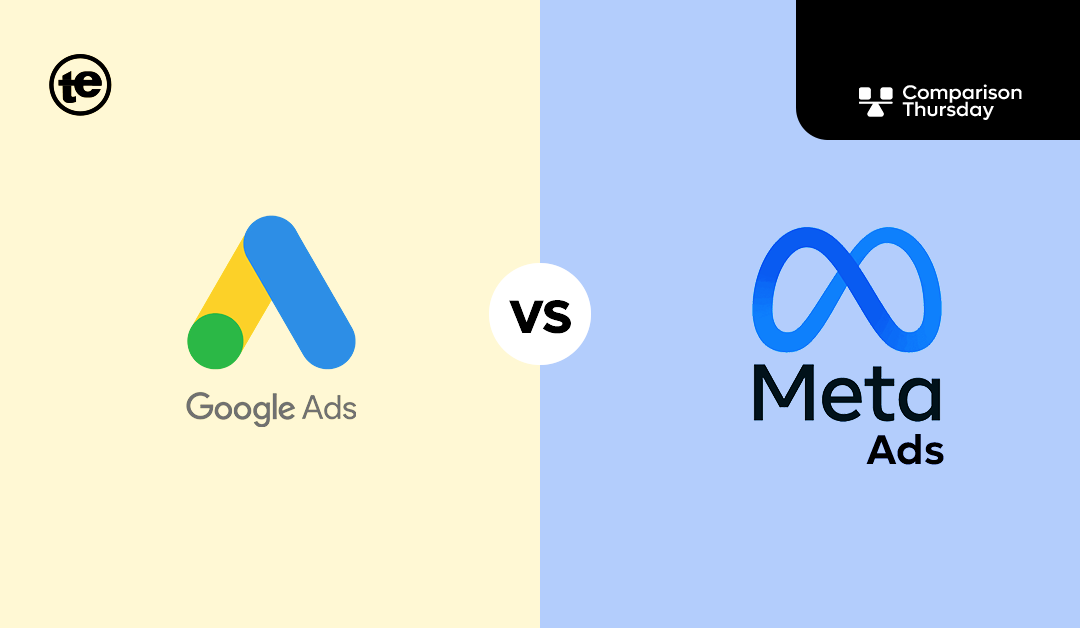
We shouldn’t be asking “which platform is better” in the abstract, we should ask “which platform gives me buyers for my money, today?” I’ll show you how to answer that for your business, sector and funnel.
The advertising context in Africa
Digital ad spend is large and growing: global internet ad revenue climbed strongly in 2024, and digital formats make up the majority of that growth.
At the same time, African markets are impacted by mobile-first users, heavy social engagement, and real-world follow-up channels such as WhatsApp and phone calls.
Nigeria is scaling, but other markets still lag in penetration and search volume.
This means benchmarks from Europe or the US mislead. Local behaviour and the downstream sales process decide outcomes more than platform sophistication.
How Google Ads drives leads (intent economics)
Google gives leads by answering a search intent. People search because they have a problem or need now. That intent is what makes search-driven leads easier to qualify and quicker to convert.
Practical realities:
- Search ads capture demand that exists already.
- Keywords with commercial intent (eg “buy solar inverter Lagos”) often deliver high-converting traffic.
- For services with immediate need; repairs, legal help, urgent courses; Google usually puts you in front of the ready buyer.
Limitations:
- In smaller or niche African markets, search volume for high-intent keywords can be low.
- Competitive CPCs on profitable keywords rise fast.
- A strong keyword and landing-page strategy is required; poor execution wastes money.
How Meta Ads drives leads (discovery economics)
Meta’s platforms work the opposite way: they interrupt attention and create interest. Users scroll. They don’t always look to buy. That’s both the opportunity and the problem.
Practical realities:
- Meta yields scale and visual storytelling power.
- Campaigns can spark interest, capture leads through forms, or drive traffic to WhatsApp.
- It works especially well for brand-first offers and product discovery.
Limitations:
- Leads tend to be softer; lower initial intent.
- Creative quality and funnel design determine success.
- Without strong qualification and follow-up, many leads remain non-converting.
Lead quality; separating volume from value
This is the heart of the matter.
Google leads generally:

- Arrive hotter.
- Close faster.
- Require shorter qualification.
Meta leads generally:
- Arrive colder.
- Need more nurturing.
- Demand better follow-up systems (WhatsApp flows, phone outreach, email sequences).
This pattern is similar across sectors. A lead from search usually bypasses four qualification steps a Meta lead must pass. That saves time and reduces lost opportunities.
Cost per acquisition (CPA) realities; what numbers hide
Click cost (CPC) is not the same as acquisition cost (CPA).
- Cheap clicks on Meta can create expensive CPAs if a high share of leads never convert.
- Higher CPC on Google can still be cheaper overall when conversion rate is far higher.
- Hidden costs are important: time spent qualifying leads, manual follow-ups, and poor landing pages.
So when comparing CPAs, measure final business results; paying customers per platform after real-world follow-up, not just clicks or leads. I recommend testing both platforms with identical offer, tracking actual sales and then comparing CPA to lifetime value.
Industry-by-industry performance; practical rules of thumb
- Professional services (law, healthcare, consulting)
- Google tends to be on top. Clients search specific needs and show buying intent.
- Meta can build awareness for longer consideration services, but closing usually requires search or direct outreach.
- Real estate
- Mixed. Google captures immediate buyers searching locations; Meta targets passive browsers and can work when paired with strong retargeting.
- Education & training
- Google for high-intent searches (short courses, certification). Meta for awareness and lead-gen for long-enrolment cycles, provided there is strong follow-up.
- E-commerce (consumer goods)
- Meta usually provides better scale and creative performance for impulse buys. Google Shopping and search work for branded or high-intent purchases.
- Fintech & digital services
- Both platforms can work. Google Ads for demand capture, Meta Ads to test product-market fit and run app-install or lead-gen funnels.
These are starting points. Each vertical requires live tests and local calibration.
Remarketing: where cross-platform strategy beats single-platform bets
Remarketing is the multiplier. It turns discovery into intent and intent into customers.
- Use Meta to re-engage visitors who saw creative or watched video.
- Use Google remarketing (search and display) to catch previously interested users when they search with intent.
- Combine platform data with WhatsApp and SMS follow-up for markets where phone contact converts best.
In Africa, remarketing that moves the conversation to WhatsApp or a phone call often outperforms pure web-based funnels.
Tracking, attribution and the real transparency problem
Tracking is the chronic headache.
- Attribution gaps happen because users switch devices, clear cookies, or interact offline.
- Conversion events tracked inside platforms may differ from your CRM’s offline conversions (calls, WhatsApp sales).
- Privacy and signal loss reduce pixel reliability.
The solution is to prefer outcome-based measurement: map platform events to real closed deals in your CRM, and attribute revenue conservatively. Spend effort on reliable conversion import (offline conversion tracking) and call-tracking where phone sales matter.
Common mistakes African businesses make
I see the same errors often:
- Copying international creatives and expecting local behaviour to match.
- Ignoring the follow-up systems (landing page, WhatsApp flow, call script).
- Assuming lower CPC equals better ROI.
- Relying solely on one platform.
- Failing to test creative and landing pages simultaneously.
Fix those and platform choice becomes a tactical decision, not a strategic trap.
Decision framework; how I decide for clients (practical, testable)
Answer these four questions:
- What is the user intent at the moment of contact?
- If they show demand now → start with Google.
- How long is your sales cycle?
- Short cycle (days) → Google favours you.
- Long or exploratory cycle → Meta plus nurturing works.
- What follow-up channels convert best for you?
- If WhatsApp/phone close most deals, invest in Meta-to-WhatsApp funnels and strong qualification.
- If web conversions close best, optimise search + landing pages.
- What is your budget and tolerance for testing?
- Small budgets: focus on the higher-intent channel first and ensure follow-up is tight.
- Larger budgets: parallel testing with cross-platform remarketing.
Use a 90-day test for Google Ads and Meta Ads: identical offer, equal creative effort, clear offline conversion mapping, and measure true CPA (sales closed) not just leads.
The platform is a tool, not the answer
I will say this: neither Google Ads nor Meta Ads closes the deal for you. The closing happens when attention is matched with intent, when creative and offer align, and when a follow-up system moves the lead to payment.
In Africa, that usually means building funnels that respect local behaviour; mobile-first, WhatsApp-enabled, and attribution-aware.
Start with intent. Measure outcomes. Optimise follow-up. Let platform choice follow those priorities.