
Long before Joan Nwosu built a relationship intelligence engine, Nigeria taught her how to find the problem underneath the problem.
As head of the Tinapa hub of iDea Hub, the technology incubator established under the Federal Ministry of Communication Technology during Minister Omobola Johnson’s tenure, Nwosu worked alongside founders navigating the demanding space between a compelling idea and a solution that actually works.
The environment was fast-moving and unforgiving. Ambition was not enough. Clarity about the real problem was everything.
In June 2026, she launched LACE, the Love Alignment and Compatibility Engine, from Canada. The discipline she carried out of Nigeria is visible in every layer of it.
Learning to find the real problem
Nwosu’s interest in decision-making technology began early.
In 2003, she completed a university dissertation at London South Bank University exploring the use of artificial intelligence to help people identify careers aligned with their strengths.
The question driving that research would run through everything she built afterward. When the consequences are significant, people deserve better intelligence than instinct alone.
Her years at iDea Hub gave that question a commercial and entrepreneurial edge. She worked with founders who needed more than vision.
They needed evidence that the market cared, a model that could survive beyond the original idea, and the discipline to keep asking questions until the structural gap became visible.
“The initial problem people describe is not always the real one,” she says. “Sometimes the breakthrough comes when you stay with the question long enough for the true structure to emerge.”
That habit became central to LACE.
The gap the industry left open
Modern dating technology has focused heavily on helping people meet. Filters, behavioural data, recommendation systems, and artificial intelligence now connect users based on location, preferences, interests, and stated values. Access has never been greater.
Nwosu saw the deeper problem that remained unresolved.
People could meet more potential partners while continuing to make poor relationship decisions. They could identify shared interests without understanding how a connection would function in daily life. They could experience intense attraction without knowing whether the relationship had the structural capacity to support the future they wanted.
“The real gap appears after two people find each other,” she says. “They still need a way to understand the relationship they are actually entering.”
LACE provides that layer of intelligence.
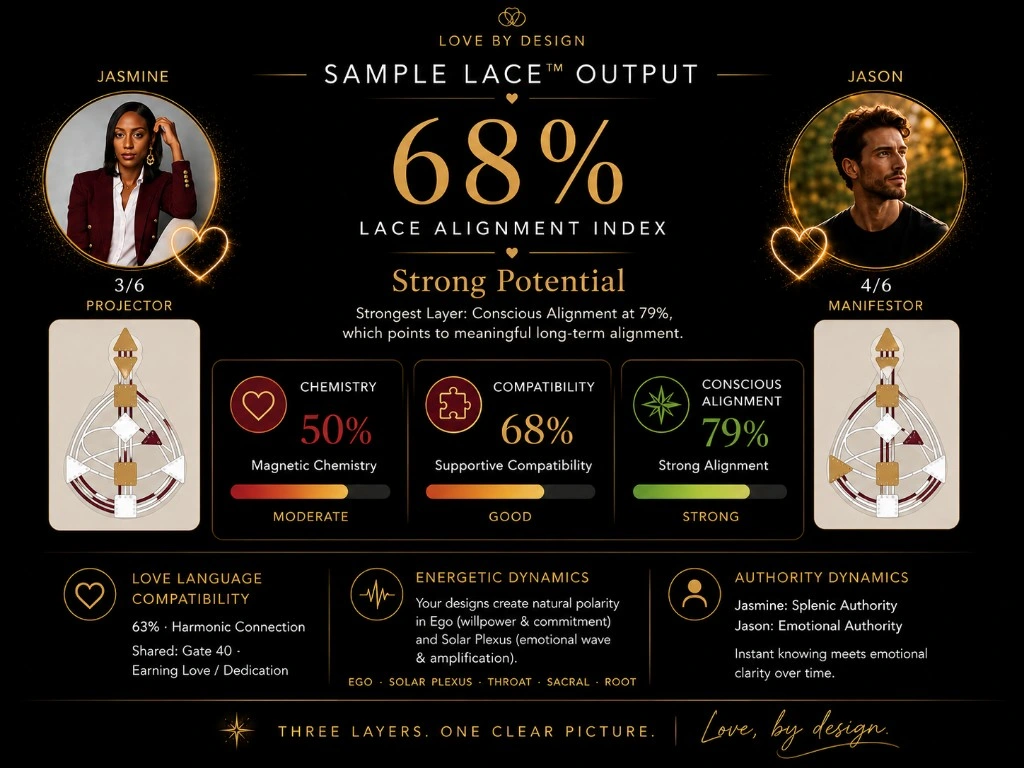
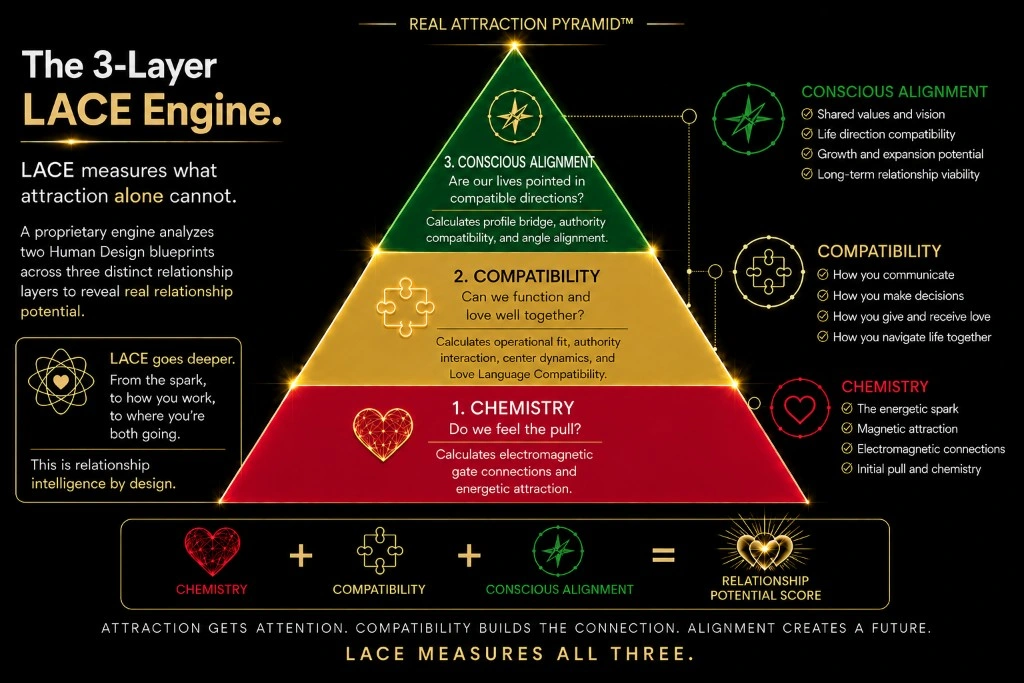
The platform examines a connection across three distinct layers. Chemistry examines the energetic interactions driving attraction and recognition.
Compatibility examines how two people operate in the day-to-day architecture of a shared life. Conscious alignment examines whether the connection has the structural capacity to support shared direction and long-term purpose.
The result is a scored assessment that gives individuals and relationship professionals a framework for discernment before emotional, financial, and relational investment deepens.
The platform is available through individual reports, professional dashboards, API integration, and white-label licensing for dating applications, matchmaking services, and relationship-focused businesses globally.
A personal problem becomes a formal system
Professional success did not protect Nwosu from the problem she eventually built a solution for.
Before she was a technology founder, she was a woman who moved through eight engagements and a divorce, each time believing she had finally chosen correctly, each time arriving at the same conclusion. The self-awareness was present.
The analytical rigour she applied to every professional decision was absent from the most consequential personal ones.
“I knew how to evaluate systems professionally,” she says. “I understood risk, pattern recognition, and structural failure. In love, I was making my most significant decisions from chemistry.”
That recognition drove more than a decade of research into attraction, compatibility, and the deeper architecture of relationships.
Personal inquiry became formal model. Formal model became scoring methodology. Scoring methodology became LACE.
The process reflected the discipline she had seen among the strongest founders at iDea Hub. A meaningful solution begins with someone willing to stay with a difficult problem long enough to understand what it actually is.
The Nigerian imprint on LACE
The influence of Nigeria’s innovation ecosystem runs deeper than business strategy.
African cultures have historically understood that partnership decisions carry consequences beyond immediate attraction.
Character, family context, values, purpose, and long-term stability formed part of the evaluation long before dating technology existed. Attraction was the beginning of an inquiry, not the conclusion of one.
Nwosu built LACE from that same instinct. The desire for deeper discernment before commitment has always existed. The technology now exists to organise that intelligence and make it accessible at scale.
“The desire for deeper understanding is not new,” she says. “Technology gives us a new way to structure that intelligence and make it useful.”
The commercial architecture of LACE reflects the incubator lesson she carried out of Nigeria. An idea reaches its potential when it can become useful across multiple settings without losing the integrity of the problem it was created to solve.
The platform’s applications extend across dating platforms, matchmaking services, relationship coaching, couples’ education, and relationship-based entertainment globally.
Building the next chapter
After leaving Nigeria, Nwosu extended her career across enterprise technology, financial services, cybersecurity, and organisational transformation in the UK and Canada, eventually serving as Director of Agile Transformation.
Each chapter deepened her ability to examine complex systems and translate ideas into structures that produce real outcomes.
In November 2026, she publishes The New Love Languages: Unlock Lasting Love Through 10 Human Design Gates with GracePoint Publishing. The book examines how individuals are designed to give and receive love.
Where LACE examines the architecture of a specific connection, the book examines the architecture of the individual. Together they form a coherent body of work built on the same foundation: that the most consequential decisions people make deserve the most rigorous thinking available.
LACE was launched from Canada. The founder behind it was shaped in Nigeria. The lessons of iDea Hub remain visible in every structural decision she has made since.
Find the real problem. Understand it completely. Build something that raises the quality of the decision permanently.
Joan Nwosu is the founder of LACE, the Love Alignment and Compatibility Engine | joannwosu.com/lace.