



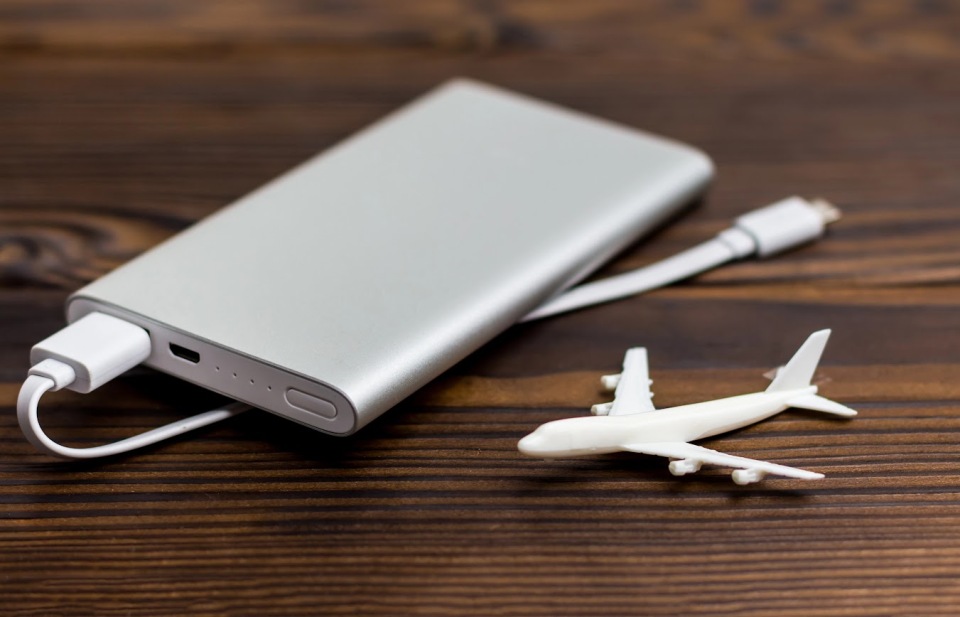
Ibom Air has announced a significant update to its cabin safety protocols, strictly prohibiting the storage of power banks in overhead bins.
The move, which aligns with a recent directive from the Nigerian Civil Aviation Authority (NCAA), is designed to mitigate the growing risk of lithium battery fires, specifically a phenomenon known as thermal runaway, during flights.
The New At-Hand Storage Rule
Effective immediately, passengers on Ibom Air are required to keep all portable power sources within immediate reach.
The airline’s updated policy specifies the following storage requirements:
Prohibited: Overhead bins (hat racks) and checked-in baggage.
Permitted: Seat-back pockets, under the seat in front, or within a carry-on bag kept at the passenger’s feet.
By keeping these devices visible and accessible, the airline ensures that cabin crew can respond instantly if a device begins to smoke or overheat.
Storing them in overhead bins often delays detection, allowing a potential fire to spread to other luggage before intervention is possible.
Capacity Limits: Understanding Watt-Hours (Wh)
The airline has also clarified the technical specifications for devices allowed on board. While most consumer electronics use Milliampere-hours (mAh) for branding, aviation safety is measured in Watt-hours (Wh):

- Under 100Wh: Permitted without prior airline approval (standard for most smartphones and small tablets).
- 100Wh to 160Wh: Requires prior approval from Ibom Air before travel.
- Above 160Wh: Strictly prohibited on all flights.
Tech Tip: To calculate your power bank’s Watt-hours, use the formula: (mAh x Voltage) / 1000 = Wh. For a standard 20,000mAh power bank at 3.7V, the rating is 74Wh, which is well within the safety limit.
The Danger of Thermal Runaway
The policy shift follows a global uptick in lithium-ion battery incidents. Unlike smartphones or laptops, many third-party power banks lack advanced thermal management systems.
If a battery cell is damaged or short-circuited, it can enter thermal runaway, a state where the battery generates heat faster than it can dissipate it.
At 35,000 feet, these fires are notoriously difficult to extinguish because they produce their own oxygen and can reignite even after being doused.
What This Means for Travelers
Ibom Air joins a growing list of global carriers, including United Nigeria Airlines and international giants like Lufthansa and Qantas, in adopting the IATA Dangerous Goods Regulations (67th Edition).
Beyond storage, the new standards also prohibit:
- Charging power banks from in-seat USB ports.
- The use of power banks to charge other devices during taxi, takeoff, and landing.
For the tech-savvy traveler, these regulations underscore the shift toward safe energy in the aviation industry.
While it may seem like an inconvenience, the move protects the airline’s high-value assets and ensures operational continuity.
As the gadget density per passenger increases, we expect more African carriers to enforce similar technocratic safety standards to prevent costly mid-air emergencies.