As concerns over press freedom, newsroom independence, and digital surveillance continue to grow, media professionals in Nigeria have called for stronger protection for journalists and greater support for evidence-based reporting (Start Reading from here).
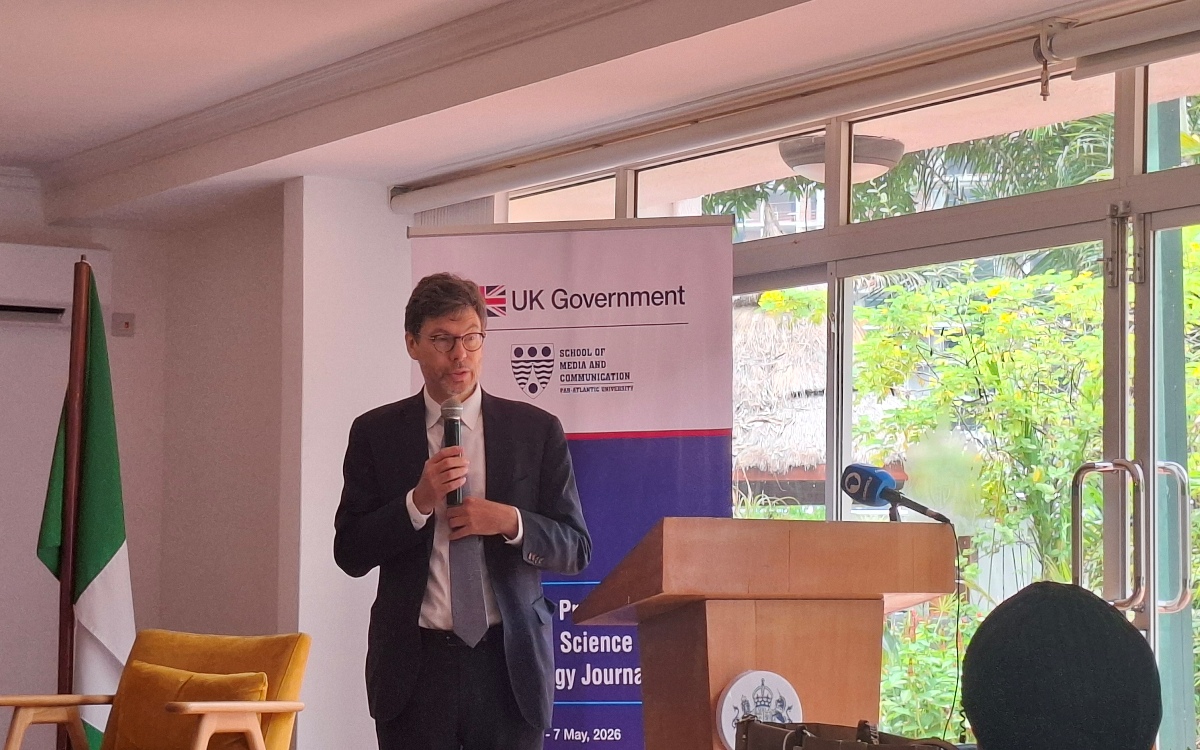
The concerns were raised during discussions at the residence of the British Deputy High Commissioner, as part of a three-day media training programme themed, “Advancing Media Freedom through Science and Technology Journalism,” organised at the School of Media and Communication, Pan-Atlantic University (PAU), with support from the British High Commission.
The event, which brought together journalists, academics, and communication experts, focused on the growing intersection between press freedom, science reporting, technology, misinformation, and ethical journalism in Nigeria.
Opening the panel session, the moderator, Silk Ugwu Ogbu, said there was an urgent need to bridge the gap between governance realities and the information available to the public.
Dr. Ogbu is an associate professor of Communication and Relationship management at the Pan-Atlantic University. According to him, tensions often arise because government institutions and journalists operate from different realities, making collaboration increasingly necessary for accountability and responsible communication.
The discussions come at a time when concerns over press freedom and misinformation are intensifying globally.
According to the latest data from Reporters Without Borders, Nigeria continues to face significant press freedom challenges, including political pressure, attacks on journalists, poor access to information, and economic vulnerability within the media sector.
Speaking during the session on evidence-based journalism, Amarachi Ubani, Channel’s Television’s diplomatic editor, said audiences are increasingly more likely to trust reports supported by verifiable evidence such as statistics, visuals, videos, eyewitness accounts, and official confirmations.
She explained that factual reporting becomes more impactful when supported by concrete evidence.
Using flooding incidents as an example, Ubani noted that simply reporting deaths may not generate strong public reaction. However, presenting casualty figures alongside images, videos, and confirmation from emergency response agencies makes such stories more credible and compelling.
According to her, visual evidence often compels government action because it exposes realities that might otherwise be ignored.
“Evidence-based journalism helps audiences connect emotionally and intellectually with stories,” she said, adding that credibility remains one of journalism’s strongest assets in the digital age.
On the challenges confronting science and technology journalism, Dr. Margaret Agada-Mba, senior a lecturer at Pan-Atlantic University, identified structural, editorial, and digital obstacles limiting effective reporting in the sector.
She explained that despite science and technology driving much of global economic and social development, there remains a major communication gap between researchers and the public.
According to her, journalists play a critical role in translating complex scientific concepts into simple and relatable stories for everyday audiences.
However, she noted that many Nigerian media organisations still lack dedicated science and technology desks or adequately trained reporters to cover specialised sectors effectively.
Dr. Agada-Mba also raised concerns about editorial interference and ownership influence within media organisations, warning that some journalists are discouraged from pursuing certain public-interest stories.
She further highlighted the growing dangers of online harassment, intimidation, and coordinated digital attacks targeting journalists whose reports may be perceived as unfavourable by certain individuals or groups.
Such hostile digital environments, she warned, are discouraging journalists from covering sensitive but important issues.
She called for improved newsroom support systems, stronger editorial independence, continuous professional training, and deliberate efforts to make science and technology reporting more accessible to younger audiences.
The issue of digital safety also featured prominently during the discussions.
Tomi Vincent, also a senior lecturer at PAU, warned that digital technology has significantly complicated journalists’ safety and source protection despite existing legal safeguards.
According to him, while legal precedents support journalists’ rights to protect confidential sources, modern surveillance technologies now make it easier to trace communications and identify information leaks if proper digital security measures are not adopted.
He urged journalists to become more deliberate about encryption, secure communication tools, device protection, and responsible information handling.
“Legal protection alone is no longer enough if journalists fail to protect themselves technologically,” Vincent said.
He cautioned that digital footprints could easily expose both journalists and confidential sources if sensitive information is poorly managed.
Beyond newsroom challenges, participants also examined the role of public trust and media literacy in protecting journalism itself.
To this end, Dr. Agada-Mba stressed that audiences must be educated to distinguish factual reporting from misinformation, propaganda, and emotionally manipulative online content.
According to her, stronger media literacy could help reduce toxic online behaviour and encourage audiences to defend credible journalism against harassment and coordinated digital attacks.
Closing the discussion, Dr. Ogbu noted that while governments and political administrations may change over time, the media remains a permanent institution within society, making public trust essential for journalism’s long-term survival.
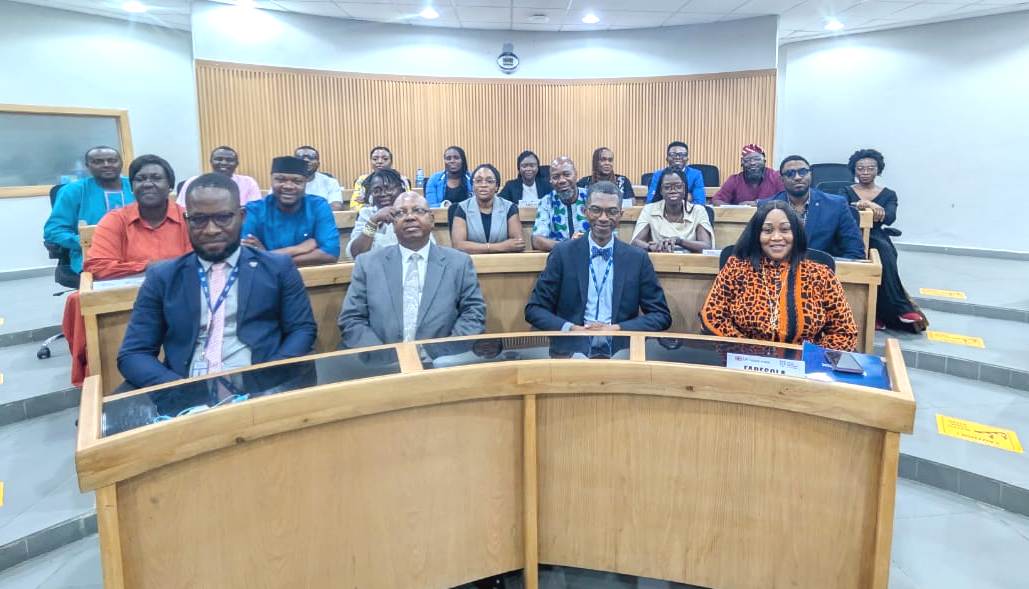
The training programme, with 60 journalists in attendance, forms part of broader efforts to strengthen ethical journalism, evidence-based reporting, and media professionalism in Nigeria amid growing concerns over misinformation, artificial intelligence, digital manipulation, and declining trust in public information ecosystems.