


The global technology landscape is undergoing a decisive shift, one that is redefining how startups are built, scaled, and protected.
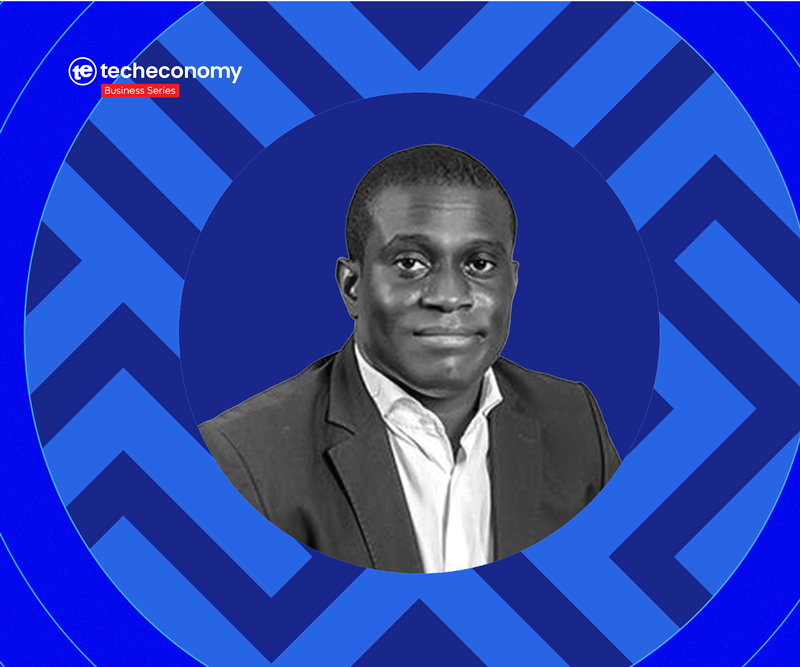
Speaking during the April 2026 edition of the Techeconomy Business Series (TBS), Kayode Akintunde, an AI Solutions Architect & Implementation Specialist, said the era of the API economy has rapidly given way to an LLM (Large Language Model) economy, where intelligence is embedded, competition is borderless, and innovation cycles are dramatically compressed.
This shift is not just technological, it is strategic. It demands that founders rethink not only what they build, but how they protect, validate, and deploy their ideas in a world where duplication is easy and speed is everything.
From Idea Advantage to Execution Urgency
In Akintunde’s view, one of the biggest misconceptions among early-stage founders is the belief in the uniqueness of their ideas. That illusion no longer holds.
“Any idea you have today, at least 100 others are already thinking about it.”
This reality introduces a new urgency. Innovation is no longer about who thinks first, it is about who validates faster, executes smarter, and protects better.
For African startups, this is particularly critical. While the continent boasts immense talent and creativity, founders often operate within constraints, power shortages, high operating costs, infrastructure gaps, that slow down execution. In such an environment, wasted effort or premature exposure of ideas can be costly.
Akintunde’s response is clear: founders must move from aspirational thinking to evidence-backed innovation.
Rethinking Idea Protection in the LLM Era
The first layer of protection Akintunde highlights is idea protection, but not in the traditional sense of secrecy alone.
Instead, he advocates for what he calls dynamic thinking, a process where ideas are continuously stress-tested using data, AI tools, and global benchmarks. Founders are encouraged to move beyond intuition and leverage AI platforms to:
- Validate whether their idea already exists elsewhere
- Understand competitive positioning globally
- Refine their concept based on real-world signals
In this new paradigm, protection is not just about hiding ideas; it is about strengthening them before exposure.
At the same time, he warns against over-sharing, particularly in early stages. The practice of presenting fully detailed pitch decks or product architectures can leave startups vulnerable.
His recommendation: strategic redaction.
By sharing only what is necessary, enough to attract interest but not enough to replicate, founders can maintain a balance between visibility and security. This is especially important in a funding environment where investors and accelerators increasingly rely on AI tools to evaluate, and sometimes replicate, ideas at scale.
The Hidden Risk of Early Funding
Perhaps the most counterintuitive insight from Akintunde’s submission lies in his stance on funding.
In a startup ecosystem where fundraising is often celebrated as a milestone, he offers a cautionary note: capital can be vulnerable if accessed too early.
Early equity deals, he argues, often come at the cost of control. Founders who rush into funding rounds without strong validation or leverage may find themselves giving up disproportionate ownership, losing decision-making authority, and becoming sidelined in their own ventures.
“Let equity be your last option,” he advises.
Instead, the LLM economy offers new pathways for lean experimentation. With AI tools, cloud infrastructure, and rapid prototyping capabilities, startups can now build, test, and iterate at significantly lower costs than before.
This creates an opportunity for founders to delay dilution, build stronger products, and approach investors from a position of strength rather than desperation.
Consumer Protection as a Competitive Strategy
Beyond ideas and capital, Akintunde introduces a third, often overlooked layer: consumer protection.
In an era where users are empowered by technology and alternatives are abundant, trust has become a critical differentiator. Startups that fail to prioritize their users risk rapid churn, especially in markets like Africa, where price sensitivity is high.
His guidance is twofold:
- Affordability matters
Products must reflect the economic realities of their target users. Passing operational inefficiencies, such as high fuel or infrastructure costs, onto consumers is a fast track to failure. - Users should feel like stakeholders
Successful products create a sense of ownership among users. When customers feel connected to a product’s evolution, they are more likely to remain loyal, provide feedback, and advocate for it.
In the LLM economy, where new competitors can emerge overnight, this kind of user-driven resilience is invaluable.
Building Despite Structural Constraints
Akintunde does not ignore the systemic challenges facing African founders. From unreliable power supply to logistical inefficiencies, the barriers are real and persistent.
However, his perspective is pragmatic: waiting for perfect conditions is not a viable strategy.
Instead, founders must focus on resource maximization, leveraging whatever tools, networks, and opportunities are available to move forward.
The democratization of AI, in particular, has lowered entry barriers, making it possible to compete globally even from resource-constrained environments.
The implication is clear: while infrastructure gaps may slow progress, they should not define it.
The New Founder Mindset
What emerges from Akintunde’s insights is a blueprint for navigating the AI-driven economy:
- Think dynamically, not statically
- Validate ideas with data, not assumptions
- Protect strategically, not fearfully
- Delay dilution and build leverage
- Design for users, not just for innovation
Ultimately, success in the LLM economy will not be determined by who has the best idea, but by who can protect, adapt, and execute that idea in a rapidly evolving global marketplace.
For African startups, this is both a challenge and an opportunity, to not just participate in the future of technology, but to compete in it on their own terms.
Listen to April edition of Techeconomy Business Series on Spotify: Clic here or Watch on YouTube: https://www.youtube.com/watch?v=C3i0-t7LGio
Subscriber to Techeconomy YouTube channel here | Follow Techeconomy: X: @Techeconomyng | Facebook: Techeconomy | IG: @Techeconomy | TikTok: @Techeconomy | LinkedIn: Techeconomy



