

ADVERTISEMENT
Saturday, May 30, 2026
Tech | Business | Economy
No Result
View All Result
  • Technology
    • Trends
    • Telecoms
      • Broadband
    • ConsumerTech
      • Gadgets and Appliances
      • Apps
      • Accessories
      • Reviews
      • Unboxing
    • EnterpriseTECH
    • Security & Data Protection
    • How To
  • Business
    • Company News
    • StartUPs
      • Founder’s Story
      • Funding
    • Deals
    • People & Moves
    • SME & Entrepreneur Focus
    • BUSINESS SENSE FOR SMEs
    • Competition & Market Positioning
    • Commerce & Mobility
    • Travel
    • WomenPreneurs
  • Economy
    • Macroeconomic Trends
      • Macro Monday
      • TE Insights
    • Finance
      • Banks
      • Fintech
      • Insurance
      • Digital Assets
      • Personal Finance
    • Policies
      • Tech & Society
    • Market Analysis
    • Jobs & Workforce Economy
  • Features
    • Guest Writer
      • Chidiverse
      • Digital Assets
      • GameTech
    • EventDIARY
    • IndustryINFLUENCERS
    • MarkTECH
    • TBS
    • NewsEXTRA
  • Editorial
  • Brand Content
  • TECHECONOMY TV
Saturday, May 30, 2026
Tech | Business | Economy
No Result
View All Result
Tech | Business | Economy
No Result
View All Result

Home » Lagos’ GDP Hits $259 Billion, Now Africa’s Second-Largest City Economy

Lagos’ GDP Hits $259 Billion, Now Africa’s Second-Largest City Economy

Joan Aimuengheuwa by Joan Aimuengheuwa
March 12, 2025
in Finance
Reading Time: 4 mins read
2
Lagos’ GDP Hits $259 Billion, Now Africa’s Second-Largest City Economy

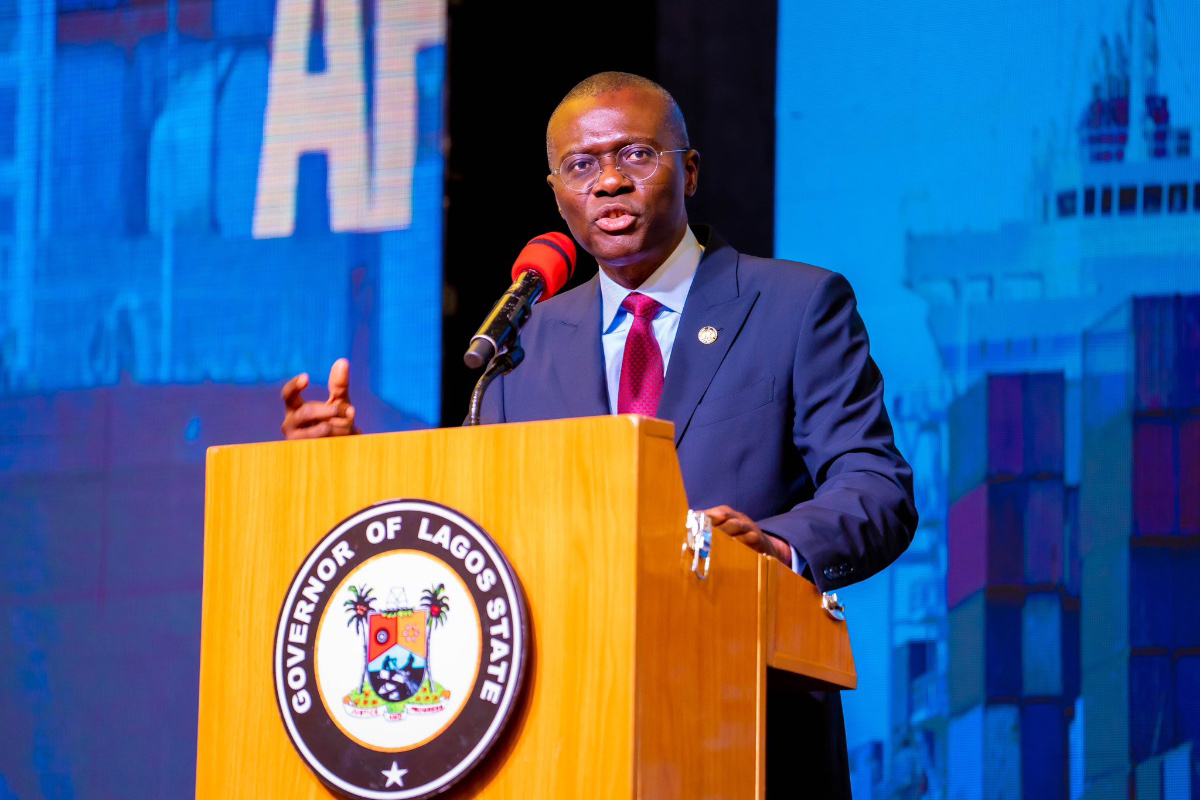
Babajide Sanwo-Olu, Lagos State Governor

Lagos State’s Gross Domestic Product (GDP) has reached $259 billion based on purchasing power parity (PPP), making it the second-largest city economy in Africa, following Cairo, Egypt.

The announcement was made during the launch of the Lagos Economic Development Update (LEDU) 2025, where officials provided an in-depth analysis of the state’s economic growth and future projections. 

The report revealed that Lagos’ economy grew commendably in the first half of 2024, expanding to ₦27.38 trillion from ₦19.65 trillion in 2023.

Even with this expansion, there are still issues over the state’s low tax-to-GDP ratio, which stands at just 2.3%. Experts stressed the need for improved revenue mobilisation strategies to sustain growth and fund critical infrastructure projects.

Economic Outlook for 2025

Subscribe to our Telegram channel for the latest updates.

Follow the latest developments with instant alerts on breaking news, top stories, and trending headlines.

Join Channel

The Lagos State Government has outlined economic projections for the 2025 fiscal year, with expectations for sustained growth and stability. Key highlights include:

  • GDP Growth: Lagos state’s economy is projected to grow from ₦54.77 trillion in 2024 to ₦66.47 trillion in 2025, with real GDP growth estimated between 5.02% and 6.49%.
  • Sectoral Performance: The service industry is expected to maintain its upward trajectory, supported by gains in agriculture and industrial production.
  • Inflation Forecast: Overall inflation is projected at 34.2%, while food inflation is expected to be slightly higher at 34.9%.
  • Revenue Projections: The government aims to generate ₦2.79 trillion in 2025, reinforcing the need for fiscal discipline and diversification of revenue sources.

Revenue Mobilisation Challenges and Reforms

Addressing the revenue gap was a key focus at the LEDU 2025 presentation. Taiwo Oyedele, Chairman of the Presidential Fiscal Policy and Tax Reforms Committee, highlighted the disparity between Lagos’ economic size and its revenue generation.

“Lagos is big, but its revenue is small, collecting less than 2% of GDP,” Oyedele noted. “While some progress has been made, we still have a big room for improvement, and the time to change this narrative is now.”

He proposed three major strategies to enhance revenue collection:

  1. Property Taxation – Lagos, with its booming real estate sector, could generate substantial revenue if inefficiencies in land titling and valuation are addressed. Oyedele pointed out that cities like Bogotá earn over $1 billion annually from property taxes, a benchmark Lagos should aim for.
  2. Personal Income Tax Expansion – The government must leverage technology to capture high-income earners and the informal sector without stifling businesses. “A better approach to taxation is not to tax the seed, but the fruit. Let businesses grow, and tax them fairly on their successes,” he advised.
  3. Tax Harmonisation – The state needs to simplify its tax system to reduce redundancy and improve compliance. “A fragmented tax system breeds confusion and inefficiencies,” Oyedele said, stressing the need for a streamlined approach that fosters transparency and investor confidence.

According to him, with the right reforms, Lagos could generate up to ₦5 trillion annually in Internally Generated Revenue (IGR), enabling the government to fund infrastructure, education, and healthcare effectively.

The Bigger Picture

The LEDU 2025 report also aligns with Governor Babajide Sanwo-Olu’s ‘Budget of Sustainability,’ which prioritises economic diversification, social inclusion, and infrastructural development. Commissioner for Economic Planning and Budget, Ope George, underscored the importance of evidence-based policymaking in shaping Lagos’ future.

“Themed ‘Lagos Economic Outlook: Charting a Resilient Path Towards a Sustainable Future,’ this year’s LEDU underscores our commitment to fiscal sustainability and inclusive development,” George stated.

Meanwhile, Olayinka Ojo, Permanent Secretary of the Ministry of Economic Planning and Budget, acknowledged the need to address macroeconomic challenges such as inflation and revenue constraints.

“As the economic nerve centre of Nigeria, Lagos continues to set the pace… However, we must address macroeconomic uncertainties, inflationary pressures, fiscal constraints, and global economic headwinds,” she stated.

Lagos is an attractive destination for investors, with continued growth in infrastructure, technology, real estate, and manufacturing. However, economic stability will depend on addressing inflation, exchange rate volatility, and infrastructural challenges.

The State needs to balance economic expansion with sustainable revenue strategies to secure its long-term growth.


0Shares
MTN Live It 100 Thematic Campaign
Previous Post

SEC to Publish Capital Market Defaulters in ‘Name and Shame’ Journal

Next Post

Black Friday is South Africa’s Single-biggest Retail Bonanza of Holiday Period

Joan Aimuengheuwa

Joan Aimuengheuwa

Joan thrives at helping individuals and businesses scale via storytelling...

Related Posts

Naira and British Pounds, IMTOs | Pound

Pound to Naira FX Rate Today, May 29, 2026

May 29, 2026
Hot money in Nigeria - Naira | official market | Dollar

Dollar to Naira FX Rate for Today, May 29, 2026

May 29, 2026

Ghana Suspends Proposed 0.75% Wallet-to-Bank Transfer Fee, VASPA Applauds

May 28, 2026
Load More
Next Post
Black Friday and Cyber Monday 2023 report

Black Friday is South Africa's Single-biggest Retail Bonanza of Holiday Period

Comments 2

  1. Pingback: Sweden Makes Strategic Bet on Nigeria, Launches Innovation Hub in Lagos
  2. Pingback: Sweden Makes Strategic Bet on Nigeria, Launches Innovation Hub in Lagos - Spark Media

Leave a Reply Cancel reply

Your email address will not be published. Required fields are marked *

I agree to the Terms & Conditions and Privacy Policy.

This site uses Akismet to reduce spam. Learn how your comment data is processed.

Techeconomy Podcast
Techeconomy Podcast

The Techeconomy Podcast is a thought-leadership show exploring the powerful intersection of technology, business, and the economy, with a strong focus on Africa’s fast-evolving digital landscape.

Financing the Future: Venture Debt, Local Capital & African Innovation | TBS May 2026 Webinar
byTecheconomy

Africa’s innovation ecosystem is evolving, but where will the funding for the next generation of startups come from?

In this edition of the Techeconomy Business Series (TBS) May 2026, industry experts explore how local capital, venture debt, and smarter investment structures are redefining startup growth and innovation across Africa.

🎙️ Featured Speakers:

* Ebunoluwa Ashley-Dejo

* Damilare Davola

* Success Ajilore (STN & Accelerated Plus)

Key conversations in this webinar include:

✔️ The future of startup financing in Africa

✔️ Venture debt and alternative funding models

✔️ The role of local investors in scaling innovation

✔️ Sustainable investment strategies for African startups

✔️ Opportunities and challenges in the African tech ecosystem

Subscribe for more conversations shaping Africa’s digital economy and innovation landscape.

#TBS2026 #AfricanInnovation #VentureDebt #StartupFinance #TechInAfrica #Techeconomy #AfricanStartups #InnovationEconomy

Financing the Future: Venture Debt, Local Capital & African Innovation | TBS May 2026 Webinar
May 27, 2026
Techeconomy
PROTECTING INNOVATION IN AFRICA’S STARTUP ECOSYSTEM
April 29, 2026
Techeconomy
BUILDING TRUST IN AFRICA ECOSYSTEM
February 27, 2026
Techeconomy
Navigating a Career in Tech Sales
January 29, 2026
Techeconomy
How Technology is Transforming Education, Health, and Business
November 27, 2025
Techeconomy
Search Results placeholder
MTN Live It 100 Thematic Campaign
ADVERTISEMENT
  • About Us
  • Careers
  • Contact Us
  • Privacy Policy

© 2026 TECHECONOMY.

No Result
View All Result
  • Technology
  • Business
  • Economy
  • Features
  • Editorial
  • Brand Content
  • TECHECONOMY TV

© 2026 TECHECONOMY.

This website uses cookies. By continuing to use this website you are giving consent to cookies being used. Visit our Privacy and Cookie Policy.

