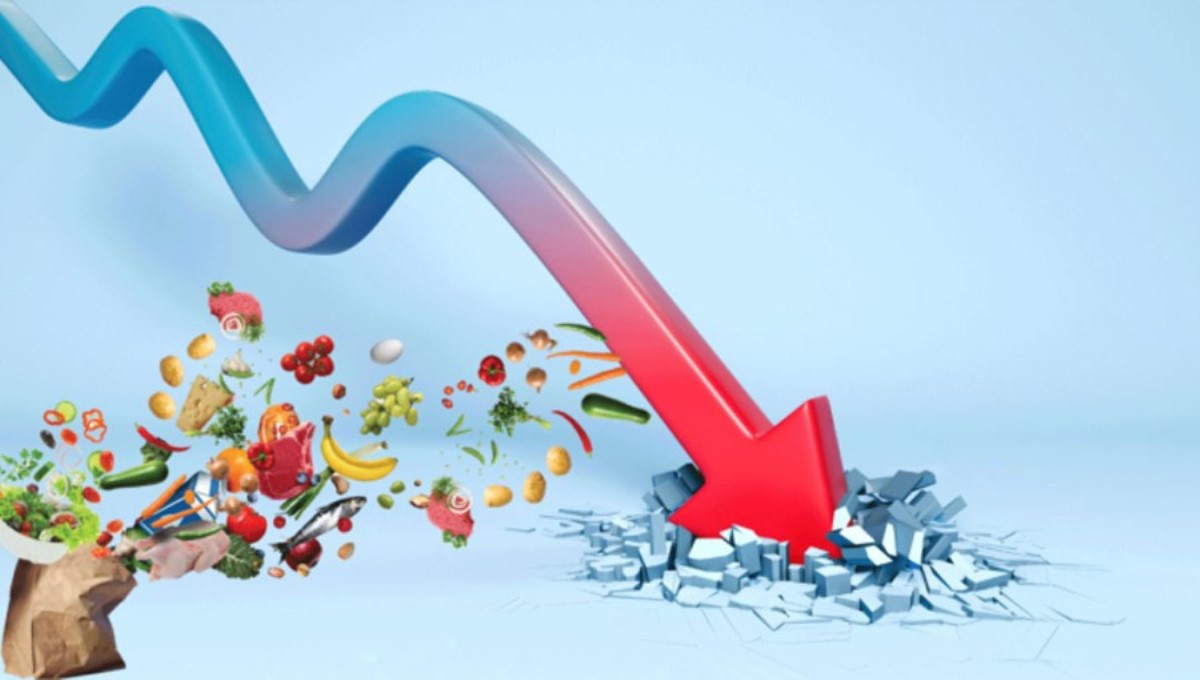
Nigeria’s headline inflation for January 2025 stood at 24.48 per cent against 34.80 per cent recorded in December 2024, according to the National Bureau of Statistics.
Before you start rejoicing, read this: The ‘crash’ in the inflation figures is due to Nigeria’s economy rebasing.
Therefore, the Consumer Price Index (CPI) which measures the rate of change in prices of goods and commodities declined to 24.48 per cent year on year in January, the NBS disclosed.
This implied that the general prices of goods and services in the country declined compared to 34.80 per cent in December, which used the old template.
According to the rebased documents, the CPI rebasing means updating the reference year used to gauge price levels in the country by essentially changing the basket of goods and services used to measure inflation, to better reflect current consumer spending patterns and ensure the inflation data accurately reflects the economy’s current state.
It involves replacing outdated items with new ones that better represent what people are buying today.
According to the CPI figures for the period under review, the rebased food inflation stood at 26.08 per cent in year -on-year in January, representing a decline in the food index when compared with 39.84 per cent year-on-year recorded in the preceding month.
Similarly, the rebased core index which excludes the prices of volatile agricultural produces and energy stood at 22.59 per cent year on year in January. It was 29.28 per cent in the preceding month.
The rebased urban inflation also stood at 26.09 per cent year-on-year. This was 37.29 per cent in December.
In addition, under the rebased template, rural inflation stood at 22.15 per cent year-on-year in the review period. It was 32.47 per cent in December when the old methodology was applied.
According to the NBS, the rebased CPI reflected the current inflationary pressure and consumption pattern of people living in the country.
The statistical agency however, however pointed out that the decline in the rebased inflation does not mean the general price level was declining.
The NBS explained that the major factor responsible for the decline was the base year being closer to the current period.
It added,
“Unlike in the past, where the base year was 2009, the base year for the rebased CPI is 2024. Meaning, we are comparing prices in 2025 with prices in 2024 instead of 2009. Also, the CPI baskets are not the same.”
The NBS stressed that with the reviewed inflation basket and adaptation of enhanced methods of compilation and computation, the “CPI figures provided the needed information for the government, firms, and households to make informed decisions on matters related to price levels and changes in prices,” It added.
Only recently, Adeyemi Adeniran, the statistician-general of the Federation (SGF)/Chief Executive, National Bureau of Statistics (NBS), explained that the rationale for the proposed rebasing of the country’s Gross Domestic Product (GDP) and the CPI was to ensure that economic indicators accurately reflect the current structure of the economy.
This, he noted, would incorporate new and emerging sectors, updating consumption baskets, and refining data collection methods.
He added that the measurement of these indicators was critical to ensuring that government, policymakers, CSOs, and all other users access accurate and most recent numbers, to enable them to track the impact of their policies and programmes, as well as their implications on the citizens.
Adeniran said contrary to speculations, the exercise was not meant to suit the “expectations of anyone or entity, but simply to measure accurately in line with the global standards and practice.”
The SGF also said rebasing GDP and CPI allows the country to align with these transformations, providing a more precise and relevant picture of Nigeria’s economic landscape.
He said,
“If Nigeria is to make the desired progress and development, it is imperative that NBS, as the official producer of data, plays its role adequately in providing timely, accurate, and reliable statistics to inform all users, be it users in the public sector, or in the private or third sector.
“This will enable them to design, plan, and implement policies and programme that will lead to the attainment of national objectives for the benefit of Nigerians.
“Our mindset in undertaking both critical assignments is in tandem with the United Nations fundamental principles of official statistics, particularly Principle 3 which deals with accountability and transparency.”
[Source: ThisDay]