

ADVERTISEMENT
Friday, June 5, 2026
Tech | Business | Economy
No Result
View All Result
  • Technology
    • Trends
    • Telecoms
      • Broadband
    • ConsumerTech
      • Gadgets and Appliances
      • Apps
      • Accessories
      • Reviews
      • Unboxing
    • EnterpriseTECH
    • Security & Data Protection
    • How To
  • Business
    • Company News
    • StartUPs
      • Founder’s Story
      • Funding
    • Deals
    • People & Moves
    • SME & Entrepreneur Focus
    • BUSINESS SENSE FOR SMEs
    • Competition & Market Positioning
    • Commerce & Mobility
    • Travel
    • WomenPreneurs
  • Economy
    • Macroeconomic Trends
      • Macro Monday
      • TE Insights
    • Finance
      • Banks
      • Fintech
      • Insurance
      • Digital Assets
      • Personal Finance
    • Policies
      • Tech & Society
    • Market Analysis
    • Jobs & Workforce Economy
  • Features
    • Guest Writer
      • Chidiverse
      • Digital Assets
      • GameTech
    • EventDIARY
    • IndustryINFLUENCERS
    • MarkTECH
    • TBS
    • NewsEXTRA
  • Editorial
  • Brand Content
  • TECHECONOMY TV
Friday, June 5, 2026
Tech | Business | Economy
No Result
View All Result
Tech | Business | Economy
No Result
View All Result

Home » Nigeria Weighs Social Media Age Ban as 93% Voice Extreme Concern Over Child Online Safety

Nigeria Weighs Social Media Age Ban as 93% Voice Extreme Concern Over Child Online Safety

Joan Aimuengheuwa by Joan Aimuengheuwa
June 5, 2026
in Security & Data Protection
Reading Time: 3 mins read
0
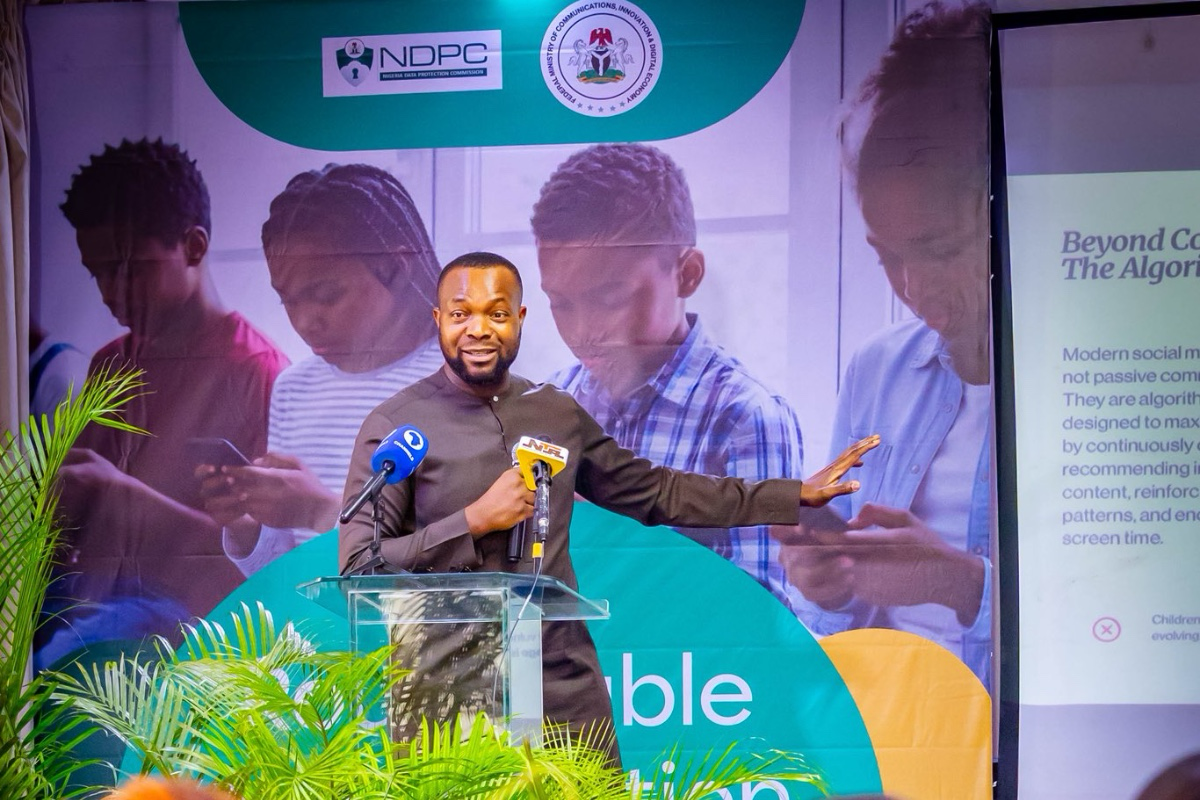
Nigeria social media age restrictions

Source: Bosun Tijani/X

A recent survey conducted by the Federal Ministry of Communications, Innovation and Digital Economy shows that 93.5% of respondents in Nigeria are highly or extremely concerned about children under the age of 18 using social media.

The findings also show strong support for regulation, with 83.4% backing restrictions on children’s access to social media.

The survey results were presented in Lagos during a roundtable on child online safety, organised in collaboration with the Nigeria Data Protection Commission (NDPC).

With 585 Nigerians taking part in the consultation, the survey examined risks, enforcement options and possible legal frameworks.

Among the group of respondents, 64.8% want outright regulation, while 18.6% prefer regulation tied to a different minimum age threshold.

Subscribe to our Telegram channel for the latest updates.

Follow the latest developments with instant alerts on breaking news, top stories, and trending headlines.

Join Channel

Only 16.6% opposed regulation, while 51% said education and digital literacy should be prioritised instead, and 40% pointed to parental supervision tools as a better precaution.

Age preference also split responses, with 36.8% saying 16 years should be the minimum age for access, closely aligning with Australia’s recent approach. Another 27.7% preferred 17 years. A smaller share, 13%, supported the global platform standard for 13 years.

Harmful content emerged as the most reported risk, cited by 90.9% of respondents. Digital addiction followed at 83.6%, while 82.4% pointed to online grooming as a major threat.

The survey also found that 74.5% believe children and parents do not fully understand the legal consequences of cyber offences. Almost all respondents, 97.6%, supported a duty-of-care approach requiring platforms to take proactive steps against harm.

Communications Minister Bosun Tijani said the consultation reveals the pace of change in the digital space and the need for policy to keep up.

He said, “The debate should focus on implementing age restrictions effectively rather than questioning the need for such safeguards.

“Nigeria can deploy digital identity infrastructure and existing platform verification systems to strengthen enforcement of age-based social media regulations.

“The fact that some people may bypass regulations is not a reason for safeguards not to exist.”

Tijani added that social media still offers opportunities for learning and innovation, but children must remain protected from exploitation, harmful content and other risks.

He also said enforcement would require cooperation across government, parents, schools and technology platforms.

NDPC National Commissioner, Dr Vincent Olatunji, also spoke about the risks facing children online. He pointed to cyberbullying, cyberstalking, exposure to harmful content and mental health pressures as key issues.

He also mentioned that access to the internet is highly important for education and development, but protection measures must sit alongside that access. Olatunji described child online safety as a shared responsibility across government agencies, families, schools and platform operators.

The discussion encapsulates a global shift in children’s access to social media. Several countries have already introduced, or are moving towards, better age-based management.

Australia introduced a ban on social media access for children under 16 in December 2025, requiring platforms such as TikTok, Instagram and YouTube to restrict underage users. Indonesia has also announced plans for a similar restriction.

In Europe, Denmark is preparing to ban social media for children under 15. The Danish government secured backing from both coalition and opposition parties in November 2025. France passed a bill in January 2026 banning social media use for children under 15, with President Emmanuel Macron supporting the measure.

These developments show a policy trend where governments treat child online safety as a public concern that extends beyond regulation of content alone. In several cases, it now sits alongside debates on health, education and digital identity systems.

In Nigeria, the proposed direction indicates a combination of age restrictions and verification systems rather than a single enforcement model. Officials have pointed to digital identity infrastructure and platform-level verification tools as possible mechanisms.

The survey indicates strong public appetite for intervention, especially given the level of concern about exposure to harmful content, addiction and grooming risks. At the same time, a smaller but notable group continues to argue for education and parental oversight rather than formal restrictions.

The government says no final decision has been made, insisting that any policy will follow nationwide consultation before implementation.

0Shares
Previous Post

Nigeria is Producing Developers, But Can Our Engineering Culture Keep Up?

Next Post

Lagos Leadership Conference 2026 Set to Inspire a New Generation of Leaders

Joan Aimuengheuwa

Joan Aimuengheuwa

Joan thrives at helping individuals and businesses scale via storytelling...

Related Posts

ESET Nigeria cybersecurity training Lagos government

ESET Nigeria Empowers Lagos Government Personnel to Fight AI-Driven Cyber Risks

June 4, 2026
Kaspersky warns about Keenadu in Android

Kaspersky: Credential Abuse Techniques Rank as Attackers’ Most Effective Tactic

June 4, 2026

Rising Cybersecurity Breaches in Nigeria: Digital Encode Issues Urgent Advisory on Widespread Security Weaknesses

June 3, 2026
Load More
Next Post
Pastor Charles Kpandei, head of RCCG Blessed Family and Convener of the Lagos Leadership Conference

Lagos Leadership Conference 2026 Set to Inspire a New Generation of Leaders

Leave a Reply Cancel reply

Your email address will not be published. Required fields are marked *

I agree to the Terms & Conditions and Privacy Policy.

This site uses Akismet to reduce spam. Learn how your comment data is processed.

Techeconomy Podcast
Techeconomy Podcast

The Techeconomy Podcast is a thought-leadership show exploring the powerful intersection of technology, business, and the economy, with a strong focus on Africa’s fast-evolving digital landscape.

Financing the Future: Venture Debt, Local Capital & African Innovation | TBS May 2026 Webinar
byTecheconomy

Africa’s innovation ecosystem is evolving, but where will the funding for the next generation of startups come from?

In this edition of the Techeconomy Business Series (TBS) May 2026, industry experts explore how local capital, venture debt, and smarter investment structures are redefining startup growth and innovation across Africa.

🎙️ Featured Speakers:

* Ebunoluwa Ashley-Dejo

* Damilare Davola

* Success Ajilore (STN & Accelerated Plus)

Key conversations in this webinar include:

✔️ The future of startup financing in Africa

✔️ Venture debt and alternative funding models

✔️ The role of local investors in scaling innovation

✔️ Sustainable investment strategies for African startups

✔️ Opportunities and challenges in the African tech ecosystem

Subscribe for more conversations shaping Africa’s digital economy and innovation landscape.

#TBS2026 #AfricanInnovation #VentureDebt #StartupFinance #TechInAfrica #Techeconomy #AfricanStartups #InnovationEconomy

Financing the Future: Venture Debt, Local Capital & African Innovation | TBS May 2026 Webinar
May 27, 2026
Techeconomy
PROTECTING INNOVATION IN AFRICA’S STARTUP ECOSYSTEM
April 29, 2026
Techeconomy
BUILDING TRUST IN AFRICA ECOSYSTEM
February 27, 2026
Techeconomy
Navigating a Career in Tech Sales
January 29, 2026
Techeconomy
How Technology is Transforming Education, Health, and Business
November 27, 2025
Techeconomy
Search Results placeholder
MTN Live It 100 Thematic Campaign
ADVERTISEMENT
  • About Us
  • Careers
  • Contact Us
  • Privacy Policy

© 2026 TECHECONOMY.

No Result
View All Result
  • Technology
  • Business
  • Economy
  • Features
  • Editorial
  • Brand Content
  • TECHECONOMY TV

© 2026 TECHECONOMY.

This website uses cookies. By continuing to use this website you are giving consent to cookies being used. Visit our Privacy and Cookie Policy.


