


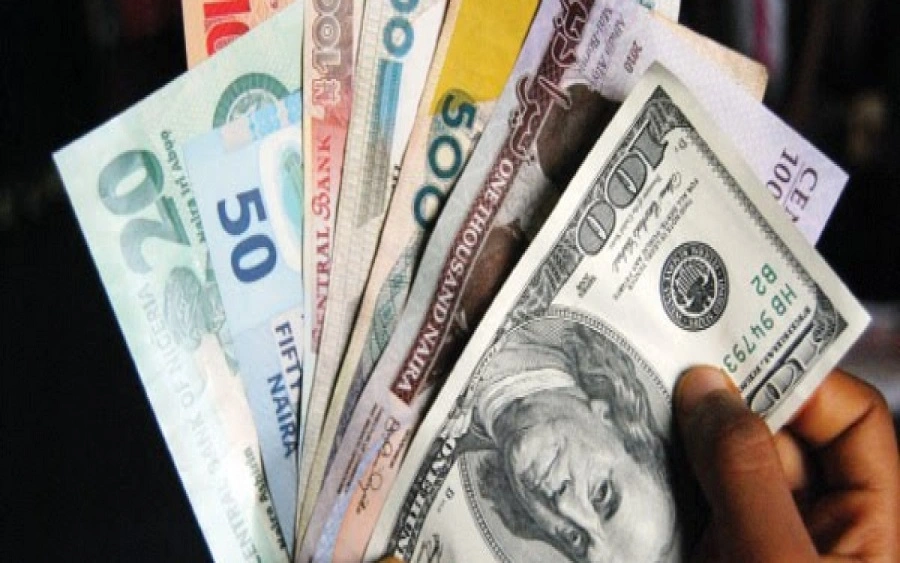
Foreign exchange inflows into Nigeria rose 13.8% to a record $109.86 billion in 2025, buoyed by strong growth in non-oil export proceeds and capital importation, the country’s central bank said in its latest report published on Thursday.
Total foreign currency inflows into Africa’s top oil producer increased from $96.53 billion in 2024, the Central Bank of Nigeria (CBN) said in its 2025 Annual Report and Statement of Accounts.
Autonomous sources, which include non-oil export receipts and over-the-counter capital importation, accounted for 64.2% of total inflows, jumping 25.1% year-on-year to $70.54 billion.
In contrast, foreign exchange inflows through the central bank fell 2.1% to $39.32 billion, representing 35.8% of total inflows, largely due to reduced receipts from government debt issuances and currency swaps.
Total foreign exchange outflows climbed 27.8% to $49.05 billion in 2025, compared with $38.37 billion the previous year, driven primarily by higher autonomous transactions. Outflows through the central bank edged up 1.7% to $32.79 billion.
Despite the rise in outflows, Nigeria’s net foreign exchange inflows expanded to $60.81 billion in 2025, up from $58.16 billion recorded in 2024.
Digital Payments Expand
The central bank report also highlighted strong expansion in Nigeria’s electronic payments sector, alongside a sharp drop in financial fraud losses.
The total value of electronic payment transactions jumped 26.1% to 3.46 quadrillion naira ($2.4 billion approx.) in 2025, with transaction volume rising 2.6% to 47.88 billion transactions.
The growth was driven by increased adoption of digital banking channels, infrastructure upgrades, and expanding e-commerce, the bank said.
Concurrently, losses from electronic payment fraud dropped 50.5% to 25.85 billion naira, down from 52.26 billion naira in 2024, aided by stricter monitoring and mandatory linkages between Bank Verification Numbers (BVN) and National Identity Numbers.
Cross-border settlements involving Nigerian participants on the Pan-African Payment and Settlement System (PAPSS) surged nearly fivefold to $143.40 million, up from $29.23 million in 2024, easing foreign currency liquidity pressure for intra-African trade.



