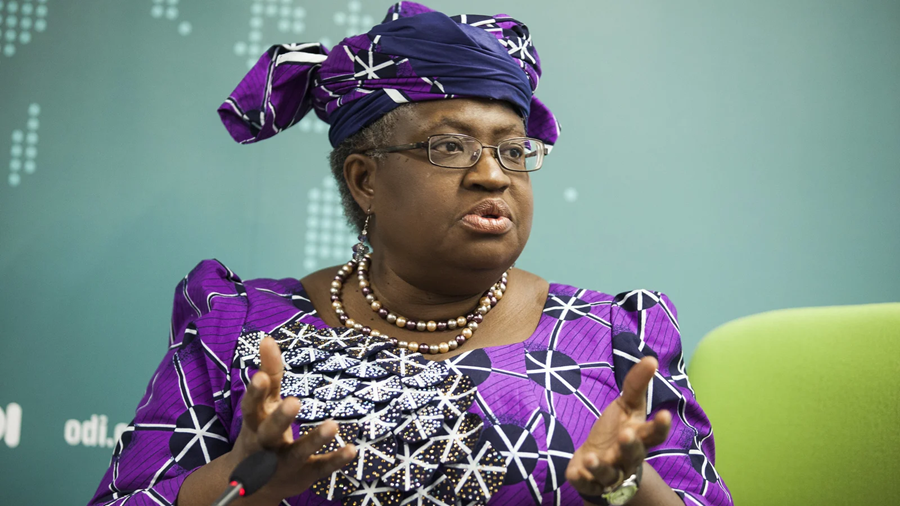
Ngozi Okonjo-Iweala has urged Nigerian policymakers to ensure ongoing economic reforms translate into jobs, business opportunities and measurable improvements in living standards, warning that public support for reforms will depend on their real-life impact.
Speaking at the 7th Africa Emerging Markets Forum in Abuja, the World Trade Organisation (WTO) director-general said strong leadership and effective policy implementation, rather than natural resource wealth, would determine Nigeria’s long-term economic success.
She stressed that while recent macroeconomic reforms had been encouraging, Nigerians must begin to experience tangible benefits through increased employment, stronger businesses and improved household welfare.
“The challenge is ensuring these reforms are transmitted into the everyday lives of Nigerians,” she said, noting that reforms would continue to attract criticism unless citizens could see and feel their benefits.
Okonjo-Iweala also called for closer coordination among monetary, fiscal and trade authorities to ensure policy gains flow into productive sectors of the economy.
Beyond economic policy, she argued that accountable leadership and active citizen participation remain critical to sustainable development, urging governments to protect free speech and strengthen transparency to improve governance.
Also speaking at the event, Olayemi Cardoso said Africa must reposition itself for a rapidly changing global economy by strengthening macroeconomic stability, expanding regional trade, mobilising domestic capital and building an artificial intelligence-ready workforce.
Cardoso identified three major shifts reshaping the global economy: increasing trade fragmentation, more selective international capital flows and the rapid advancement of artificial intelligence.
According to him, investors are placing greater emphasis on institutional quality, policy consistency and transparency, making credibility a strategic economic asset rather than solely a central bank objective.
He said Nigeria’s recent monetary reforms, including exchange-rate liberalisation, renewed focus on price stability and reforms in the foreign exchange market, were beginning to restore investor confidence.
The CBN governor added that inflation had moderated from previous highs, external buffers had strengthened and the financial system had become more resilient, although sustaining stability remained essential for attracting investment and deepening regional trade.
Cardoso also urged African economies to rely less on foreign capital by mobilising domestic savings, pension funds, insurance assets and diaspora investments to finance long-term development.
Highlighting Nigeria’s strategic role on the continent, he noted that the country’s economic performance carries implications well beyond its borders, given its dominant share of West Africa’s economy.
Okonjo-Iweala further advised Nigeria not to become overly concerned about recent US tariff measures, observing that crude oil, Nigeria’s principal export to the United States, remains largely exempt, while Africa’s growing population presents significant long-term economic opportunities if supported by sound leadership and investment in human capital.