
ADVERTISEMENT
Thursday, April 30, 2026
Tech | Business | Economy
No Result
View All Result
  • Technology
    • Trends
    • Telecoms
      • Broadband
    • ConsumerTech
      • Gadgets and Appliances
      • Apps
      • Accessories
      • Reviews
      • Unboxing
    • EnterpriseTECH
    • Security & Data Protection
    • How To
    • GameTech
  • Business
    • Company News
    • StartUPs
      • Founder’s Story
      • Funding
    • Deals
    • People & Moves
    • SME & Entrepreneur Focus
    • BUSINESS SENSE FOR SMEs
    • Competition & Market Positioning
    • Commerce & Mobility
    • Travel
    • WomenPreneurs
  • Economy
    • Macroeconomic Trends
      • Macro Monday
      • TE Insights
    • Finance
      • Banks
      • Fintech
      • Insurance
      • Digital Assets
      • Personal Finance
    • Policies
      • Tech & Society
    • Market Analysis
    • Jobs & Workforce Economy
  • Features
    • Guest Writer
      • Chidiverse
      • Digital Assets
    • EventDIARY
    • IndustryINFLUENCERS
    • MarkTECH
    • TBS
    • NewsEXTRA
  • Editorial
  • Brand Content
  • TECHECONOMY TV
Thursday, April 30, 2026
Tech | Business | Economy
No Result
View All Result
Tech | Business | Economy
No Result
View All Result

Home » Nigeria’s Inflation Drops to 23.18% in February, but Are Prices Really Falling?

Nigeria’s Inflation Drops to 23.18% in February, but Are Prices Really Falling?

Joan Aimuengheuwa by Joan Aimuengheuwa
March 17, 2025
in Business
Reading Time: 2 mins read
0
Nigeria’s Inflation Drops to 23.18% in February, but Are Prices Really Falling?

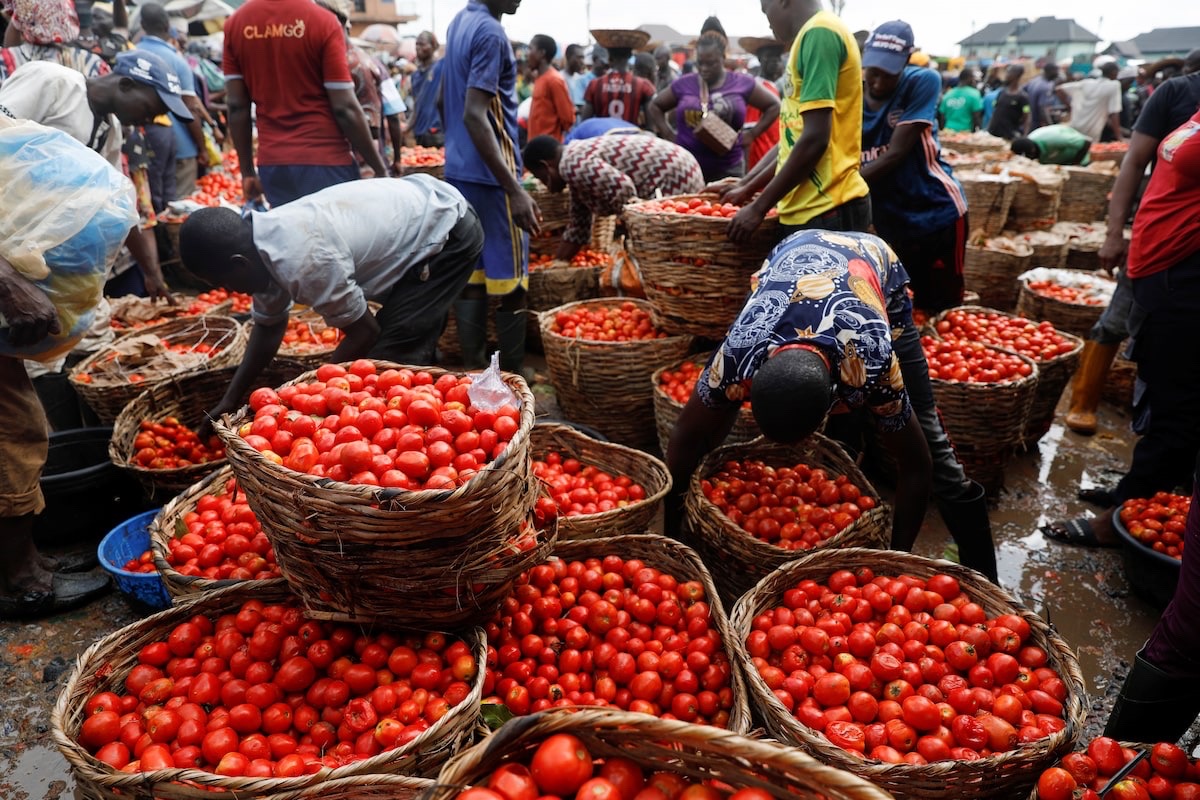
Nigerian Food Market

The latest data from the National Bureau of Statistics (NBS) shows that Nigeria’s inflation rate eased to 23.18% in February 2025, down from 24.48% in January. 

While this decline shows a slowdown in price increases, it does not necessarily mean that the cost of living is improving for the average Nigerian.

A 1.30% drop in inflation may seem like prices are beginning to drop, compared to February 2024, when inflation stood at 31.70%, this is an 8.52% year-on-year decline. However, the truth is that essential goods and services are still expensive.

The NBS says the decline is partly due to adjustments in the base year used to calculate inflation, and this means while the numbers look better, the actual effect on purchasing power may be less.

Food inflation stood at 23.51% in February, a sharp drop from 37.92% recorded a year earlier. The NBS notes that the decline in food inflation is due to a statistical adjustment rather than a genuine reduction in food prices.

Subscribe to our Telegram channel for the latest updates.

Follow the latest developments with instant alerts on breaking news, top stories, and trending headlines.

Join Channel

Month-on-month, food prices still increased by 1.67%, with staples like yam, potatoes, soya beans, and maize flour seeing slight reductions in price. However, for a country where food makes up a huge portion of household expenses, any increase, no matter how small, continues to bite.

Inflation in urban areas stood at 25.15%, while rural areas saw a lower rate of 19.89%. Though both figures show declines from a year ago, they still speak loads about a harsh economy. Rural communities, where incomes are generally lower, are seeing slower price increases, but access to affordable goods remains a struggle.

A slowdown in inflation doesn’t mean prices are coming down; it just means they are increasing at a slower pace. The relief many Nigerians need—actual price reductions—has not yet materialised. Economic policies, exchange rate stability, and production costs will keep impacting how inflation behaves both now and later on.


0Shares

Previous Post

MTN Sees Recovery in Nigeria Unit Following Naira Devaluation

Next Post

Naira Declines to N1,528/$1 in Official Market

Joan Aimuengheuwa

Joan Aimuengheuwa

Joan thrives at helping individuals and businesses scale via storytelling...

Related Posts

AVCA VC Summit 2026 Nairobi

AVCA Spotlights African Diaspora Capital, Exit Pathways and Private Credit as Key Drivers of Growth Across the Continent

April 30, 2026
Grey secures payment license in Canada

Nigerian Fintech Startup Grey Secures Canada Payments Approval

April 30, 2026

Chip Startup Mosaic Gets $3.8M for Spatial Intelligence in Wearables, Mobiles

April 30, 2026
Load More
Next Post
old naira notes

Naira Declines to N1,528/$1 in Official Market

Leave a Reply Cancel reply

Your email address will not be published. Required fields are marked *

I agree to the Terms & Conditions and Privacy Policy.

This site uses Akismet to reduce spam. Learn how your comment data is processed.

Techeconomy Podcast
Techeconomy Podcast

The Techeconomy Podcast is a thought-leadership show exploring the powerful intersection of technology, business, and the economy, with a strong focus on Africa’s fast-evolving digital landscape.

PROTECTING INNOVATION IN AFRICA’S STARTUP ECOSYSTEM
byTecheconomy

Protecting Innovation in Africa’s Startup Ecosystem . A timely conversation for the future of African entrepreneurship.

PROTECTING INNOVATION IN AFRICA’S STARTUP ECOSYSTEM
April 29, 2026
Techeconomy
BUILDING TRUST IN AFRICA ECOSYSTEM
February 27, 2026
Techeconomy
Navigating a Career in Tech Sales
January 29, 2026
Techeconomy
How Technology is Transforming Education, Health, and Business
November 27, 2025
Techeconomy
INNOVATION IN MOBILE BANKING
October 30, 2025
Techeconomy
Search Results placeholder
  • About Us
  • Careers
  • Contact Us
  • Privacy Policy

© 2026 TECHECONOMY.

No Result
View All Result
  • Technology
  • Business
  • Economy
  • Features
  • Editorial
  • Brand Content
  • TECHECONOMY TV

© 2026 TECHECONOMY.

This website uses cookies. By continuing to use this website you are giving consent to cookies being used. Visit our Privacy and Cookie Policy.