
…Just 265,000 Homes on FTTH as Internet Users Hit 154.7 Million NCC
Nigeria has only 265,000 active fibre-to-the-home subscriptions nationwide, even as the country’s total internet subscriber base has grown to 154.72 million, a gap regulators and telecoms operators say threatens the sustainability of the nation’s broadband ambitions.
The figures were disclosed by Dr Aminu Maida, executive vice chairman/CEO of the Nigerian Communications Commission (NCC), in a keynote address at the Association of Telecommunications Companies of Nigeria’s (ATCON) Critical Conversation Forum on FTTH, held in Lagos, recently.
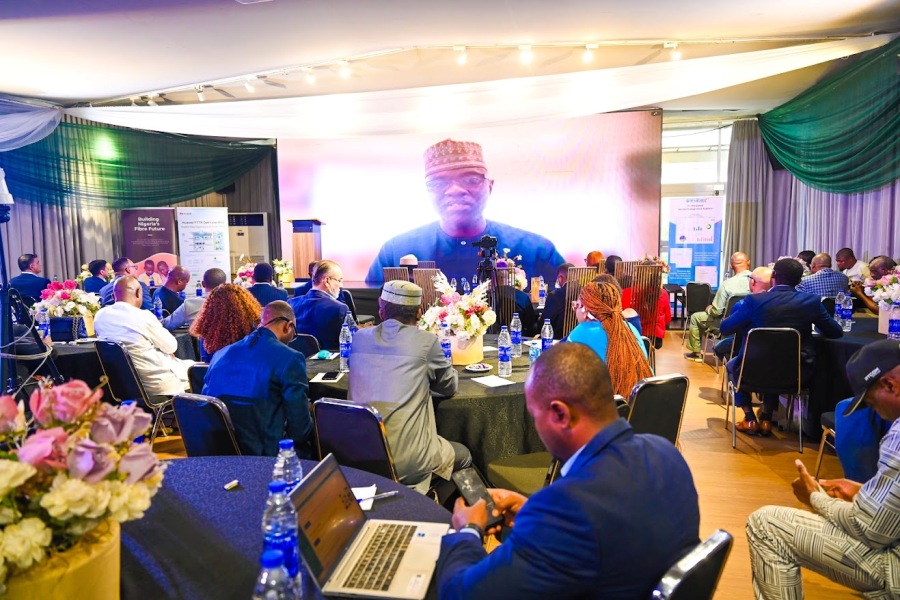
The scale of the gap
According to Maida, Nigeria’s FTTH penetration sits below the African average of 2.5 per cent and far below the 47 per cent average recorded in mature broadband markets globally.
This is despite overall internet growth: active subscriptions rose from 141.99 million in April 2025 to 154.72 million in April 2026, while broadband penetration climbed from 48.81 per cent to 55.67 per cent over the same period. As at March 2026, 4G accounted for 53.76 per cent of mobile network share and 5G for 4.20 per cent.
Nigerians consumed an average of approximately 1.4 million terabytes of data monthly over the preceding six months, Maida said.
Separately, Egerton Idehen, chief broadband officer at MTN Nigeria, put FTTH penetration against the country’s housing stock at approximately 1.5 per cent, which he described as critically low, and pointed to right-of-way (RoW) charges from state governments, compounded by informal levies from community development associations and land-owning interests (Omo-onile meaning ‘land grabbers’), as major cost burdens on deployment.
Cables under attack
The NCC recorded over 27,685 fibre-cut incidents (equaling one incident per 19 minutes, for the year), more than 27,000 cases of access denial, and 4,210 cases of theft across telecom operators between January and December 2025, Maida said.
He linked the figures to the full operationalisation of the Presidential Order designating telecommunications infrastructure as Critical National Information Infrastructure (CNII).
The NCC, the Federal Ministry of Works and the Federal Ministry of Communications, Innovation and Digital Economy inaugurated a Joint Standing Committee on the Protection of Fibre Optic Cables in February 2025 to coordinate protection efforts around road works.
Right-of-way reform advances, but gaps remain
Thirteen states have fully waived RoW charges, while sixteen others have adopted the National Economic Council’s recommended rate of N145 per linear metre, Maida said, adding that the NCC’s Ease of Doing Business Portal now publishes state-by-state data on RoW charges and approval processes.
The Commission is also conducting a Wholesale Fixed Broadband Market Assessment to evaluate competitiveness in the wholesale fixed broadband market.

However, Biodun Omoniyi, MD/CEO of VDT Communications, cautioned during a panel session that RoW represents only a fraction of total deployment costs, and urged states to legislate protective frameworks against damage from uncoordinated public works.
Panellists also noted that even in states that have waived formal RoW charges, multiple agencies continue to impose other levies.
Backbone expansion underway
Maida referenced Project BRIDGE, the federal government’s initiative to extend the national fibre backbone by approximately 90,000 kilometres to reach all 774 Local Government Areas. Low-level design work for 40,000 kilometres of the network has begun, supported by development partners, with last-mile FTTH infrastructure identified as the necessary complement to the backbone investment.
Industry voices: patient capital, shared infrastructure
Tony Emoekpere, ATCON President, told the forum that mobile networks are not designed to deliver full broadband, positioning FTTH as the only sustainable route to national penetration targets, and called for greater industry self-regulation on infrastructure-sharing standards.
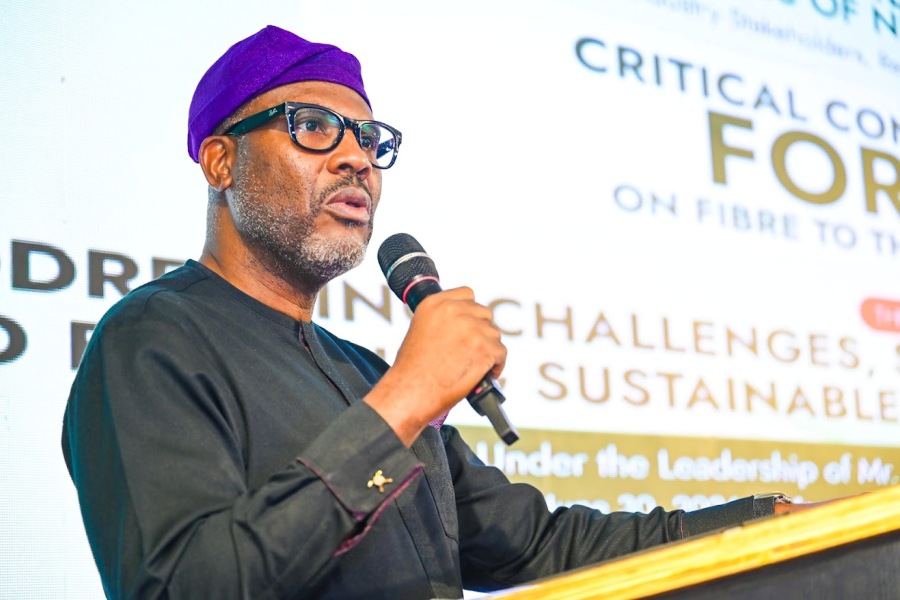
Eric Chen, Director of Strategy at Huawei, presented industry analysis linking every 10 per cent increase in fixed broadband penetration to approximately 1.5 per cent GDP growth, a figure attributed to Huawei’s own analysis rather than an independently verified source.
Chen cited China’s post-2013 policy of mandating in-building fibre for new construction, paired with open-access rules guaranteeing at least three operators per facility, as a model Nigeria could adapt through “Dig-Once” and fibre-ready building mandates.
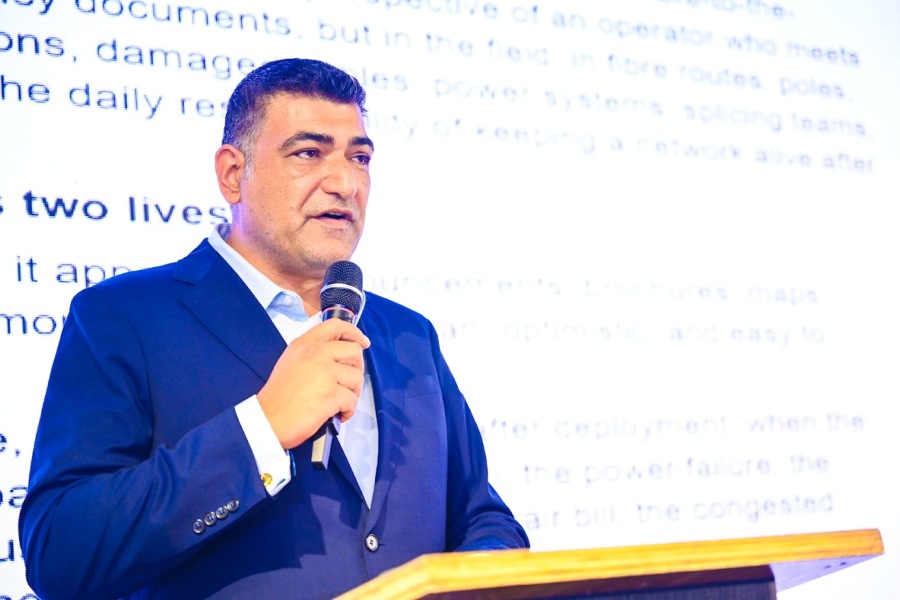
Amin Dayekh, MD/CEO of Megamore Wireless Broadband, called for a four-part investment compact: patient, infrastructure-minded capital; proactive infrastructure protection ahead of excavation; realistic recognition that wireless ISPs will continue serving markets where fibre economics aren’t yet viable; and affordability built into policy upstream rather than imposed on retail pricing. Without it, he warned, Nigeria risks shifting “from a divide of availability to a divide of affordability.”
Segun Okuneye, chairman of the ATCON Fibre Clean-Up Committee, reported that a pilot phase of the association’s cable clean-up project has begun across high-density routes in Lagos, including the Ikeja corridor, Lekki Phase 1 and Victoria Island, in partnership with the Lagos State Infrastructure Maintenance and Regulatory Agency (LASIMRA).
What happens next
The forum’s communiqué carries 17 recommendations, including calls for the NCC to expedite and publish its Wholesale Fixed Broadband Market Assessment, for state governments to legislate protection for licensed infrastructure and address informal levies, for operators to adopt international outside-plant standards and join the ATCON clean-up project, and for financiers to structure FTTH investment around realistic, longer payback timelines rather than short-cycle returns.

ATCON said it will transmit the communiqué to the Minister of Communications, Innovation and Digital Economy, the NCC’s Executive Vice Chairman, and participating state governments.