


ADVERTISEMENT
Friday, June 12, 2026
Tech | Business | Economy
No Result
View All Result
  • Technology
    • Trends
    • Telecoms
      • Broadband
    • ConsumerTech
      • Gadgets and Appliances
      • Apps
      • Accessories
      • Reviews
      • Unboxing
    • EnterpriseTECH
    • Security & Data Protection
    • How To
  • Business
    • Company News
    • StartUPs
      • Founder’s Story
      • Funding
    • Deals
    • People & Moves
    • SME & Entrepreneur Focus
    • BUSINESS SENSE FOR SMEs
    • Competition & Market Positioning
    • Commerce & Mobility
    • Travel
    • WomenPreneurs
  • Economy
    • Macroeconomic Trends
      • Macro Monday
      • TE Insights
    • Finance
      • Banks
      • Fintech
      • Insurance
      • Digital Assets
      • Personal Finance
    • Policies
      • Tech & Society
    • Market Analysis
    • Jobs & Workforce Economy
  • Features
    • Guest Writer
      • Chidiverse
      • Digital Assets
      • GameTech
    • EventDIARY
    • IndustryINFLUENCERS
    • MarkTECH
    • TBS
    • NewsEXTRA
  • Editorial
  • Brand Content
  • TECHECONOMY TV
Friday, June 12, 2026
Tech | Business | Economy
No Result
View All Result
Tech | Business | Economy
No Result
View All Result

Our Recommendations in Respect of VAT, Not Reduction in FAAC Allocation- Oyedele

Adetunji Tobi by Adetunji Tobi
October 14, 2024
in Finance
Reading Time: 2 mins read
0
FAAC

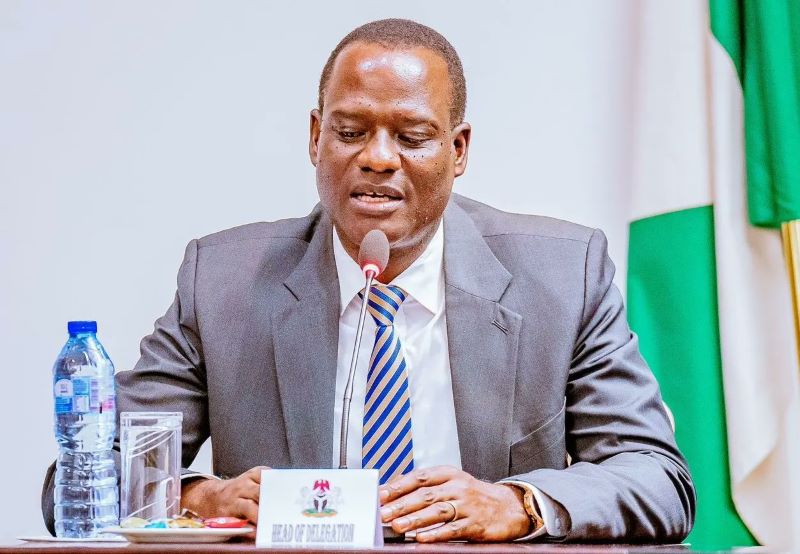
Mr. Taiwo Oyedele, Chairman, Presidential Committee on Fiscal Policy and Tax Reforms.

Taiwo Oyedele, Chairman of the Presidential Committee on Fiscal Policy and Tax Reforms, has dismissed reports suggesting that the committee is proposing a reduction in the federal government’s share of the Federation Account Allocation Committee (FAAC) to 10%.

In a statement on Sunday, Oyedele responded to claims suggesting that his committee is advocating for the federal government to receive only 10% of FAAC, while the remaining 90% would go to state and local governments.

According to him, the report does not reflect the committee’s position, as their reforms focus solely on Value Added Tax (VAT) within the FAAC framework and do not encompass all revenue allocated to the government’s account.

“We did not recommend a reduction in the federal government’s share from the federation account.

“Our recommendation is in respect of VAT revenue, to increase the share of states and local governments from 85% to 90% and for states to discontinue with their other forms of consumption taxes which constitute multiple taxation on businesses and individuals,” Oyedele said.

Subscribe to our Telegram channel for the latest updates.

Follow the latest developments with instant alerts on breaking news, top stories, and trending headlines.

Join Channel

Earlier, there are several reports indicating that the federal government is proposing a shift in the revenue allocation of the FAAC, with 90% of the distribution given to the State and local government.

The report claimed this represents a drastic departure from the current sharing formula, which allegedly allocates 52.68% to the federal government, 26.72% to states, and 20.60% to local governments.

Under the new proposal, the report alleged that Oyedele explained the distribution formula for the states and local governments would include a clause stipulating that 60% of their share would be based on the principle of derivation.

In practice, it was claimed that if N100 is available for distribution from FAAC, the federal government would take N10, all 36 states would share N36 equally, and N54 would be distributed based on derivation, favouring states with higher resource generation.

Meanwhile, Oyedele refuted this claim, stating that the bill only proposed the allocation of VAT revenue in the FAAC.

According to the Revenue Mobilisation Allocation and Fiscal Commission (RMAFC) under the Presidency, the distribution of the country’s monthly revenue allocates 52.68% to the Federal Government, 26.72% to states, and 20.60% to local governments, disbursed through the Federation Account Allocation Committee (FAAC).

Interestingly, funds for local governments are deposited into a joint account managed by state governments and local governments within their jurisdictions.
However, these funds are rarely allocated to the local government chairmen, therefore bringing to question the effective practice of an independent local government.
With the Supreme Court ruling on fiscal autonomy for local government, the payment of FAAC meant for the third tier of government will be directly allocated to each local government.

0Shares
Previous Post

NGO Celebrates Int’l Day of the Girl Child

Next Post

Bridging Development Gaps: Fostering Technological Innovation in Global South Nations

Adetunji Tobi

Adetunji Tobi

Tobi Adetunji is a Business Reporter with Techeconomy. Contact: adetunji.tobi@techeconomy.ng

Related Posts

Yellow Card in Fortune Crypto Innovators list | co-founders

Fortune Names Yellow Card among Top Global Crypto Innovators

June 11, 2026
Dangote Refinery valuation, private placement demand

Dangote Refinery Valued at $39.1bn as $1bn Share Sale Draws Strong Investor Demand

June 11, 2026

How a Regular Savings Culture Can Support Long-Term Financial Stability 

June 10, 2026
Load More
Next Post
Tech governance, AI and cybersecurity, Solutions to Recover Kidnapped Students and Bilateral approaches - Prof. Ojo Emmanuel Ademola - Global South nations

Bridging Development Gaps: Fostering Technological Innovation in Global South Nations

Leave a Reply Cancel reply

Your email address will not be published. Required fields are marked *

I agree to the Terms & Conditions and Privacy Policy.

This site uses Akismet to reduce spam. Learn how your comment data is processed.

Techeconomy Podcast
Techeconomy Podcast

The Techeconomy Podcast is a thought-leadership show exploring the powerful intersection of technology, business, and the economy, with a strong focus on Africa’s fast-evolving digital landscape.

Financing the Future: Venture Debt, Local Capital & African Innovation | TBS May 2026 Webinar
byTecheconomy

Africa’s innovation ecosystem is evolving, but where will the funding for the next generation of startups come from?

In this edition of the Techeconomy Business Series (TBS) May 2026, industry experts explore how local capital, venture debt, and smarter investment structures are redefining startup growth and innovation across Africa.

🎙️ Featured Speakers:

* Ebunoluwa Ashley-Dejo

* Damilare Davola

* Success Ajilore (STN & Accelerated Plus)

Key conversations in this webinar include:

✔️ The future of startup financing in Africa

✔️ Venture debt and alternative funding models

✔️ The role of local investors in scaling innovation

✔️ Sustainable investment strategies for African startups

✔️ Opportunities and challenges in the African tech ecosystem

Subscribe for more conversations shaping Africa’s digital economy and innovation landscape.

#TBS2026 #AfricanInnovation #VentureDebt #StartupFinance #TechInAfrica #Techeconomy #AfricanStartups #InnovationEconomy

Financing the Future: Venture Debt, Local Capital & African Innovation | TBS May 2026 Webinar
May 27, 2026
Techeconomy
PROTECTING INNOVATION IN AFRICA’S STARTUP ECOSYSTEM
April 29, 2026
Techeconomy
BUILDING TRUST IN AFRICA ECOSYSTEM
February 27, 2026
Techeconomy
Navigating a Career in Tech Sales
January 29, 2026
Techeconomy
How Technology is Transforming Education, Health, and Business
November 27, 2025
Techeconomy
Search Results placeholder
MTN Live It 100 Thematic Campaign
ADVERTISEMENT
  • About Us
  • Careers
  • Contact Us
  • Privacy Policy

© 2026 TECHECONOMY.

No Result
View All Result
  • Technology
  • Business
  • Economy
  • Features
  • Editorial
  • Brand Content
  • TECHECONOMY TV

© 2026 TECHECONOMY.

This website uses cookies. By continuing to use this website you are giving consent to cookies being used. Visit our Privacy and Cookie Policy.


