

ADVERTISEMENT
Saturday, May 30, 2026
Tech | Business | Economy
No Result
View All Result
  • Technology
    • Trends
    • Telecoms
      • Broadband
    • ConsumerTech
      • Gadgets and Appliances
      • Apps
      • Accessories
      • Reviews
      • Unboxing
    • EnterpriseTECH
    • Security & Data Protection
    • How To
  • Business
    • Company News
    • StartUPs
      • Founder’s Story
      • Funding
    • Deals
    • People & Moves
    • SME & Entrepreneur Focus
    • BUSINESS SENSE FOR SMEs
    • Competition & Market Positioning
    • Commerce & Mobility
    • Travel
    • WomenPreneurs
  • Economy
    • Macroeconomic Trends
      • Macro Monday
      • TE Insights
    • Finance
      • Banks
      • Fintech
      • Insurance
      • Digital Assets
      • Personal Finance
    • Policies
      • Tech & Society
    • Market Analysis
    • Jobs & Workforce Economy
  • Features
    • Guest Writer
      • Chidiverse
      • Digital Assets
      • GameTech
    • EventDIARY
    • IndustryINFLUENCERS
    • MarkTECH
    • TBS
    • NewsEXTRA
  • Editorial
  • Brand Content
  • TECHECONOMY TV
Saturday, May 30, 2026
Tech | Business | Economy
No Result
View All Result
Tech | Business | Economy
No Result
View All Result

Home » Stanbic’s February PMI: Cash Shortages Lead to Sharp Decline in Business Activity 

Stanbic’s February PMI: Cash Shortages Lead to Sharp Decline in Business Activity 

Techeconomy by Techeconomy
March 2, 2023
in Finance
Reading Time: 2 mins read
0
cash shortages

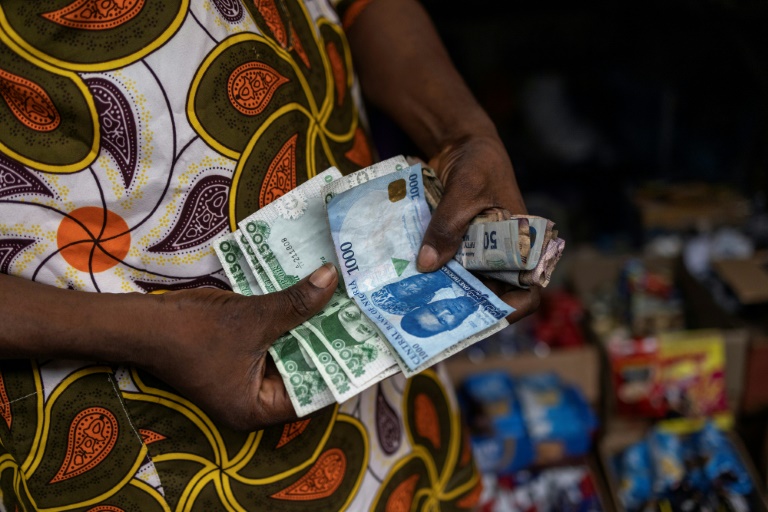
New naira notes

February PMI data indicated that cash shortages across the Nigerian economy had a severe impact on the private sector midway through the first quarter of the year.

Substantial declines were seen in both output and new orders, while firms scaled back their purchasing activity and employment.

Companies were also impacted by shortages of fuel, which added to price pressures and led to supplier delivery delays.

The headline figure derived from the survey is the Stanic IBTC Bank Purchasing Managers’ Index (PMI). Readings above 50.0 signal an improvement in business conditions on the previous month, while readings below 50.0 show a deterioration.

The headline PMI dropped below the 50.0 no-change mark in February, posting 44.7 from 53.5 in January. Business conditions deteriorated markedly, ending a 31-month sequence of expansion.

Subscribe to our Telegram channel for the latest updates.

Follow the latest developments with instant alerts on breaking news, top stories, and trending headlines.

Join Channel

The decline in operating conditions was the sharpest since the survey began in January 2014, excluding the opening wave of the COVID-19 pandemic in the second quarter of 2020.

The most severe impacts of cash shortages were seen with regards to output and new orders, which both fell substantially as customers were often unable to secure the funds to commit to spending. The decline in new orders was the first since June 2020, while the fall in output ended a seven- month sequence of growth.

In both cases, the reductions were the most pronounced in the survey’s history, apart from during the opening wave of the COVID-19 pandemic.

With new orders and output falling, companies reduced their input buying and staffing levels accordingly.

The declines were the first in 32 and 25 months respectively. The decrease in purchasing reflected not only a drop in customer demand but also difficulties for companies to find the funds to pay for items.

Alongside cash shortages, the private sector was also impacted by a scarcity of fuel in February.

This had a notable impact on suppliers’ delivery times, which lengthened for the first time in close to six-and-a-half years and to the greatest extent since April 2016.

The slump in PMI shows that while the central bank has managed to reduce the amount of cash held outside the banking system to a record low, it has come at a cost to the economy. “The lingering cash shortages will likely continue to dampen economic activities and could depress economic growth” this quarter, said the Head of Equity Research West Africa at Stanbic IBTC Bank, Muyiwa Oni, adding that the Nigerian economy could grow at 3 per cent in 2023 due to the challenges.

“Furthermore, persistent fuel shortages from the beginning of the year saw petrol pump prices increase, which both increased production cost for firms and led to supplier delivery delays. Sure, the lingering cash shortages will likely continue to dampen economic activities and could depress economic growth in Q1:23,” he stated.

In turn, shortages led to a rise in fuel costs which were widely mentioned as having been behind a further marked increase in purchase prices. Higher raw material costs and currency weakness were also factors pushing up purchase prices.

The rate of inflation was the softest since June 2020, but marked nonetheless and stronger than the series average. Staff costs also rose again in February, but at a modest pace.

The passing on of higher input costs to customers resulted in a further sharp rise in output prices, albeit one that was the weakest in four months.

Hopes that economic conditions will improve, alongside business expansion and investment plans, led to confidence in the year-ahead outlook for business activity. Sentiment was at a five-month high but still relatively muted.


0Shares
MTN Live It 100 Thematic Campaign
Previous Post

The Power of Forgetting – Why Unlearning is Critical to Building Data Skills in 2023

Next Post

Kehinde Ogundare: Zoho as Customer-Centric Company Believes There’s No Good Alternative to Investing in R&D

Techeconomy

Techeconomy

Related Posts

Naira and British Pounds, IMTOs | Pound

Pound to Naira FX Rate Today, May 29, 2026

May 29, 2026
Hot money in Nigeria - Naira | official market | Dollar

Dollar to Naira FX Rate for Today, May 29, 2026

May 29, 2026

Ghana Suspends Proposed 0.75% Wallet-to-Bank Transfer Fee, VASPA Applauds

May 28, 2026
Load More
Next Post
Kehinde Ogundare Zoho

Kehinde Ogundare: Zoho as Customer-Centric Company Believes There's No Good Alternative to Investing in R&D

Leave a Reply Cancel reply

Your email address will not be published. Required fields are marked *

I agree to the Terms & Conditions and Privacy Policy.

This site uses Akismet to reduce spam. Learn how your comment data is processed.

Techeconomy Podcast
Techeconomy Podcast

The Techeconomy Podcast is a thought-leadership show exploring the powerful intersection of technology, business, and the economy, with a strong focus on Africa’s fast-evolving digital landscape.

Financing the Future: Venture Debt, Local Capital & African Innovation | TBS May 2026 Webinar
byTecheconomy

Africa’s innovation ecosystem is evolving, but where will the funding for the next generation of startups come from?

In this edition of the Techeconomy Business Series (TBS) May 2026, industry experts explore how local capital, venture debt, and smarter investment structures are redefining startup growth and innovation across Africa.

🎙️ Featured Speakers:

* Ebunoluwa Ashley-Dejo

* Damilare Davola

* Success Ajilore (STN & Accelerated Plus)

Key conversations in this webinar include:

✔️ The future of startup financing in Africa

✔️ Venture debt and alternative funding models

✔️ The role of local investors in scaling innovation

✔️ Sustainable investment strategies for African startups

✔️ Opportunities and challenges in the African tech ecosystem

Subscribe for more conversations shaping Africa’s digital economy and innovation landscape.

#TBS2026 #AfricanInnovation #VentureDebt #StartupFinance #TechInAfrica #Techeconomy #AfricanStartups #InnovationEconomy

Financing the Future: Venture Debt, Local Capital & African Innovation | TBS May 2026 Webinar
May 27, 2026
Techeconomy
PROTECTING INNOVATION IN AFRICA’S STARTUP ECOSYSTEM
April 29, 2026
Techeconomy
BUILDING TRUST IN AFRICA ECOSYSTEM
February 27, 2026
Techeconomy
Navigating a Career in Tech Sales
January 29, 2026
Techeconomy
How Technology is Transforming Education, Health, and Business
November 27, 2025
Techeconomy
Search Results placeholder
MTN Live It 100 Thematic Campaign
ADVERTISEMENT
  • About Us
  • Careers
  • Contact Us
  • Privacy Policy

© 2026 TECHECONOMY.

No Result
View All Result
  • Technology
  • Business
  • Economy
  • Features
  • Editorial
  • Brand Content
  • TECHECONOMY TV

© 2026 TECHECONOMY.

This website uses cookies. By continuing to use this website you are giving consent to cookies being used. Visit our Privacy and Cookie Policy.


