


Article Written by: Rashi Gupta, Group Chief Operating Officer at MFS Africa
The success of mobile money in Africa is well known. If you’ve paid any attention to the continent’s financial and technology spaces over the past decade or so, you probably won’t be surprised to learn that it accounts for around 70% of the world’s US$1 trillion mobile money value.
You’d probably also be unsurprised to learn that in Kenya, the country that effectively kick-started Africa’s mobile money revolution, mobile money transactions now account for 56.8% of GDP.
What you might not know is that mobile money has long played (and continues to play) an important role in empowering women across Sub-Saharan Africa.
That’s important because, despite gains in representation (in 11 African countries, women hold over a third of parliamentary seats, more than in Europe), gender inequality remains stark across Africa.While there are obviously differences from country to country, women throughout the continent fare worse than their male counterparts in a number of measures, including wages, investment, access to capital, and education.
Of course, mobile money can’t fix all of those issues on its own. That requires serious investment as well as shifts in policy and societal attitudes. But it can play a significant role in making life better for women across the continent, especially when it comes to financial inclusion.
Taking care of business
That’s not just conjecture either. Research conducted on behalf of the World Bank shows just how substantial the impact has been.
It notes, for example, that mobile money has enabled Kenyan women to move away from subsistence farming and towards business and retail, helping alleviate poverty in the country.
The research further notes that, for individuals and households, mobile phones can help reduce transaction costs, lower travel costs, improve welfare by smoothing unexpected income shocks, increase security, and facilitate remittances.
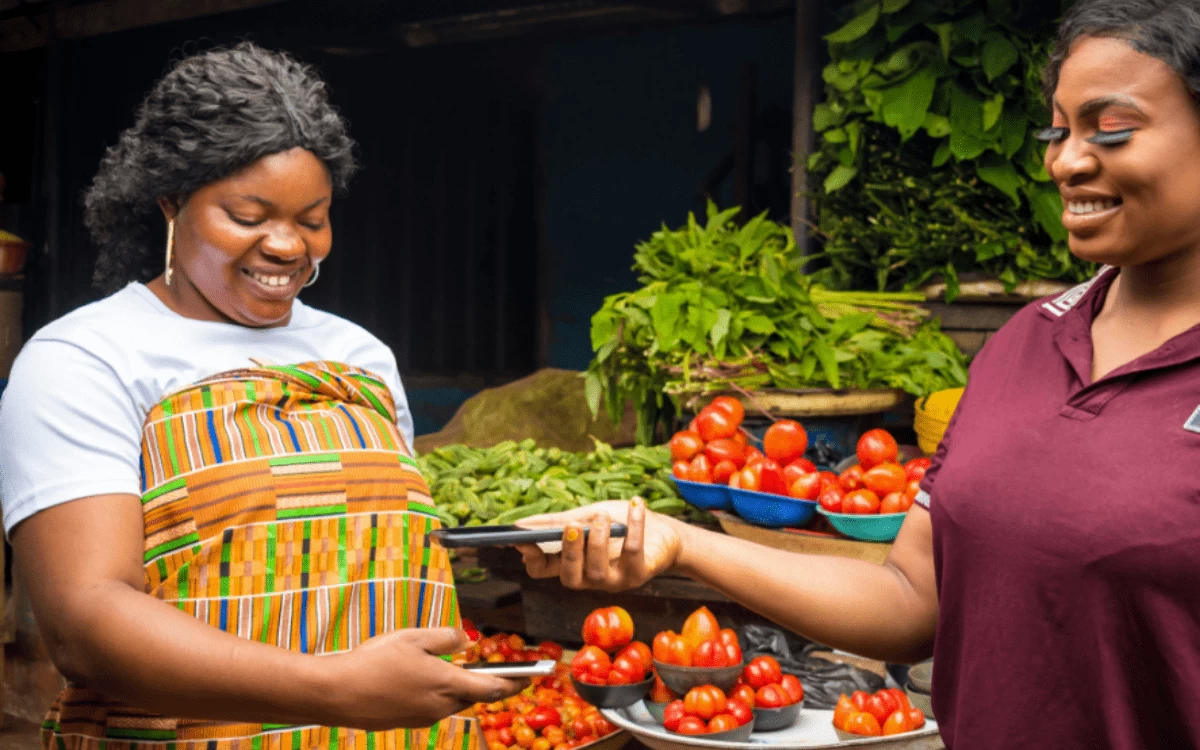
Perhaps the most significant impact, however, lies in what mobile money can do for female entrepreneurs.
Using mobile money leads to a 19.8% increase in the likelihood of female-led businesses receiving investment from outside sources. Given that the average capital investment by female-owned firms is more than six times lower than the average for male-owned firms in Africa, that’s especially critical.
That same World Bank research shows that such female-owned businesses are then more likely to invest that money in fixed assets and their business’s expansion, more likely to offer credit to customers, demand credit, and have better relationships with suppliers
A state of constant evolution
It’s also worth noting that mobile money has evolved considerably since it landed on the African continent, further enhancing its ability to empower women.
Advances in interoperability, for example, mean that it’s easier than ever for people and businesses on different mobile money systems and in different countries to send and receive money. That has massive potential benefits for female entrepreneurs as it allows them to sell their products across borders without having to rely on traditional international ecommerce infrastructure that can be costly, resource intensive, and require business owners to travel away from home on a regular basis using unsafe or unreliable modes of transportation. Unlocking new markets is vital for any business’s ability to scale and grow.
In the coming years, mobile money will continue to evolve in new and innovative ways. And if history is anything to go by, then women will embrace and benefit most from those advancements.
Breaking barriers across borders
That’s because financial inclusion is the most effective way of reducing inequalities. That’s especially true for women. And few technologies have fostered that kind of inclusion as successfully as mobile money has.
It has given unbanked communities and people in remote and rural areas the kind of access to financial services that would’ve taken far longer if they’d had to rely on traditional financial institutions.
The fact that it’s had such a profound and lasting impact in elevating women across the continent should, therefore, never be underestimated.






Comments 0